On this page
- Yacht-Master 40 vs Submariner at a Glance
- Two very different backstories
- Design: Platinum vs Ceramic
- The Yacht-Master's Rolesium bezel
- The Submariner's Cerachrom bezel
- Dials and bracelets
- In the Water: 100 Metres vs 300 Metres
- On the Wrist: Comfort and Everyday Wear
- Which one works with a suit?
- Same movement, same daily experience
- Price, Availability and Resale Value
- Retail price
- Getting one
- Resale value
- Yacht-Master 40 or Submariner: Which Should You Buy?
- Other water watches worth a look
- How to Buy Either One Safely
- The Verdict
- FAQ
- Is the Yacht-Master better than the Submariner?
- Can you swim with a Rolex Yacht-Master?
- Why is the Yacht-Master more expensive than the Submariner?
- Which holds its value better, the Submariner or the Yacht-Master?
- Is the Yacht-Master good for small wrists?
- Is the Yacht-Master easier to buy than the Submariner?
In the Yacht-Master 40 vs Submariner debate, both watches use the same Calibre 3235 movement, so the choice comes down to character. The Submariner is the true dive watch: 300 metres of water resistance, a ceramic bezel and the stronger resale value. The Yacht-Master 40 is the dressier one: a platinum bezel, 100 metres of water resistance, a lighter feel and easier availability. Dive? Buy the Submariner. Sail, swim and wear a jacket? Buy the Yacht-Master.
Put these two on a table and most people would call them siblings. Same Oyster case shape. Same rotating bezel up top. Same movement inside. And yet they've ended up on completely different wrists.
The Submariner is the watch everyone recognises — the one people mean when they say "a Rolex." The Yacht-Master is the one watch people notice a second later, usually because the bezel catches the light in a way ceramic never does.
So which one belongs on yours? I've compared the current Yacht-Master 40 (ref. 126622) and Submariner Date (ref. 126610LN) on everything that actually matters once the box is open: how they look, how they feel, what they can handle in the water, and what they're worth later.
Yacht-Master 40 vs Submariner at a Glance
Here's the side-by-side before we get into the details. Figures are from The Watchology's November comparison of the two references.
Rolex Yacht-Master 40 (ref. 126622)
- Case: 40mm Oystersteel
- Bezel: solid platinum, bidirectional, 60-minute scale
- Water resistance: 100 metres
- Movement: Calibre 3235, 70-hour power reserve
- Dial: slate grey (the classic choice)
- Retail: about $13,150
Rolex Submariner Date (ref. 126610LN)
- Case: 41mm Oystersteel
- Bezel: black Cerachrom ceramic, unidirectional, 60-minute scale
- Water resistance: 300 metres
- Movement: Calibre 3235, 70-hour power reserve
- Dial: matte black
- Retail: about $11,650
Notice what's missing from the differences list: the engine. That's the most important thing to understand about this comparison. You're not choosing a better watch. You're choosing a personality.
Two very different backstories
The Submariner arrived in 1953 as a professional dive tool, and it's been the template for almost every dive watch since. The current 41mm generation landed in 2020.
The Yacht-Master came much later, in 1992, and it was never meant to dive. According to The Watchology's Yacht-Master history, the first one was an 18k yellow gold watch built for the sailing crowd Rolex had sponsored for decades. The steel-and-platinum Rolesium version — the one we're comparing here — followed in 1999.
One was built for the bottom of the sea. The other was built for the deck of a boat. That difference shows up everywhere.
Design: Platinum vs Ceramic
The bezel is where these two watches split. It's the first thing you see, and it changes the whole mood of the watch.
The Yacht-Master's Rolesium bezel
The Yacht-Master 40's bezel is solid platinum, with a matte, sandblasted surface and raised, polished numerals. Rolex calls the steel-and-platinum combination Rolesium. In person, it has a soft grey glow that's hard to capture in photos — it reads as quietly expensive rather than flashy.
It also turns both ways. That's deliberate: on a boat, you might need to count down to a race start as well as time how long you've been sailing. The action is smoother and lighter than the Submariner's.
The Submariner's Cerachrom bezel
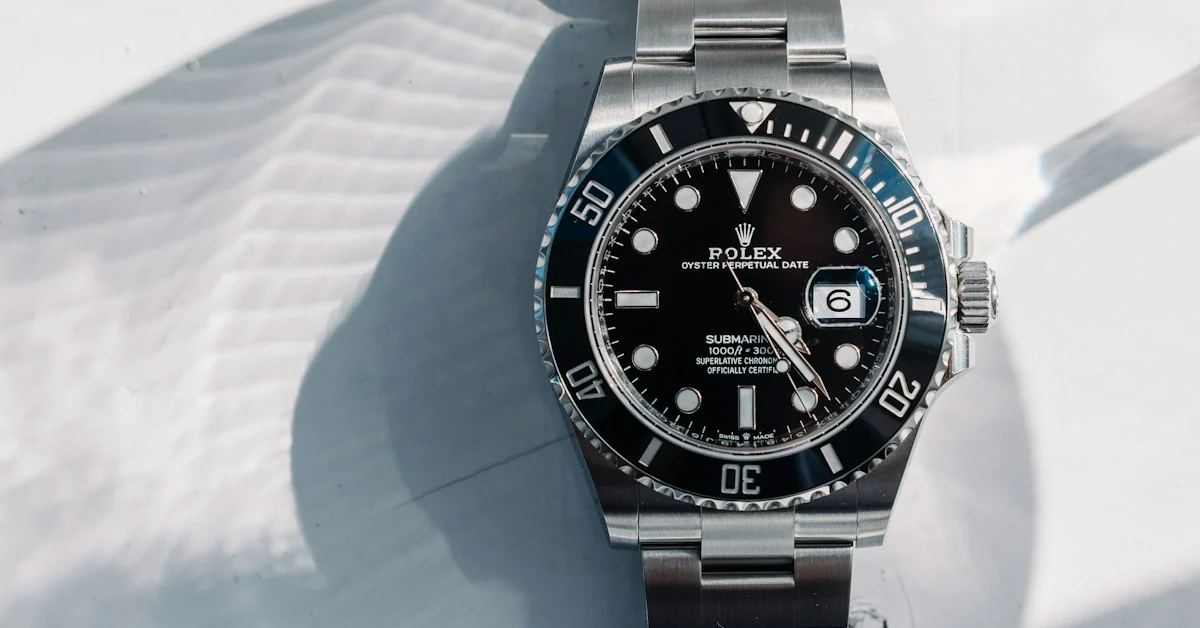
The Submariner uses Cerachrom, Rolex's own ceramic. It's glossy, almost impossible to scratch, and won't fade in sunlight or salt water.
Its bezel only turns anticlockwise. That's a diving safety rule: if you knock it by accident underwater, it can only make you think you've been down longer, never shorter. The clicks are firmer and more mechanical — a tool doing a tool's job.
Dials and bracelets
The Submariner's matte black dial is pure function: big luminous markers, maximum contrast, nothing extra. The Yacht-Master's slate dial is softer and more refined, and it plays nicely with the grey of the platinum.
Both come on an Oystersteel Oyster bracelet, but the finish differs. The Yacht-Master's has polished centre links that catch the light, while the Submariner's is fully brushed. It's a small detail that makes a big difference under a shirt cuff.
Both cases are made of Oystersteel, which is Rolex's name for 904L stainless steel. If you've ever wondered whether that matters, here's the real difference between Oystersteel and regular stainless steel.
In the Water: 100 Metres vs 300 Metres
This is the one hard, measurable gap between them.
The Submariner is rated to 300 metres. It's a genuine professional dive watch, with a case, gaskets and crown system built for the pressure of real scuba diving.
The Yacht-Master 40 is rated to 100 metres. That's plenty for swimming, snorkelling, sailing in spray, jumping off the back of a boat and showering. It isn't built for scuba — dive-watch standards call for at least 200 metres, as The Watchology notes in its Yacht-Master guide.
Here's the honest truth, though: most Submariner owners never dive with it. If your idea of water is a pool, a beach or a boat deck, both watches will handle your life without blinking. If you actually strap on a tank, there's no debate. Get the Submariner.
And if you need even more depth, Rolex has bigger tools for that — see Sea-Dweller vs Deepsea.
On the Wrist: Comfort and Everyday Wear
On paper, there's 1mm between them. On the wrist, the gap feels bigger.
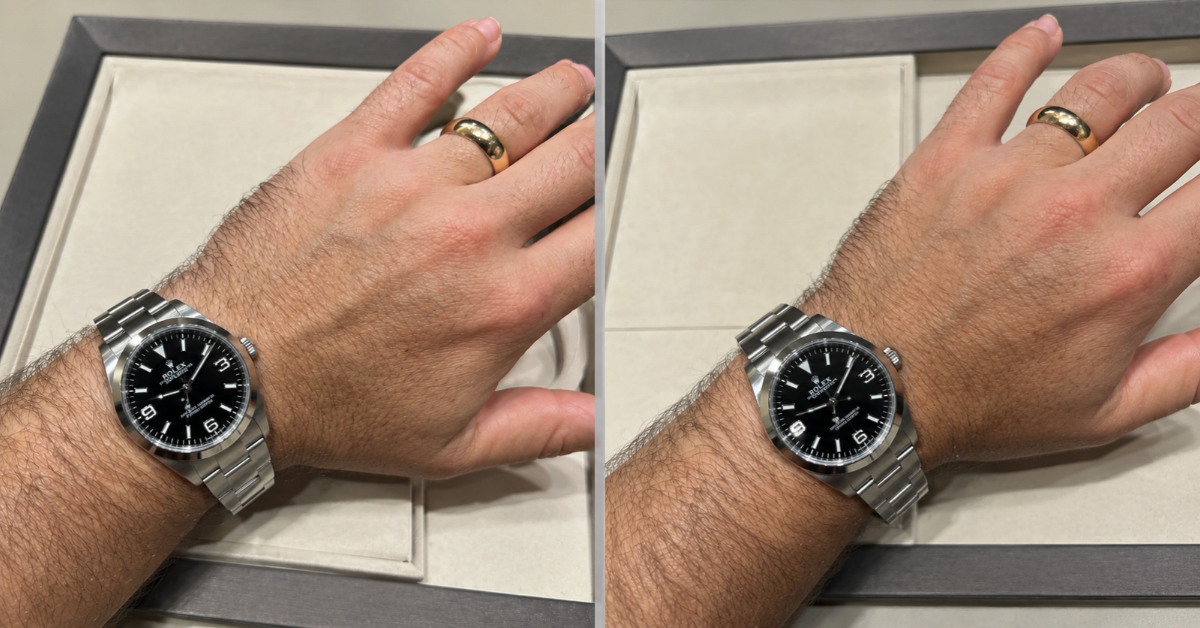
The Yacht-Master 40 is the lighter watch — about 116 grams on its bracelet, against roughly 140 grams for the Submariner. It has slimmer-looking lugs and a narrower bezel, so it tends to wear smaller than its 40mm suggests. If your wrist is under about 6.5 inches, that matters.
The Submariner has more visual weight. The broader lugs, the crown guards and the bold black bezel give it real presence. Some people love that heft. Others find it a bit much for a desk job.
Which one works with a suit?
The Yacht-Master, without much argument. The platinum bezel and polished links let it slide from a weekend on the water into a meeting without looking out of place.
The Submariner is versatile too — it's been worn with tuxedos for decades — but it never stops looking like a dive watch. That's either its charm or its limit, depending on who you ask.
Same movement, same daily experience
Both run the Calibre 3235, with a 70-hour power reserve and Rolex's Superlative Chronometer accuracy of ±2 seconds a day. Take either off on Friday night and it'll still be running on Monday morning. Both have a date window with Rolex's Cyclops magnifier — here's how to set the date on a Rolex without damaging it.
Price, Availability and Resale Value
Here's the twist: the Yacht-Master costs more new, but the Submariner usually costs more to actually buy.
Retail price
At authorized dealers, the Yacht-Master 40 sits at about $13,150 and the Submariner Date at about $11,650 — a gap of roughly $1,500, according to The Watchology's November figures. You're paying for platinum. It's a denser, rarer and harder-to-machine metal than ceramic.
If you'd rather skip the date, the no-date Submariner is cheaper still. Our Submariner buying guide breaks down date vs no-date vs vintage.
Getting one
The Submariner is one of the most in-demand watches Rolex makes, and many authorized dealers still prioritise existing clients. The Yacht-Master 40 is generally easier to get at retail, with shorter waits and less competition.
Resale value
On the pre-owned market, the Submariner Date trades for roughly $11,000 to $14,000, often above retail. The Yacht-Master 40 tends to trade close to retail, and sometimes below it, because its fan base is smaller.
That cuts both ways. If resale matters to you, the Submariner is the safer bet — it's consistently among the Rolex models that hold their value best. If you're buying to wear, the Yacht-Master's softer resale is actually an opportunity: a lightly used example can cost close to, or under, what you'd pay new.
Yacht-Master 40 or Submariner: Which Should You Buy?
Forget the spec sheet for a second. Picture where you'll actually wear it.
Buy the Submariner if:
- You dive, or seriously plan to
- It's your first and only Rolex, and you want the most recognisable one
- Resale value is part of your thinking
- You like a bolder, heavier watch with real wrist presence
Buy the Yacht-Master 40 if:
- You swim, sail and travel, but don't scuba dive
- You wear a jacket or shirt cuff most days
- You'd like a Rolex that's a little less obvious
- You want it sooner, with less waiting and less premium
- Your wrist is on the smaller side
My own take? If you can only own one, the Submariner is the safer, more complete answer — it's the reference point for a reason. But I'd never talk anyone out of the Yacht-Master. It's the more interesting watch, and the platinum bezel is one of the nicest details Rolex makes at this price.
Other water watches worth a look
Still torn? The Yacht-Master also comes in Everose gold on an Oysterflex strap, white gold and a lighter 42mm RLX titanium version. And Rolex just brought back the regatta chronograph — the Yacht-Master II is back, with a new movement.
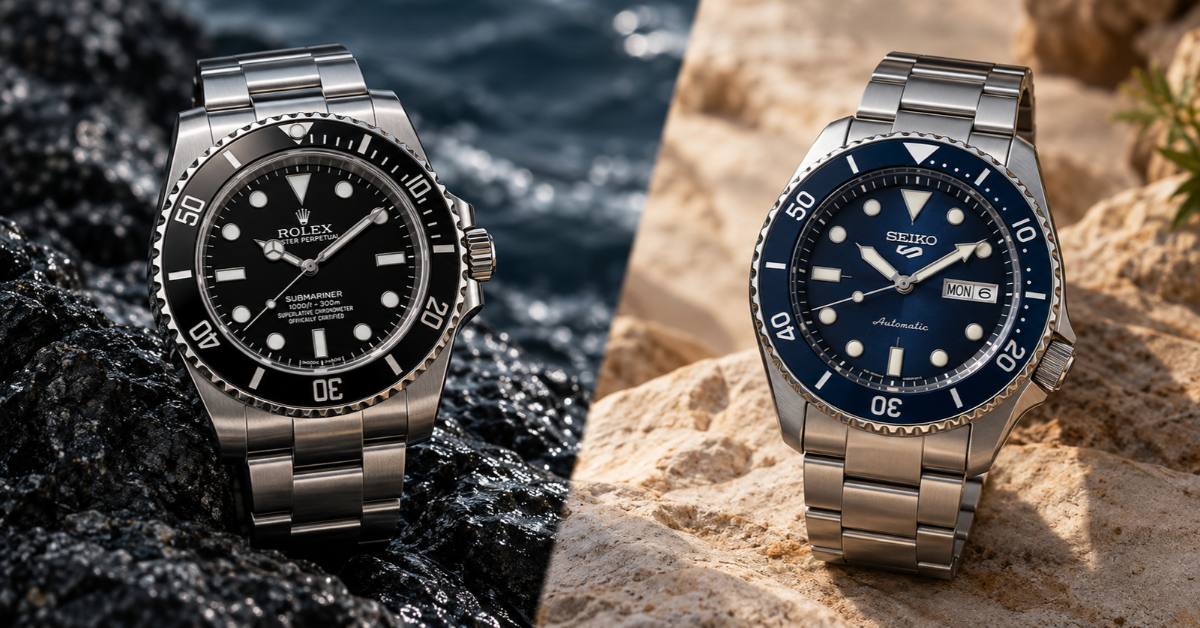
If the Submariner look is what you love but the price stings, Tudor's Black Bay is a real alternative. And if you're weighing the Yacht-Master against Rolex's racing chronograph instead, see Daytona vs Yacht-Master.
How to Buy Either One Safely
The Submariner is one of the most copied watches on the planet, which means pre-owned buyers need to be careful.
- Check the bezel, crystal and lume. Our 60-second Submariner field test covers the fast checks that catch most fakes.
- Watch the seller as well as the watch. These 7 warning signs of a fake Rolex often show up before you even see it.
- Match the serial and papers. Date the watch with our Rolex serial number lookup and make sure the warranty card matches the case.
- Budget for upkeep. Plan ahead for Rolex servicing costs — both of these share the same movement, so expect similar bills.
Want zero doubt? Rolex's own Certified Pre-Owned program costs more, but comes with a two-year guarantee. We've looked at whether the CPO premium is worth paying.
The Verdict
The Submariner and the Yacht-Master 40 share an engine, a case shape and a family name. What they don't share is a purpose.
The Submariner is a dive watch that happens to look great everywhere. The Yacht-Master is a luxury watch that happens to love the water. Neither is the wrong choice — but one of them is almost certainly the right one for you.
If your weekends involve a wetsuit, buy the Submariner. If they involve a boat, a beach club or a dinner reservation, the Yacht-Master is the more honest answer.
FAQ
Is the Yacht-Master better than the Submariner?
Neither is better mechanically, since both use the same Calibre 3235 movement. The Submariner is the better dive watch, with 300 metres of water resistance and stronger resale value. The Yacht-Master 40 is dressier, lighter and easier to buy, with a solid platinum bezel.
Can you swim with a Rolex Yacht-Master?
Yes. The Yacht-Master 40 is water resistant to 100 metres, which is plenty for swimming, snorkelling, sailing and showering. It is not designed for scuba diving — for that, the Submariner's 300-metre rating is the right choice.
Why is the Yacht-Master more expensive than the Submariner?
The Yacht-Master 40 costs about $1,500 more because its bezel is solid platinum, a rarer and harder-to-machine metal than the Submariner's ceramic. It also has a more polished bracelet finish. The extra cost is for materials, not performance.
Which holds its value better, the Submariner or the Yacht-Master?
The Submariner holds its value better. Pre-owned Submariner Dates often trade above retail, while the Yacht-Master 40 usually trades close to or slightly below retail because it has a smaller collector base.
Is the Yacht-Master good for small wrists?
Yes. The Yacht-Master 40 wears smaller than its size suggests and is lighter than the Submariner, at around 116 grams versus about 140 grams. For very small wrists, Rolex also makes a 37mm Yacht-Master.
Is the Yacht-Master easier to buy than the Submariner?
Generally, yes. The Submariner is one of Rolex's most in-demand models and often involves waiting at authorized dealers. The Yacht-Master 40 usually has shorter waits and is easier to find pre-owned at or near retail.
Reviews Editor
Sofia Marchetti
Reviews editor focused on dive watches, chronographs and everyday wearability.