On this page
- One Watch, Two Very Different Feelings
- Why There Are Two Sizes
- Explorer 36 vs 40: Side by Side
- Rolex Explorer 36 (ref. 124270)
- Rolex Explorer 40 (ref. 224270)
- What They Share
- Why Lug-to-Lug Matters More Than Diameter
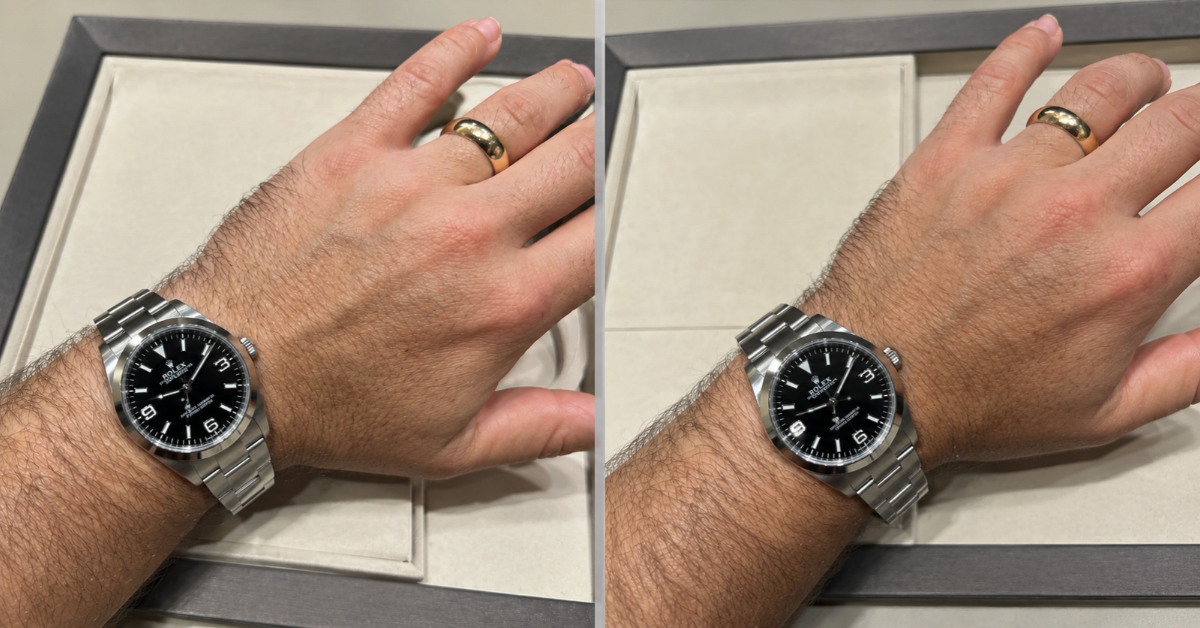
- How the Explorer 36 Wears
- How the Explorer 40 Wears
- Wrist Size Guide
- Price: Is the 40 Worth the Extra $450?
- Resale Value and Availability
- Explorer vs the Alternatives
- Our Verdict
- Buying Safely
- Frequently Asked Questions
- What's the difference between the Rolex Explorer 36 and 40?
- How much is the Rolex Explorer 36 vs 40?
- Is the Rolex Explorer 36 too small for men?
- Which Explorer size holds its value better?
- Are the Explorer 36 and 40 the same thickness?
- Does the Rolex Explorer have a date?
- The Bottom Line
One Watch, Two Very Different Feelings
The Rolex Explorer is about as simple as Rolex gets. Black dial, bold 3-6-9 numerals, a smooth bezel and no date. Since 2023, it has come in two sizes, and that's where the hard decision starts.
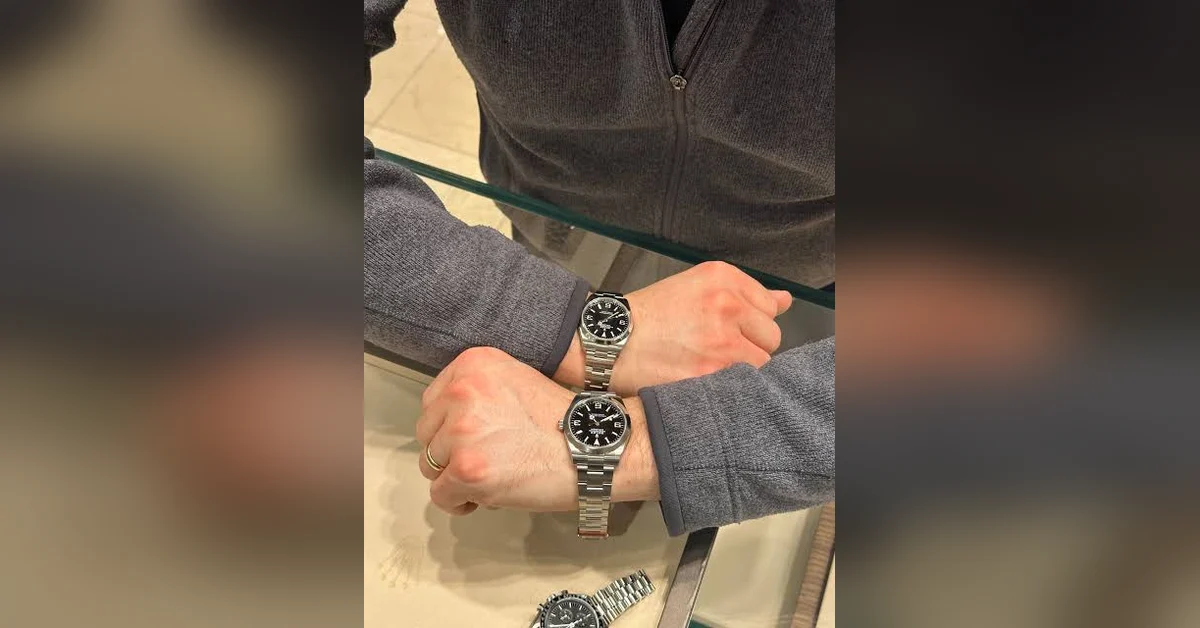
On paper, 4mm doesn't sound like much. On the wrist, it changes the whole character of the watch. One size feels like a 1950s tool watch; the other feels like a modern sports Rolex.
This guide skips the history lesson and focuses on one question: which size is right for your wrist and lifestyle? We'll cover real dimensions, how each one wears, prices, resale and a simple wrist-size guide.
Why There Are Two Sizes
The Explorer has changed size over the years, and knowing how explains why both now exist:
- 1953 onward: the original Explorer was 36mm, linked to the first ascent of Everest.
- 2010: Rolex grew it to 39mm (ref. 214270), following the trend for bigger watches.
- 2021: Rolex surprised everyone by returning to 36mm with ref. 124270.
- 2023: Rolex added the 40mm ref. 224270 alongside it, giving buyers a choice for the first time.
So today you can pick the traditional size or the modern one. Neither replaced the other.
Explorer 36 vs 40: Side by Side
Rolex Explorer 36 (ref. 124270)
- Diameter: 36mm
- Lug-to-lug: about 43mm
- Thickness: about 11.5mm
- Lug width: 19mm, tapering to about 14mm at the clasp
- US retail: $7,900
Rolex Explorer 40 (ref. 224270)
- Diameter: 40mm
- Lug-to-lug: about 46.5mm
- Thickness: about 11.6 to 11.8mm
- Lug width: 21mm, tapering to about 19mm
- US retail: $8,350
What They Share
- Oystersteel case with a smooth, polished bezel
- Rolex calibre 3230 automatic movement, about 70 hours of power reserve
- Superlative Chronometer accuracy, −2 to +2 seconds per day
- 100m water resistance with a screw-down Twinlock crown
- Black dial with 3-6-9 numerals and Chromalight lume
- Oyster bracelet with Oysterclasp and Easylink 5mm comfort extension
Curious about that steel? Here's what makes Oystersteel different.
Why Lug-to-Lug Matters More Than Diameter
Most people compare watches by diameter. That's a mistake. The number that decides whether a watch fits is lug-to-lug: the distance from the tip of the top lugs to the tip of the bottom lugs.
If the lug-to-lug is wider than the flat top of your wrist, the watch overhangs and looks too big, whatever its diameter. Here's the difference in practice:
- Explorer 36 at about 43mm: sits inside the edges of almost any wrist.
- Explorer 40 at about 46.5mm: fits comfortably on medium and larger wrists, but can overhang slim ones.
A quick test: measure across the flat top of your wrist with a ruler. If it's under about 45mm, the 36 is the safer choice.
How the Explorer 36 Wears
The Explorer 36 wears smaller than its number suggests. Measured across the case, it's actually a hair under 36mm, and the narrow 19mm lugs taper the bracelet sharply. Some owners with larger wrists describe it as feeling "diminutive."
That's not a flaw. It's the point. The 36 has the proportions of a classic 1950s and '60s Rolex. It disappears under a shirt cuff, looks elegant with a suit and feels incredibly light on the wrist.
Best for: wrists under about 6.75 inches, anyone who loves vintage proportions, and buyers who want one watch for both formal and casual wear.
How the Explorer 40 Wears
The Explorer 40 feels like a modern sports watch. Its wider 21mm lugs and broader bracelet give it more visual weight, and the dial details, including the hands and numerals, are scaled up to match the larger case.
It's still slim, at under 12mm thick, so it never feels bulky. It simply has more presence. On a larger wrist, it looks balanced where the 36 might look small.
Best for: wrists over about 7 inches, anyone used to 40mm-plus watches, and buyers who want the Explorer to feel like a substantial sports Rolex.
Wrist Size Guide
- Under 6.5 inches: Explorer 36, without much debate. The 40's lug-to-lug can crowd the edges of the wrist.
- 6.5 to 7 inches: the hardest zone. The 36 looks classic, the 40 looks modern. Choose by style, and try both on if you can.
- 7 to 7.5 inches: both work. The 40 looks more balanced; the 36 looks deliberately vintage.
- Over 7.5 inches: Explorer 40 is usually the better fit.
Style matters too. If you mostly wear shirts and jackets, the 36 is easier to live with. If you mostly wear casual clothes or sportswear, the 40 often feels more natural.
Price: Is the 40 Worth the Extra $450?
- Explorer 36 (124270): $7,900
- Explorer 40 (224270): $8,350
The $450 gap is small by Rolex standards, so price shouldn't decide this. Choose the size that fits. Rolex prices rose again in 2026; here's what collectors think about the increases.
Resale Value and Availability
Both Explorers are among the easiest steel sports Rolexes to buy right now.
- Explorer 36: trades at or around its $7,900 retail price on the pre-owned market, sometimes slightly below.
- Explorer 40: trades about 4% to 5% above its $8,350 retail price.
The 40 holds its value slightly better, mainly because more buyers want the larger size. But neither carries the big premiums of a Submariner or Daytona, which is good news if you want to buy one at a fair price. For the full picture across Rolex models, see which Rolex holds its value best.
A buying tip: because the 36 trades near retail, a lightly used one can be a smart way to get a modern Rolex sports watch without paying a premium.
Explorer vs the Alternatives
- Explorer II: a bigger, 42mm travel watch with a 24-hour hand and fixed bezel. See GMT-Master II vs Explorer II.
- Oyster Perpetual: similar sizes and simplicity, with colourful dial options and a lower price. Compare it with the Datejust in Datejust vs Oyster Perpetual.
- Submariner: if you want a dive bezel and more water resistance. Read our Submariner buying guide.
- Tudor: similar tool-watch character for less money. See Rolex vs Tudor.
Our Verdict
There's no "better" Explorer, only a better fit.
- Choose the Explorer 36 if your wrist is under about 7 inches, you love classic proportions, or you want a Rolex that works just as well with a suit as with a T-shirt.
- Choose the Explorer 40 if your wrist is over about 7 inches, you prefer modern sizing, or you want the Explorer to feel like a substantial sports watch.
If you can, try both on. Many buyers who expect to choose the 40 end up loving the 36, and vice versa.
Buying Safely
Buy from an authorised dealer or a reputable pre-owned seller. Check that the serial matches the warranty card, using our Rolex serial number guide, and read 7 signs your Rolex might be a fake before you pay.
Frequently Asked Questions
What's the difference between the Rolex Explorer 36 and 40?
Only the size. The Explorer 36 (ref. 124270) is 36mm with about 43mm lug-to-lug and 19mm lugs. The Explorer 40 (ref. 224270) is 40mm with about 46.5mm lug-to-lug and 21mm lugs. Both use the calibre 3230 movement, have 100m water resistance and share the same design.
How much is the Rolex Explorer 36 vs 40?
In the US, the Rolex Explorer 36 ref. 124270 retails for $7,900 and the Explorer 40 ref. 224270 for $8,350, a difference of $450.
Is the Rolex Explorer 36 too small for men?
Not necessarily. The Explorer 36 is the original Explorer size and suits many men, especially with wrists under about 7 inches. On larger wrists, it looks deliberately vintage, which many owners prefer.
Which Explorer size holds its value better?
The Explorer 40 holds its value slightly better, trading about 4% to 5% above retail, while the Explorer 36 trades at or around its retail price.
Are the Explorer 36 and 40 the same thickness?
Almost. The Explorer 36 is about 11.5mm thick and the Explorer 40 about 11.6 to 11.8mm, so both slip easily under a shirt cuff.
Does the Rolex Explorer have a date?
No. Both the Explorer 36 and Explorer 40 are time-only watches with no date.
The Bottom Line
The Explorer 36 and 40 are the same brilliant, simple Rolex, built for two different wrists. Measure yours, think about how you dress, and if you can, try both on.
The right Explorer isn't the bigger one or the smaller one. It's the one that disappears on your wrist and stays there for decades.
Senior Writer
James Whitfield
Senior watch writer with a decade covering Swiss horology, vintage markets and modern releases.