On this page
- The Actual Relationship, Not the Rumor
- Tudor's Own Dive-Watch Heritage
- The Shift That Actually Matters: In-House Movements
- Black Bay 58 vs. Submariner: The Direct Comparison
- Black Bay Pro vs. Explorer: An Even Sharper Value Case
- Where Rolex Still Wins
- Where Tudor Genuinely Wins
- So, Is It a Real Alternative?
- FAQ
- Conclusion
Yes, genuinely — the Tudor Black Bay has evolved well beyond a budget look-alike into a legitimate watch on its own terms. Tudor was founded in 1926 by Rolex's own Hans Wilsdorf specifically as a more accessible sibling brand, and it has its own separate dive-watch heritage dating to 1954, the same year as the original Rolex Submariner. Since 2012, Tudor has shifted from third-party movements to genuine in-house, METAS-certified Master Chronometer calibers, and a current Black Bay 58 retails around $4,975 to $5,350 — roughly half the price of a comparable steel Rolex Submariner at $10,050 and up.
"Just a cheaper Rolex" is the laziest way to describe Tudor, and it's also increasingly wrong. The relationship between the two brands is real and deliberate, but the Black Bay specifically has earned its own identity over the past decade rather than simply borrowing Rolex's — and understanding exactly how gets you a much better answer than a reflexive yes or no.
The Actual Relationship, Not the Rumor
Tudor isn't an unrelated competitor riding on Rolex's coattails — it's a genuine sibling brand, founded in 1926 by Hans Wilsdorf, Rolex's own founder, specifically to offer Rolex's design philosophy and build quality at a more accessible price. That's not marketing spin; it's the brand's actual founding purpose, and it's worth understanding because it explains why the family resemblance between certain Rolex and Tudor references runs so deep.
For decades, that relationship showed up mainly in shared case-making and design language, while Tudor relied on third-party ETA movements rather than in-house calibers — a real distinction from Rolex, and part of why Tudor spent years living somewhat in Rolex's shadow. The Black Bay, launched in 2012, is the watch that started changing that.
Tudor's Own Dive-Watch Heritage
Here's what a lot of "cheap Rolex" framing misses entirely: Tudor has genuine, independent tool-watch history of its own, not borrowed from Rolex's story. In 1954 — the same year Rolex introduced the original Submariner — Tudor released the Oyster Prince Submariner, reference 7922, a serious dive tool in its own right. Tudor divers went on to serve with the French Navy's Marine Nationale, the US Navy, and various military diving units through the 1960s and 1970s. That's documented military service history, entirely separate from anything Rolex did, and it's the actual foundation the modern Black Bay draws on.
The Shift That Actually Matters: In-House Movements
This is the development that turns "cheaper alternative" into "genuine alternative," and it's relatively recent. Current core Black Bay references run Tudor's own in-house movements — the MT5400-U in the Black Bay 58, for instance — independently METAS-certified as Master Chronometers, the same certification tier Omega uses on its own watches. These movements run within 0/+5 seconds per day and resist magnetic fields up to 15,000 gauss, a genuinely different proposition than the third-party ETA movements Tudor relied on for most of its history.
It's worth being precise about how this compares to Rolex's own standard: Rolex's Superlative Chronometer certification is tighter, at ±2 seconds per day, against Tudor's 0/+5 second range. That's a real, measurable gap — Rolex's in-house engineering still edges out Tudor's on pure precision tolerance — but it's a gap between two genuinely serious certified chronometers, not between real engineering and an imitation. Our Rolex Perpetual Calibre explainer covers what Rolex's own certification process actually involves, useful context for understanding exactly where that gap sits.
Black Bay 58 vs. Submariner: The Direct Comparison
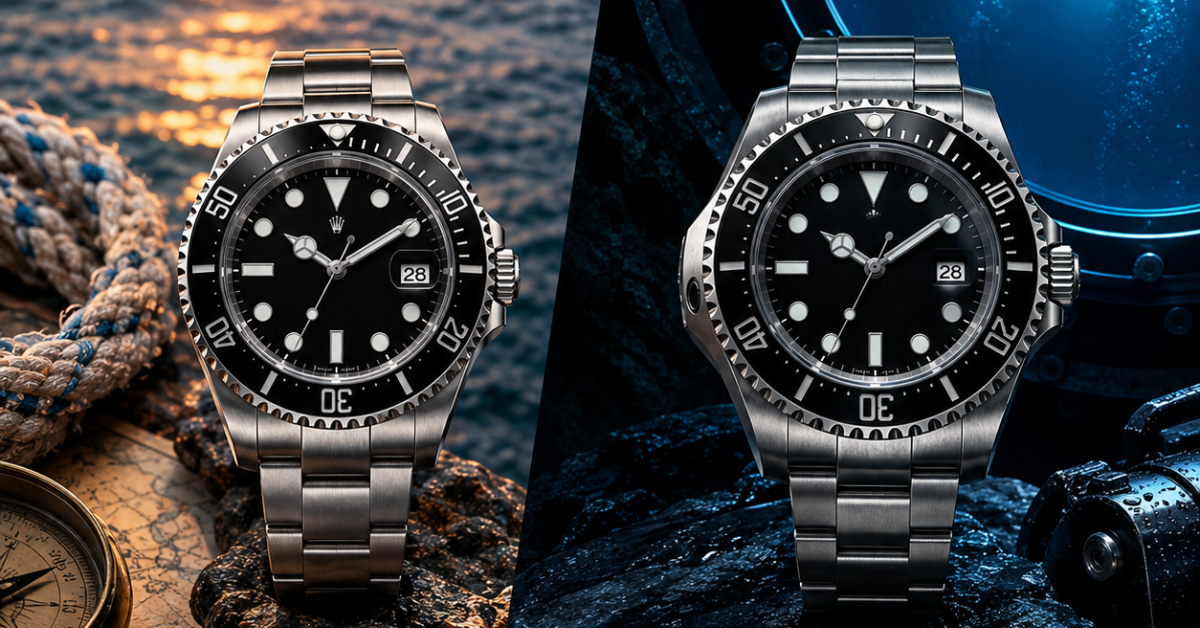
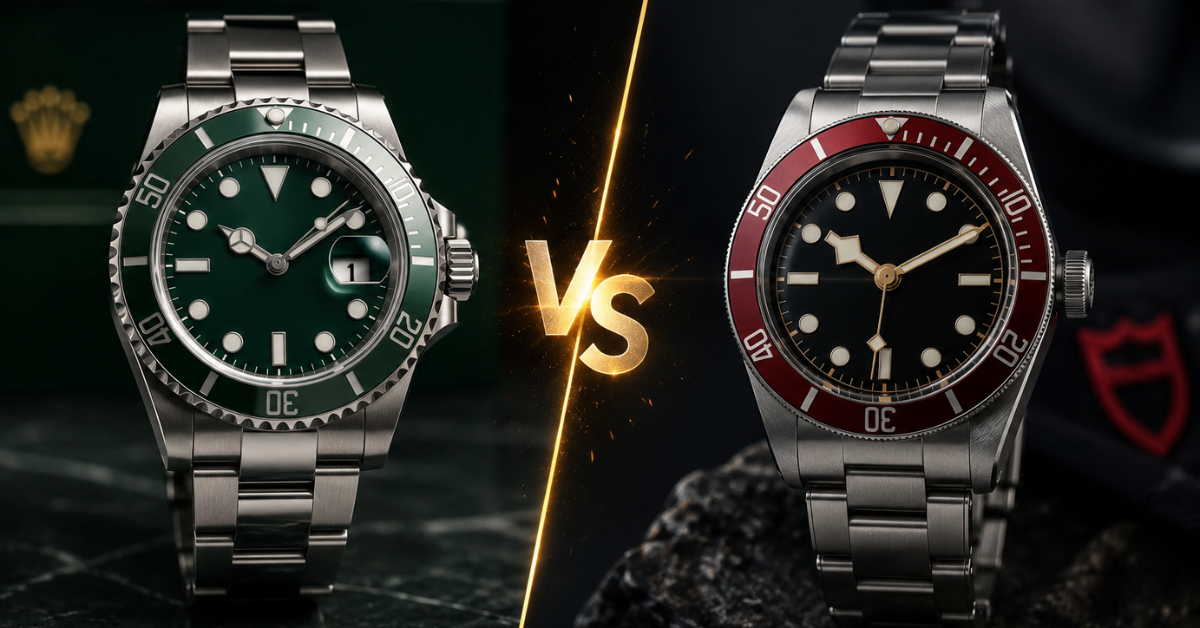
This is the matchup most buyers are actually weighing, and the numbers are stark. The Black Bay 58 retails for $4,975 to $5,350 depending on strap and bracelet choice, against a current steel Rolex Submariner starting at $10,050 for the no-date reference and climbing from there. Our Submariner pricing by reference guide covers the full current Submariner lineup in more depth if you want the complete pricing picture on the Rolex side of this comparison.
Design-wise, the two watches share obvious DNA but diverge in deliberate ways. The Black Bay uses a matte anodized aluminum bezel insert rather than Rolex's glossy, scratch-resistant Cerachrom ceramic — a choice that keeps a more authentically vintage look but means it will show wear over years in a way Rolex's ceramic won't. Tudor's signature snowflake hands are a distinct design element with their own vintage pedigree, not an imitation of Rolex's Mercedes hands. Both watches share genuine 200-plus meter dive-watch water resistance and comparable overall build quality, even where Rolex's finishing polish still pulls ahead on close inspection.
Black Bay Pro vs. Explorer: An Even Sharper Value Case
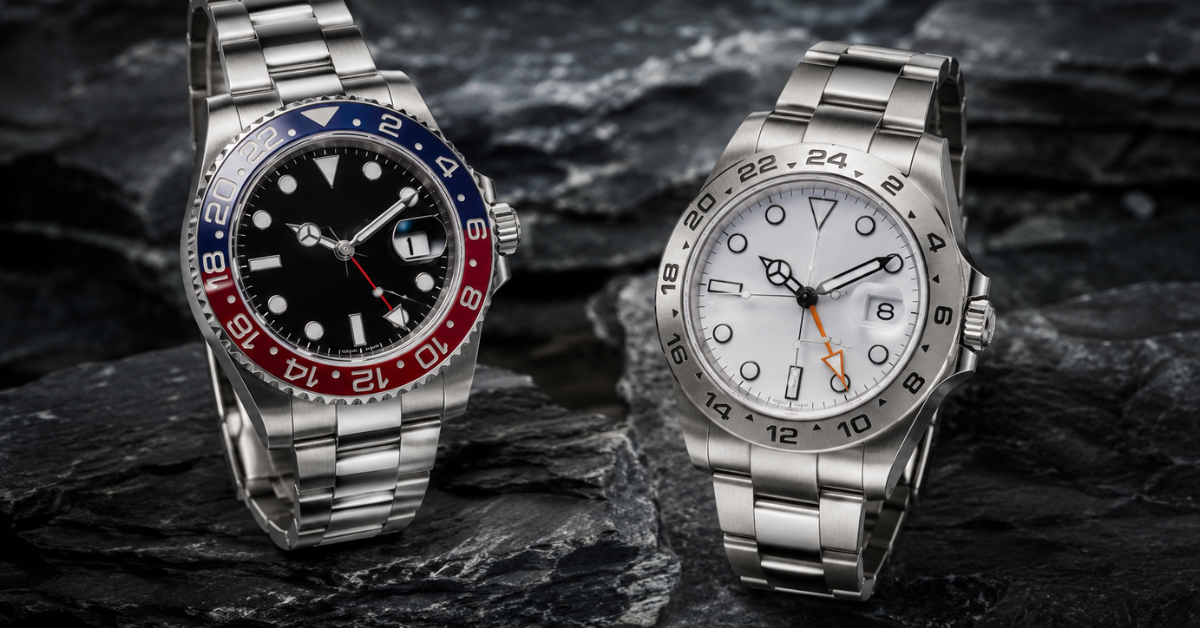
If you're weighing Tudor against Rolex's simpler side rather than its dive watches, the gap gets even more interesting. The Black Bay Pro, a 39mm GMT tool watch with a genuine in-house movement and independently adjustable hour hand, retails around $4,500 — while the time-only Rolex Explorer starts around $7,900. That means Tudor's watch actually offers more function, a real GMT complication, for roughly half the price of Rolex's simplest sports watch. It's one of the clearest examples of Tudor not just undercutting Rolex on an equivalent watch, but genuinely out-speccing it at a lower price point.
Where Rolex Still Wins
None of this makes Tudor a strict upgrade, and it's worth being honest about where Rolex's premium still earns its keep. Finishing polish remains a real, visible difference on close inspection — case bevels, bracelet link tolerances, and overall fit and finish still favor Rolex's decades of manufacturing refinement. Brand prestige and resale liquidity are the bigger factor for a lot of buyers: Rolex's steel sports watches hold value and command recognition in a way Tudor, fairly or not, doesn't yet match. If long-term value retention genuinely matters to your decision, that's a real consideration Tudor can't currently answer.
Where Tudor Genuinely Wins
Availability is the most underrated advantage, and it's substantial. Where Rolex's popular sports references still involve real allocation friction — our coverage of Rolex waitlists in 2026 covers how that's shifted this year — Tudor's Black Bay lineup is generally purchasable at an authorized dealer without a comparable wait. For buyers who want to walk in and walk out wearing the watch, that's not a small factor. Combined with genuine in-house movement technology and a price roughly half of the Rolex equivalent, it's a legitimately strong case, not just a consolation prize.
So, Is It a Real Alternative?
Yes, with an honest caveat. If what you want is a genuinely well-built Swiss dive watch with real in-house engineering, immediate availability, and Rolex-adjacent design DNA at roughly half the price, the Black Bay earns that comparison honestly — it's not pretending to be something it isn't. If what you actually want is the Rolex name specifically, the tighter chronometer tolerance, the superior finishing polish, or the resale liquidity that comes with it, no amount of Tudor's improvement changes that calculation. The Black Bay isn't trying to replace the Submariner in every sense — it's built to be a legitimate watch on its own terms, and it succeeds at that.
FAQ
Is Tudor owned by Rolex? Tudor is a sister brand rather than a subsidiary — both were founded by Hans Wilsdorf, with Tudor established in 1926 specifically to offer Rolex's design philosophy at a more accessible price.
Does the Tudor Black Bay use the same movement as Rolex? No — Tudor uses its own in-house movements, like the MT5400-U, independently METAS-certified to a 0/+5 second per day tolerance, compared to Rolex's tighter ±2 second Superlative Chronometer standard.
How much cheaper is the Tudor Black Bay than a Rolex Submariner? Roughly half the price — the Black Bay 58 retails around $4,975 to $5,350, compared to $10,050 and up for a current steel Rolex Submariner.
Is the Tudor Black Bay easier to buy than a Rolex? Generally, yes — Tudor's Black Bay lineup is typically available at authorized dealers without the allocation waits that still affect many popular Rolex sports references.
Does Tudor have its own watchmaking heritage separate from Rolex? Yes — Tudor released its own dive watch, the Oyster Prince Submariner, in 1954, the same year as the original Rolex Submariner, and supplied divers to the French and US Navy through the 1960s and 70s.
Conclusion
The Black Bay's case as a real Rolex alternative rests on genuine substance, not just a lower price tag: its own military dive-watch heritage, a real shift to in-house METAS-certified movements, and immediate availability at roughly half the cost of a comparable Submariner. Rolex still wins on finishing polish, chronometer precision, and resale prestige — those gaps are real. But "real alternative" is the right description, not "cheap imitation," and buyers who understand exactly what they're trading away for that lower price are making a genuinely sound decision either way.
Senior Writer
James Whitfield
Senior watch writer with a decade covering Swiss horology, vintage markets and modern releases.