On this page
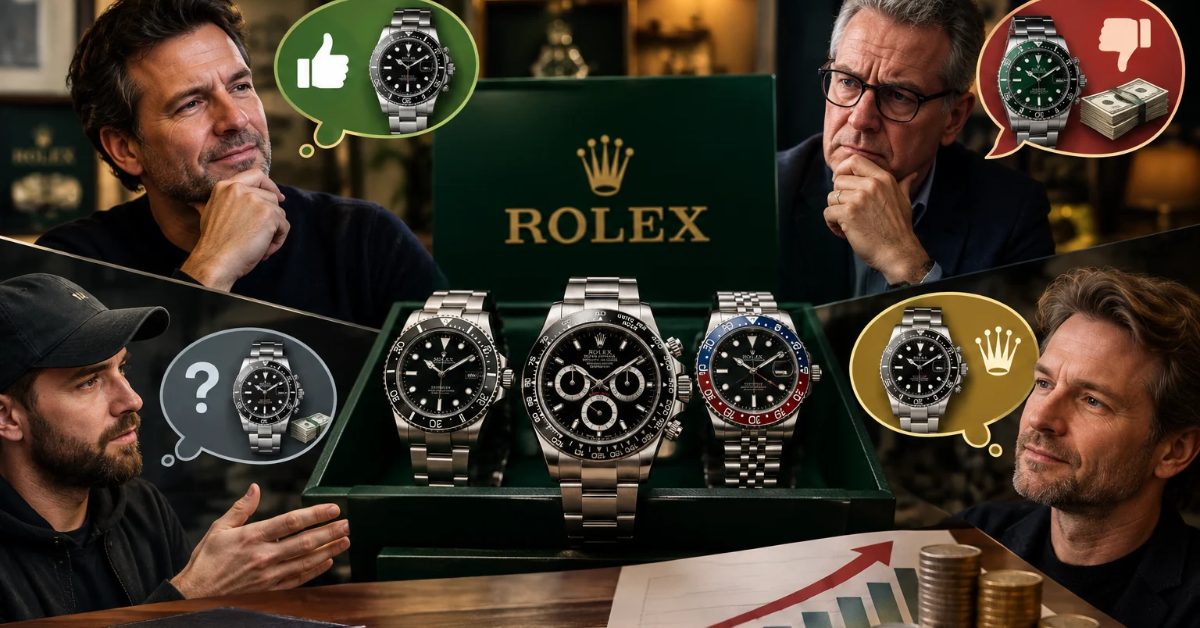
A note before we start: nobody has run a proper poll of Rolex collectors, and we didn't either. What follows is a read of what people are saying in public, from forum threads to dealer analysis, checked against what resale prices actually did. Most of the loudest commentary comes from retailers, who have watches to sell. That doesn't make it wrong, but it's worth keeping in mind as you read.
What Actually Happened
Rolex increased US retail prices on January 1, 2026. Reported increases ranged from about 4% to 9%, averaging around 7%, with gold models taking the biggest jumps. The numbers that people keep quoting:
- The no-date Submariner 124060 went from about $9,500 to $10,050, which is the first time it crossed $10,000 at retail.
- A steel GMT-Master II moved from about $11,300 to $12,000.
- The yellow gold Day-Date 40 went from $44,200 to $48,000.
This wasn't a surprise. Rolex raises prices every year, and it adjusted prices more than once in 2026 alone, a pattern we covered in our look at how Rolex prices have changed over the decades. Dealers also point to higher gold prices and tariff costs on Swiss imports as part of the picture.
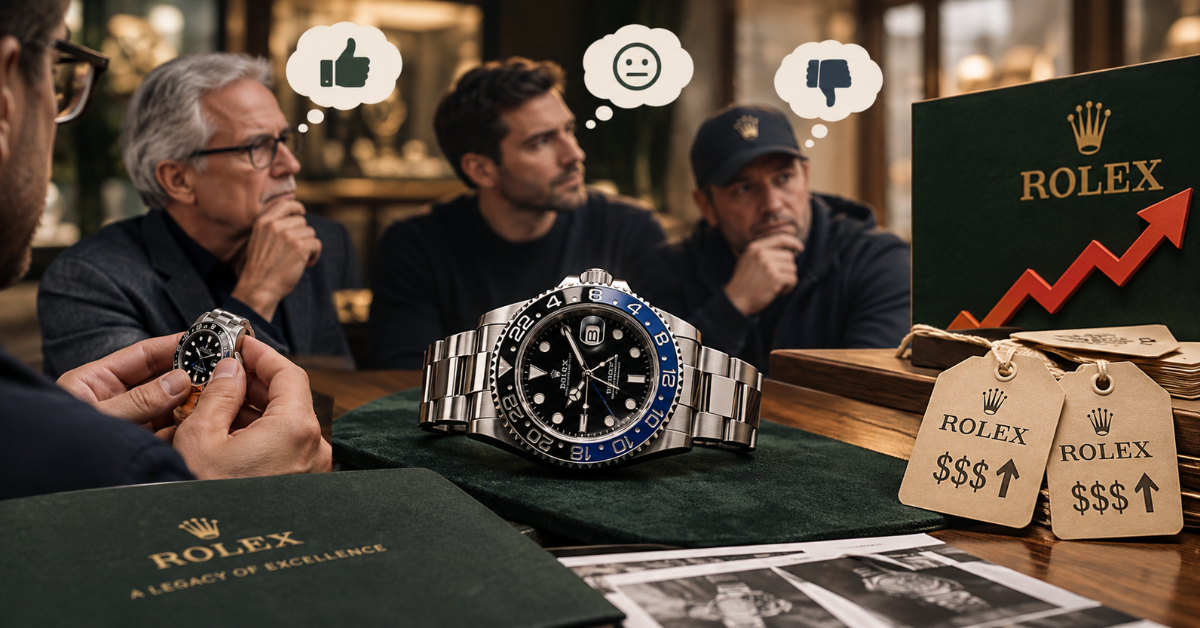
Camp One: "It Raises the Floor"
Owners tend to read a price increase as good news, and the argument is easy to follow. When a new watch costs more, the cheapest way to own that watch is a used one, and the price a used one can fetch goes up with it. One dealer's example: someone who paid about $13,000 for a steel Daytona in 2016 has watched the retail price climb underneath a watch that now sells for well above what they paid.
Dealers also like to say that each retail increase resets the secondary market floor. It's a tidy theory, and it holds up better for scarce watches than for easy ones.
Camp Two: "I'm Priced Out, So I'll Buy Used"
For buyers, the same hike has the opposite effect. If a new Submariner is $10,050, a pre-owned one at $11,000 to $12,000 starts to look like a smaller premium for skipping the waitlist. The retail price moved, the used price didn't, and the gap narrowed.
A January 2026 thread on a long-running Rolex forum shows the split nicely. Some posters argued higher retail would send buyers toward the pre-owned market and hold used prices down. Others argued the opposite: that people priced out of retail would pile into the gray market and push used prices up. A third group said secondary prices usually adjust to a hike, but with a lag of a few months. Nobody in the thread could settle it, which is the point.
If you're buying used because of price, read our guide to seven signs a Rolex might be a fake first. A bigger gap between retail and used prices makes a convincing fake more tempting to buy.
Camp Three: "This Is Partly About Perception"
The skeptics' argument is subtler. Their claim is that Rolex prices retail upward partly to keep the premium on the secondary market from looking embarrassing. A watch retailing at $13,000 and selling for $38,000 shows a premium of about 190%. Raise retail to $16,550 and the same $38,000 looks like a 130% premium, even though nothing about the market changed.
That's a theory, and it comes from a dealer's analysis, not from Rolex. But it explains why a hike can feel irritating to people who can't get a watch at retail anyway. If you can't buy at the list price, the list price is mostly a signal, and the signal keeps going up.
What the Data Says
Here's where opinion meets evidence, and the evidence is mixed.
Evidence the hikes didn't lift resale prices: One dealer analysis of 2026 data found that for every 1% increase in retail, secondary values on popular steel models fell by 0.3% to 0.5%. In Singapore, retail rose 7% while steel sports watches softened by 2% to 3% against late 2025. That's one analysis from one retailer, so treat it as a data point, not a verdict.
Evidence the market is healthy: The WatchCharts index showed the overall Rolex market up 7.9% year over year as of March 2026. Commentary around that figure describes demand as more organic than the speculative peak of 2022, with people buying watches they intend to wear.
Where the gap is widest: Gold. The green-dial yellow gold Day-Date trades between roughly $60,000 and $68,000, well above even the new $48,000 retail price. That shows how unevenly the market moves. Our look at the Pepsi's discontinuation shows another case where one model took off while the market around it behaved differently.
The honest reading is that retail hikes and resale prices are linked loosely and unevenly. Nobody who tells you a price increase automatically lifts your watch's value is describing what's happened this year.
Who Feels It Most
The people who feel price increases most are the ones at the bottom of the range. When the most affordable Rolex costs over $6,000, as covered in our Oyster Perpetual guide, a 7% increase is a few hundred dollars of difference on a first purchase. For some buyers, that nudge is exactly what sends them to look at alternatives. Our comparison of Rolex and Tudor's Black Bay covers the main one.
Waiting also has a cost. Even if you're happy with the price, availability is its own issue, which we cover in the Rolex waiting list guide.
How to Read the Next One
When the next increase lands, a few habits will keep you out of trouble:
- Check who is talking. Dealers benefit when you believe prices only go up, and they also benefit when you believe used is the smart move. Compare more than one source.
- Look at your reference, not Rolex as a whole. A Submariner, a Day-Date and a Datejust behave very differently.
- Watch the used market for a few months, not days. Forum members note that secondary prices typically take time to react.
- Buy to wear. Our Submariner pricing guide shows the range of outcomes, and none of them are guaranteed.
FAQ
How much did Rolex raise prices in 2026? US retail prices rose on January 1, 2026 by roughly 4% to 9%, averaging about 7%, with gold models rising more than steel.
Do Rolex price increases raise resale values? Not reliably. One dealer analysis found steel sports models softening slightly after the hikes, while an index of the overall market was still up year over year.
Why does Rolex raise prices every year? Rolex doesn't explain it. Dealers point to rising gold prices, tariffs, and a desire to keep retail prices meaningful when the secondary market sells for far more.
Is it smarter to buy new or pre-owned after a price increase? It depends on the reference. A hike can narrow the gap between new and used, so compare both for your specific watch.
Did collectors actually react negatively? Opinion is split. Owners tend to welcome increases, buyers who are priced out are more frustrated, and some commentators see the hikes as managing perception more than reflecting costs.
Conclusion
Collectors disagree about Rolex's price increases because they sit in different places: owners, waiting buyers, and people who gave up on the dealer and went used. All three have a point, and none of them can promise what happens next. The sensible response is the dull one. Check the price of the exact watch you want, new and used, and buy it because you'll enjoy wearing it.
Senior Writer
James Whitfield
Senior watch writer with a decade covering Swiss horology, vintage markets and modern releases.