On this page
The Rolex Oyster Perpetual is the brand's purest current model—a time-only watch with no date window or complications, built on the same Oystersteel construction and self-winding rotor technology found across Rolex's entire catalog. It's also the most accessible current Rolex, with the smallest 28mm size starting around $6,200. Sizes range from 28mm to 41mm, all running Superlative Chronometer-certified movements delivering a 70-hour power reserve. 2026 marks the Oyster case's 100th anniversary, and for the first time in the collection's history, the Oyster Perpetual is now available in gold and two-tone configurations alongside its traditional steel-only lineup.
The Oyster Perpetual gets overlooked constantly in favor of Rolex's more complicated, more famous references, which is exactly backward given what it actually represents: the foundational design every other current Rolex builds on. This covers what it actually is, what it costs, and how it fits into the rest of the catalog.
Where the Name Actually Comes From
The name describes two separate inventions, decades apart, that together define every Rolex made since. "Oyster" refers to the waterproof case Rolex patented in 1926 — the first of its kind, and the foundation of every current Rolex case construction. "Perpetual" refers to the self-winding rotor mechanism Rolex patented five years later, in 1931, which winds the mainspring using the natural motion of the wearer's wrist rather than requiring manual winding. Our Rolex Perpetual Calibre explainer covers how that rotor technology actually works and how it's evolved since 1931 — the Oyster Perpetual represents that technology in its most direct, unadorned form.
What It Actually Is
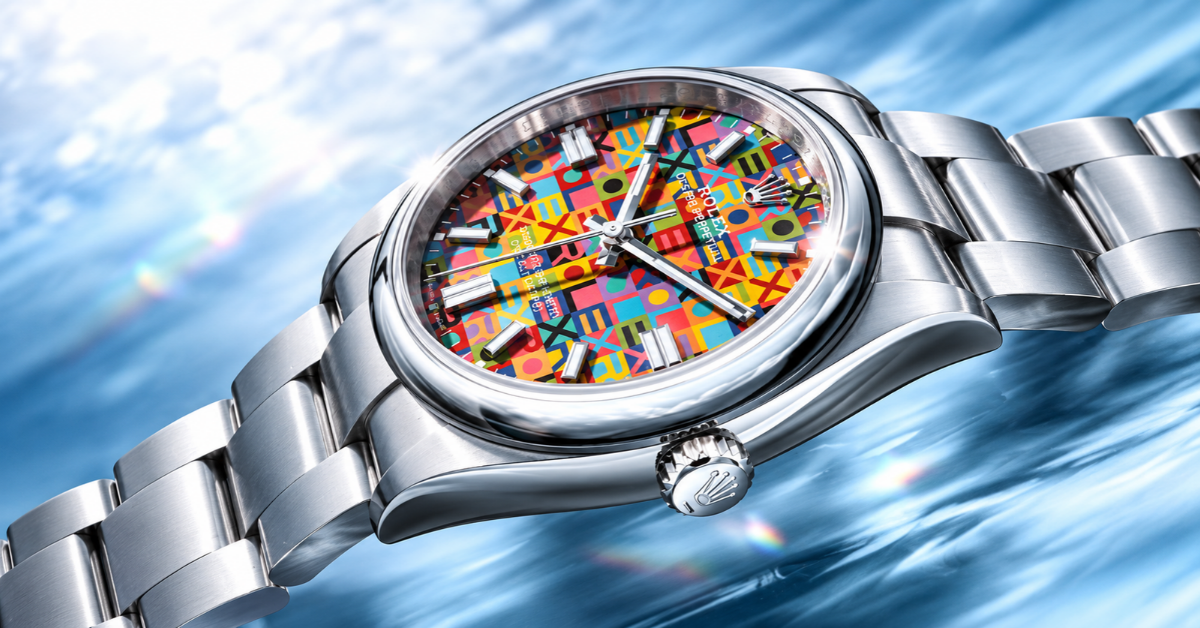
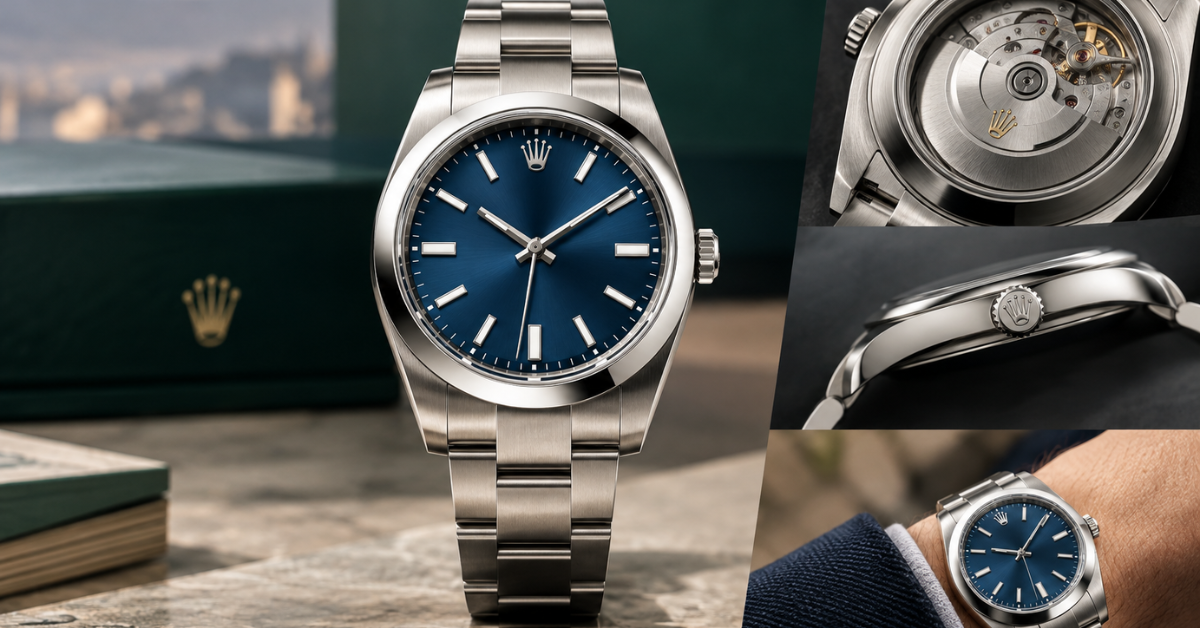
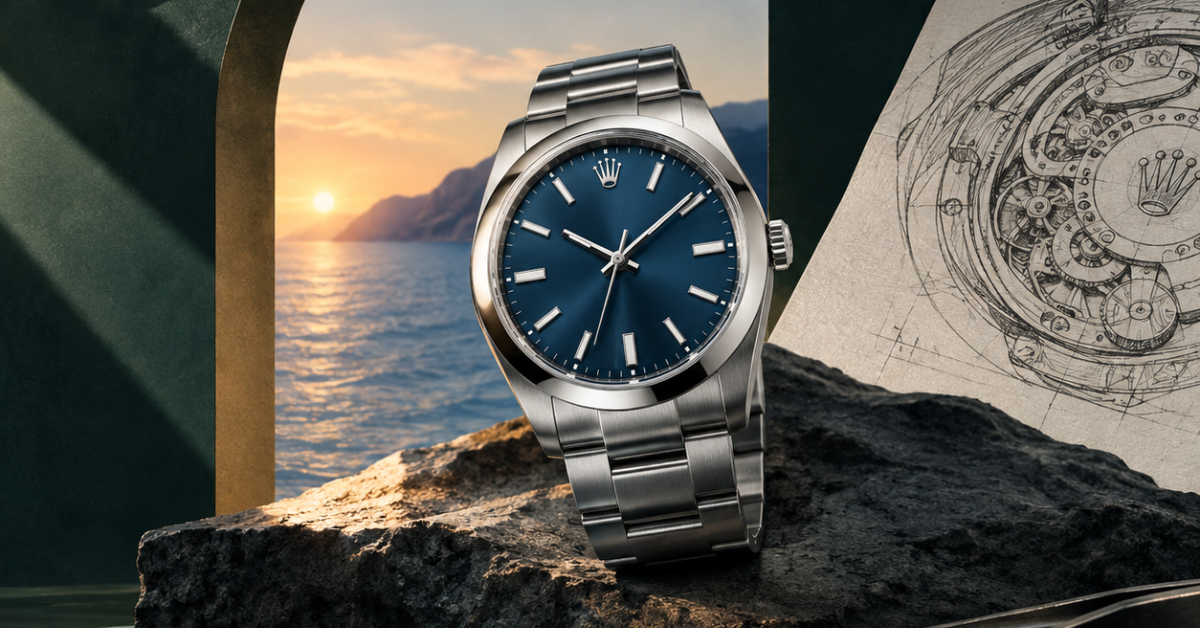
Strip away every complication Rolex offers elsewhere in its catalog, and the Oyster Perpetual is what remains: hours, minutes, and seconds, with no date window, no bezel function, no additional display of any kind. That simplicity is deliberate, not a limitation — it's the collection built to showcase Rolex's core case and movement engineering without anything else competing for attention on the dial. Current dial options include a genuinely wide color range, including new "candy" pastel colors introduced for the Oyster case's 2026 centennial, alongside the more traditional black, blue, and silver options that have anchored the line for decades.
Sizes and Pricing
The Oyster Perpetual spans the widest size range of any current Rolex collection: 28mm, 31mm, 34mm, 36mm, and 41mm. Pricing scales modestly with size rather than jumping dramatically — the 28mm starts around $6,200, climbing to roughly $6,750 for the 36mm and a similar range for the 41mm. Our cheapest Rolex 2026 guide covers the full pricing ladder in more detail, along with how the Oyster Perpetual compares to the rest of Rolex's accessible entry points.
Movement
The smaller sizes — 28mm through 34mm — run Rolex's Calibre 2232, while the 36mm and 41mm run Calibre 3230, the same movement family found in current Submariner and Explorer references. Both deliver a 70-hour power reserve and full Superlative Chronometer certification, meaning every Oyster Perpetual meets the identical precision and durability standard as Rolex's far more expensive references. There's no engineering compromise here — the difference between an Oyster Perpetual and a Submariner is complication and case design, not movement quality.
2026: A Genuinely Significant Year for This Collection
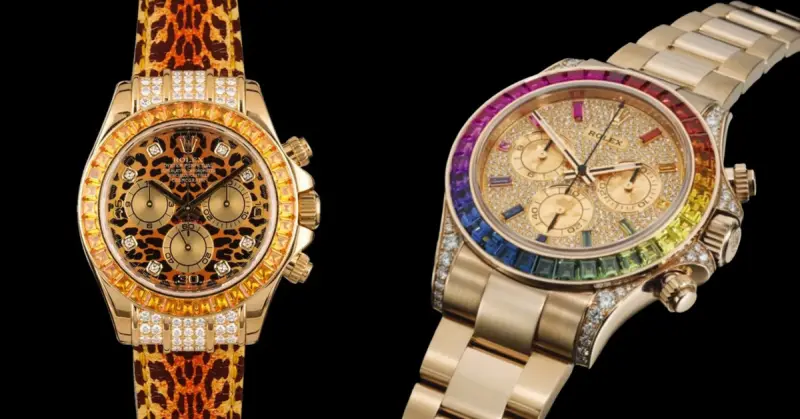
This year matters specifically for the Oyster Perpetual, and it's worth knowing before you buy. The Oyster case turns 100 in 2026, and Rolex marked the anniversary with the Oyster Perpetual's first-ever gold and two-tone Rolesor configurations—previously, the entire collection had been offered exclusively in steel throughout its history. Our Datejust vs Oyster Perpetual comparison covers this shift in more detail, since it meaningfully narrows what used to be one of the clearest differences between the two collections.
How It Compares to the Datejust
These two get confused constantly, and the actual difference is straightforward once you know it: the Datejust adds a date window with Rolex's signature Cyclops magnifying lens, plus fluted-bezel and Jubilee-bracelet options the Oyster Perpetual doesn't offer. The Oyster Perpetual stays purely time-only with a smooth bezel throughout. Beyond that, both currently share closely related movement technology, and, as of 2026, both offer precious-metal options for the first time in the Oyster Perpetual's case. The full comparison is worth reading if you're deciding between the two specifically.
Reading a Specific Reference Number
Current Oyster Perpetual references follow the same six-digit format used across Rolex's modern catalog — the 28mm, for instance, carries reference 276200. Our reference numbers decoded guide walks through how to interpret the digits and material codes on any current Rolex, useful for confirming exactly which configuration a specific watch represents.
Buying One
The Oyster Perpetual remains one of the more attainable current Rolex references, generally easier to secure at an authorized dealer than the brand's hyped steel sports watches. Our coverage of Rolex waitlists in 2026 covers how allocation currently works across the catalog — though it's worth noting that specific new configurations, including some of the 2026 candy-color dials, have generated real demand and shorter-term scarcity despite the collection's broader accessibility.
Buying With Confidence
Given how frequently entry-level Rolex references get counterfeited, buying from an authorized source removes any authentication risk. Our field guide to spotting a fake Rolex covers the checks worth running before any pre-owned purchase.
FAQ
What does "Oyster Perpetual" actually mean? "Oyster" refers to Rolex's 1926 waterproof case patent, and "Perpetual" refers to the 1931 self-winding rotor mechanism—together, the two foundational technologies underlying every current Rolex.
Is the Oyster Perpetual the cheapest Rolex? Yes—the 28mm reference 276200 is currently the least expensive watch in Rolex's catalog, starting around $6,200.
What's the difference between the Oyster Perpetual and the Datejust? The Datejust adds a date window with a Cyclops lens and offers fluted-bezel and Jubilee-bracelet options; the Oyster Perpetual stays purely time-only with a smooth bezel throughout.
Can you get an Oyster Perpetual in gold? As of 2026, yes — for the first time in the collection's history, Rolex introduced gold and two-tone Rolesor Oyster Perpetual configurations to mark the Oyster case's 100th anniversary.
Does the Oyster Perpetual use the same movement as Rolex's sports watches? The 36mm and 41mm versions run Calibre 3230, the same movement family found in current Submariner and Explorer references, delivering identical power reserve and chronometer certification.
Conclusion
The Oyster Perpetual isn't a stripped-down entry point into Rolex — it's the collection that shows exactly what the brand's core engineering looks like without anything else layered on top. Genuine Oystersteel construction, the same self-winding rotor technology patented in 1931, and full chronometer certification, all in the most accessible current Rolex you can buy. Understanding that is the real key to appreciating why it deserves more attention than it usually gets.
Senior Writer
James Whitfield
Senior watch writer with a decade covering Swiss horology, vintage markets and modern releases.