On this page
- The Night Rolex Broke Its Own Rules
- Rolex Four Seasons Daytona Results
- The Four Watches, Season by Season
- Spring: White Gold and Chrysoprase
- Summer: Everose and Turquoise
- Autumn: Yellow Gold and Mookaite
- Winter: Platinum and Blue Opal
- Why the Prices Went So High
- 1. Each One Is a True One-Off
- 2. It Was Rolex's First Charity Auction
- 3. Demand Was Already Overflowing
- 4. Charity Changes How People Bid
- 5. Federer, DiCaprio and Aurel Bacs
- 6. Colourful Gem-Set Rolex Is Hot
- Why Did Spring Sell for $4 Million Less?
- Where These Rank Among the Most Expensive Rolexes Ever
- Does This Change the Value of Your Daytona?
- What It Says About Rolex Right Now
- Frequently Asked Questions
- How much did the Rolex Four Seasons Daytonas sell for?
- Who received the money from the Rolex auction?
- What is the most expensive Rolex ever sold?
- Why was the Spring Daytona the cheapest?
- Can you still buy a Rolex Four Seasons Daytona?
- Will the auction raise regular Daytona prices?
- The Bottom Line
Four one-of-a-kind Rolex Cosmograph Daytonas, called "The Four Seasons," sold at Phillips in London on September 28, 2026 for a combined £37.3 million (about $49.4 million). It was Rolex's first-ever charity auction, with every penny going to the Federer Foundation and Leonardo DiCaprio's Re:wild. The watches sold for so much because each is a true one-off made by Rolex itself, with rare stone dials, gem-set bezels and a charity cause that brought out the world's top collectors.
The Night Rolex Broke Its Own Rules
Rolex doesn't do auctions. For decades, the brand has acted as if the secondary market barely exists. Its rare off-catalogue pieces usually go quietly from the factory to a hand-picked client, and you only find out when one turns up in a paparazzi photo.
So when four unique Rolex Daytonas went under the hammer in London, the watch world paid attention. And when the hammer came down on the last lot, the total stood at $49.4 million.
That's roughly ten times what Rolex reportedly expected. Here's what was sold, what each watch fetched, and the real reasons the numbers went so high.
Rolex Four Seasons Daytona Results
Phillips offered the watches as four separate lots. Because it was a charity sale, the buyer's premium was waived, so these hammer prices are the final prices:
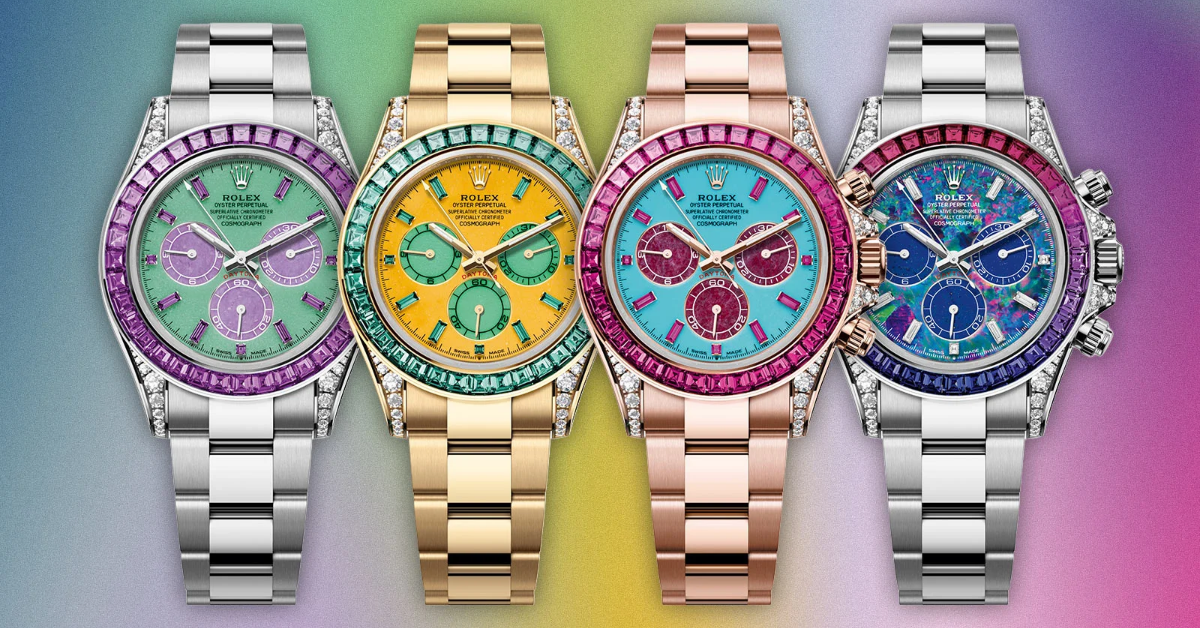
- Summer (ref. 126595 SARO, Everose gold): £10.3 million, about $13.66 million
- Autumn (ref. 126598 TML, yellow gold): £10.2 million, about $13.53 million
- Winter (ref. 126596 SABV, platinum): £10 million, about $13.26 million
- Spring (ref. 126599 SAVL, white gold): £6.8 million, about $9.02 million
That works out to an average of roughly $12.35 million per watch. The top three landed within £300,000 of each other, which tells you how evenly matched the bidding was. Spring is the clear outlier, and we'll get to why.
The Four Watches, Season by Season
All four share the familiar Daytona layout, the calibre 4131 automatic chronograph with a 72-hour power reserve, Superlative Chronometer certification and 54 brilliant-cut diamonds across the lugs and crown guards. What changes is everything you see.
Spring: White Gold and Chrysoprase
Spring pairs an 18k white gold case with an apple-green chrysoprase dial and purple lepidolite counters. Purple sapphires line the bezel and mark the hours. It's fresh, bright and the most unusual colour combination of the four.
Summer: Everose and Turquoise
The top seller. Summer uses an 18k Everose gold case, a turquoise dial and ruby counters, with pink sapphires on the bezel and hour markers. Warm, playful and very photogenic, it's easy to see why bidders fought hardest for this one.
Autumn: Yellow Gold and Mookaite
Autumn is set in 18k yellow gold, with a yellow-toned mookaite stone dial, chrysoprase counters and green tourmalines on the bezel and hour markers. The orange-and-green palette reads like falling leaves, and it finished just £100,000 behind Summer.
Winter: Platinum and Blue Opal
Winter is the cool one: 950 platinum, a blue opal dial with lapis lazuli counters and a bezel of sapphires that fades from blue to fuchsia. On paper it's the most "precious" of the four, yet it came third.
Why the Prices Went So High
A new gem-set Daytona from a Rolex dealer costs a lot, but nothing close to $13 million. So what pushed these four into eight figures? Several things stacked up at once.
1. Each One Is a True One-Off
These aren't limited editions of 100 or even 10. There is one Spring, one Summer, one Autumn and one Winter, made by Rolex itself and never to be repeated. For a collector who already owns every "rare" Daytona, that's the only kind of watch left to chase.
2. It Was Rolex's First Charity Auction
History has value. Owning a lot from Rolex's first-ever auction is a story no future buyer can match. Phillips called it the largest single consignment ever sold at a charity watch auction.
3. Demand Was Already Overflowing
Here's the detail that explains a lot. Rolex reportedly first planned to sell all four watches as a set for around CHF 4 million. But Rolex retailers nominated potential buyers, and the brand received more than 1,000 expressions of interest. With that much demand for four watches, an auction was the only fair way to sell them. The final total came to about CHF 41.15 million.
4. Charity Changes How People Bid
When the money goes to children's education and wildlife conservation, bidders push harder. Paying "too much" feels a lot better when it's funding a cause, and the waived buyer's premium meant every pound bid went straight to the charities.
5. Federer, DiCaprio and Aurel Bacs
The sale brought together two of Rolex's best-known ambassadors, Roger Federer and Leonardo DiCaprio, through Rolex's Perpetual Planet Initiative. And it was run by Aurel Bacs, the auctioneer behind the record-breaking Paul Newman Daytona sale. That combination draws a very particular, very wealthy room.
6. Colourful Gem-Set Rolex Is Hot
Gem-set and stone-dial Rolex pieces have been climbing for years. The original "Rainbow" Daytona sold for around $6.3 million at Phillips in 2024. The Four Seasons took that energy and, with Rolex's own name behind them, pushed it much further.
Why Did Spring Sell for $4 Million Less?
Nobody outside the room knows for sure, but a few reasons make sense. Spring's green-and-purple palette is the most unusual of the four, and colour taste narrows the pool of serious bidders. White gold also looks similar to steel from a distance, so it has less visual "wow" than Everose or yellow gold.
Even so, $9 million for a modern Rolex is extraordinary. Calling it the "cheap" one is a joke only this auction could produce.
Where These Rank Among the Most Expensive Rolexes Ever
The Four Seasons didn't beat the all-time record, but they rewrote the list below it. Based on reported results, here's how they stack up:
- Paul Newman's Daytona (ref. 6239): $17.75 million, Phillips New York, 2017
- Four Seasons "Summer": about $13.66 million
- Four Seasons "Autumn": about $13.53 million
- Four Seasons "Winter": about $13.26 million
- Four Seasons "Spring": about $9.02 million
The difference matters. Paul Newman's watch was valuable because of who wore it. The Four Seasons are valuable because of what Rolex made. That's a new kind of record for the brand.
Does This Change the Value of Your Daytona?
Probably not, if you own a regular steel or gold Daytona. These were one-off watches, sold in Rolex's first auction, with the money going to charity. None of that applies to a catalogue Daytona at your local dealer, and most market watchers don't expect everyday Daytona prices to move because of this sale.
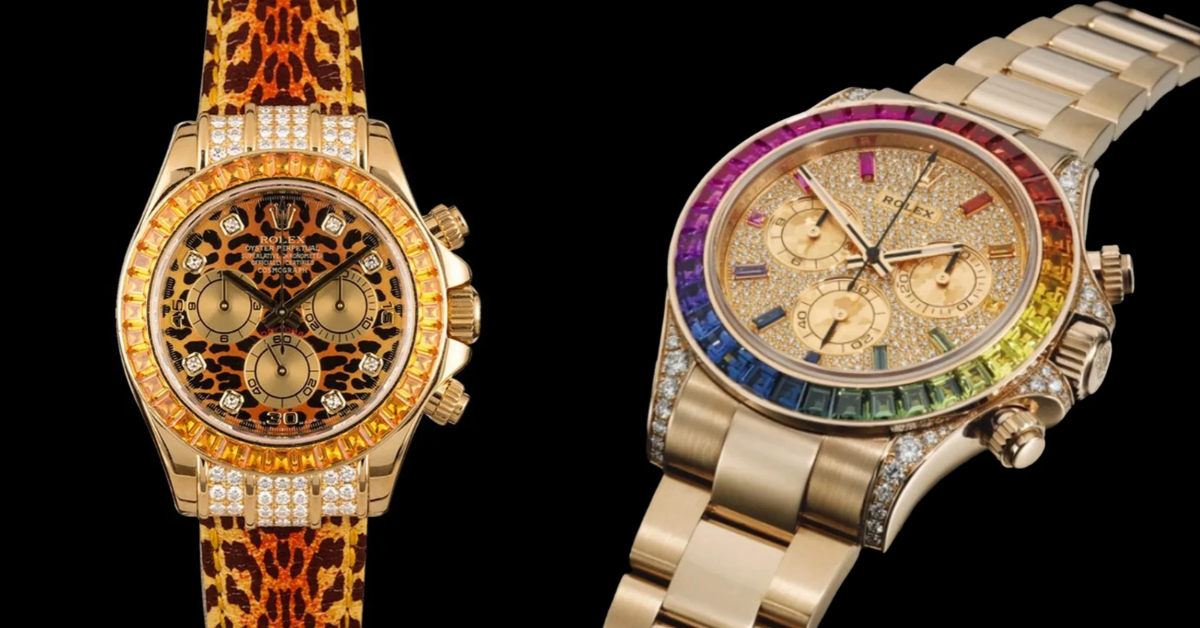
Where it could matter is at the very top. Owners of factory gem-set Daytonas, like the Rainbow or Leopard, and older hard-stone-dial pieces may see more attention at auction. And Rolex now has clear proof of what its best clients will pay for something unique, so don't be surprised if more one-offs appear.
If you're shopping for a Daytona yourself, the bigger issue is still fakes. Here are 5 ways to spot a fake Rolex Daytona before you buy. And if you're still choosing a model, our Daytona vs Yacht-Master comparison covers how the Daytona fits everyday life.
What It Says About Rolex Right Now
For a brand that rarely says anything in public, this auction said a lot. Rolex can create demand at almost any level, and buyers will follow. It's the same pull that keeps retail prices rising and waiting lists long.
If you want the bigger picture, see how much Rolex prices have gone up over the years, what collectors think of the latest price increases, and whether the Rolex waiting list is still a thing.
Frequently Asked Questions
How much did the Rolex Four Seasons Daytonas sell for?
The four Rolex Four Seasons Daytonas sold for a combined £37.3 million, about $49.4 million, at Phillips in London on September 28, 2026. Summer fetched about $13.66 million, Autumn $13.53 million, Winter $13.26 million and Spring $9.02 million.
Who received the money from the Rolex auction?
All proceeds went to two charities: the Roger Federer Foundation, which supports children's education, and Re:wild, the conservation group co-founded by Leonardo DiCaprio. The sale was part of Rolex's Perpetual Planet Initiative, and the buyer's premium was waived.
What is the most expensive Rolex ever sold?
The most expensive Rolex ever sold at auction is still Paul Newman's own Daytona ref. 6239, which sold for $17.75 million at Phillips in 2017. The Four Seasons Daytonas are now the next four most expensive Rolexes sold at auction.
Why was the Spring Daytona the cheapest?
Spring sold for about $9.02 million, roughly $4 million less than the others. Its unusual green-and-purple colours and white gold case likely appealed to fewer bidders than the warmer Summer and Autumn designs.
Can you still buy a Rolex Four Seasons Daytona?
No. Each Four Seasons Daytona is a unique piece, and all four were sold at the Phillips auction. Rolex has not announced any plans to make more.
Will the auction raise regular Daytona prices?
It's unlikely to affect regular catalogue Daytonas, because the Four Seasons were one-off charity pieces. It may, however, boost interest in rare factory gem-set Daytonas and stone-dial models at the top of the market.
The Bottom Line
The Four Seasons sold for $49.4 million because they were the rarest thing Rolex can make: watches that exist once, sold once, for a cause bidders believed in. For one night in London, the most secretive brand in watches let the market name its price. And the market answered loudly.
Senior Writer
James Whitfield
Senior watch writer with a decade covering Swiss horology, vintage markets and modern releases.