On this page
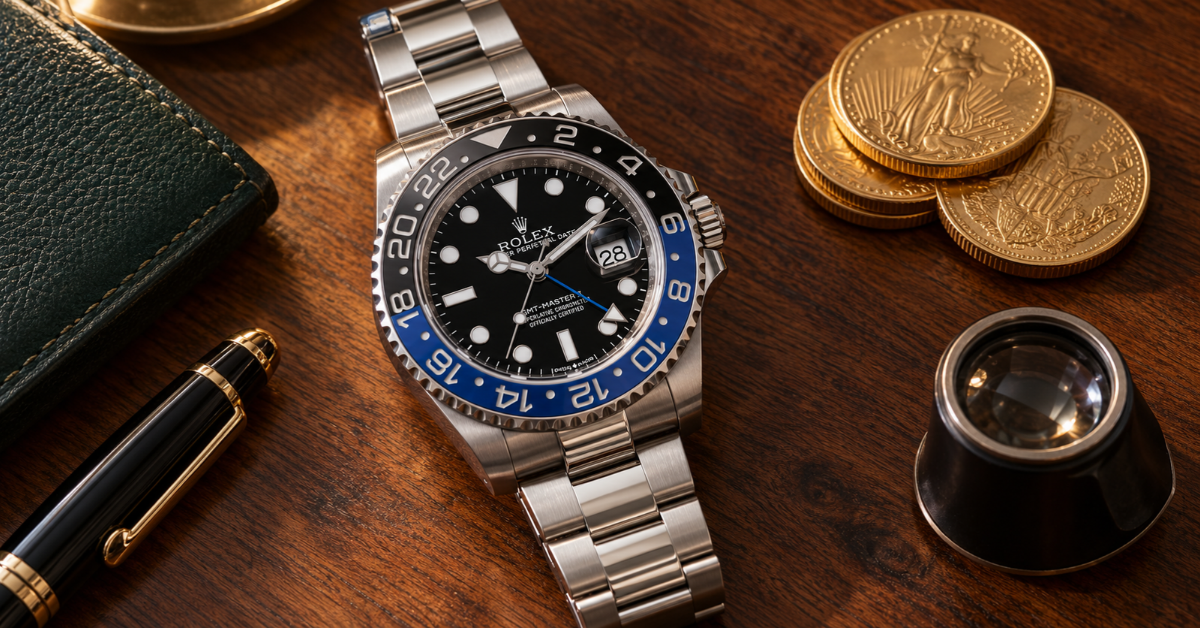
Ask most people how much a Rolex has gone up over the decades and they'll guess "a lot," which undersells it considerably. The actual trajectory is one of the more revealing stories in watchmaking — not a steady climb, but two sharp inflection points separated by long stretches of relative calm. Here's what the numbers actually show, using the Submariner as the best-documented case study across Rolex's history.
The Starting Point: Genuinely Affordable
In the late 1950s, the earliest Submariner references sold for roughly $150. By 1967, a steel no-date Submariner ran about $225. These weren't positioned as luxury items at all — they were professional tools, priced accordingly, built for divers who needed a reliable instrument rather than collectors chasing status. Even into the early 1970s, pricing stayed remarkably restrained: a steel Submariner with date ran around $230, and even the solid 18-karat gold version sold for roughly $2,000 to $3,450 depending on the exact year.
Part of the reason prices stayed modest through this stretch was the quartz crisis, which devastated the Swiss mechanical watch industry through the 1970s as cheap, highly accurate quartz watches from Japan undercut traditional manufacturers. Rolex wasn't raising prices aggressively during a period when the entire category of mechanical watchmaking was fighting for relevance.
The 1980s: Where Everything Changed
This is the real inflection point, and it's worth understanding why it happened rather than just citing the numbers. As the Swiss watch industry recovered from the quartz crisis, it did so by repositioning mechanical watches entirely — no longer tools competing on accuracy, but luxury objects competing on status, craftsmanship, and heritage. Rolex led that repositioning as effectively as any brand in the industry.
The numbers reflect it starkly. The steel Submariner crossed the $1,000 mark by the mid-1980s, reaching roughly $1,325 to $1,375. The 18-karat gold Submariner tells an even more dramatic story: from around $3,450 in 1974 to $10,850 by 1984 — more than tripling in a single decade. That wasn't inflation. Consumer prices roughly doubled over that same ten-year stretch; Rolex's gold Submariner more than tripled. This is the decade that taught the entire luxury watch industry what a Rolex could actually command once it stopped being sold as a diving instrument and started being sold as a diving instrument that also happened to be a status symbol.
The 1990s and 2000s: Steady, Compounding Growth
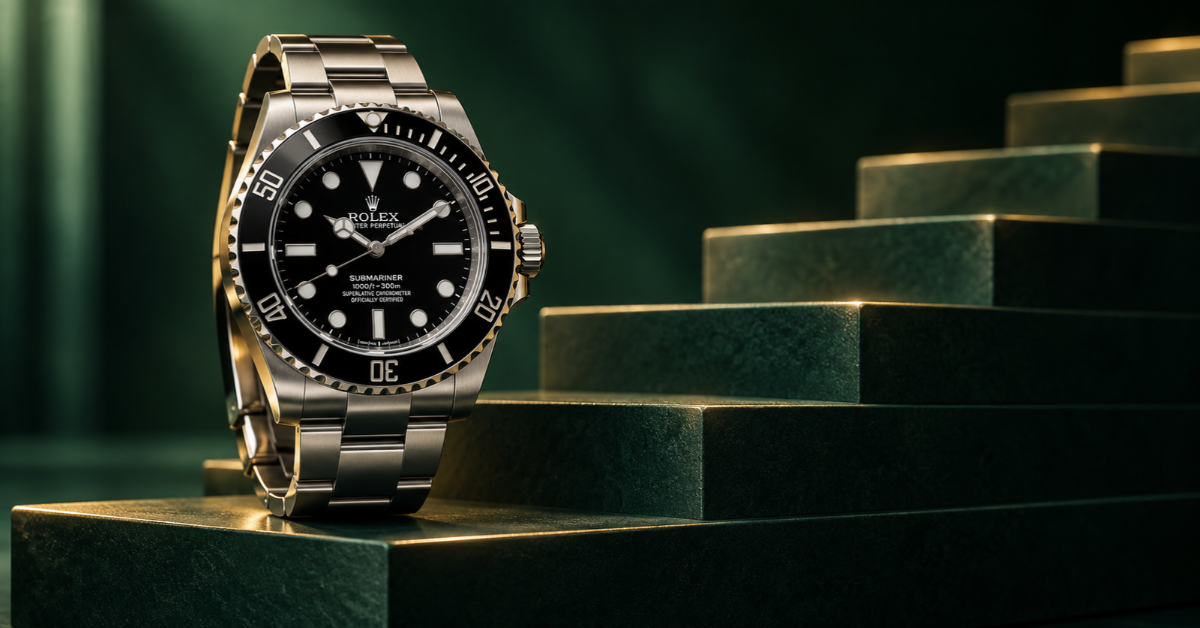
The acceleration continued, if less explosively. Steel Submariner pricing moved from around $2,000 in the early 1990s to roughly $3,350 to $3,800 by 1996, and up to approximately $6,000 by the mid-to-late 2000s. When Rolex introduced the ceramic-bezel references in 2008 — the 116610LN and 116610LV, the generation that brought the scratch-resistant Cerachrom bezel still used today — pricing moved to roughly $7,250 to $7,725.
Each of these increases tracked real engineering changes as much as market positioning: in-house movement development, the shift to 904L Oystersteel across the full catalog, and progressively tighter chronometer certification standards all added genuine manufacturing cost on top of brand positioning. Our Submariner pricing by reference guide covers exactly where current references sit today, both at retail and on the secondary market.
Today: Past $10,000, and Still Climbing
The current no-date Submariner starts around $10,050 — a genuinely significant figure against that $225 starting point in 1967. Run the full math and the increase comes out to roughly 44 times the original nominal price, while inflation alone over that same nearly six-decade span would only account for roughly a 9 to 10 times increase. Rolex pricing hasn't just kept pace with inflation. It's outpaced it by a factor of four or five.
The pace hasn't slowed recently, either. Our coverage of whether the GMT-Master II is worth it in 2026 notes that Rolex adjusted retail pricing more than once within 2026 alone — a pattern that's become increasingly normal rather than exceptional in recent years, reflecting both genuine cost pressures and the brand's continued ability to raise prices without denting demand.
Why the Increase So Dramatically Outpaced Inflation
A few forces compound together here, and it's worth naming them directly rather than treating the climb as simply inevitable.
Deliberate scarcity. Rolex produces fewer steel sports watches than market demand, a dynamic covered in detail in our Rolex waitlists guide. Sustained demand against constrained supply is a direct driver of pricing power that has little to do with manufacturing cost.
Genuine material and engineering upgrades. The shift to 904L Oystersteel, the development of in-house movements with tightened chronometer standards, and the move to scratch-resistant ceramic bezels all represent real cost increases layered on top of brand positioning, not purely arbitrary markup.
Brand positioning that's never reversed. Once the 1980s established Rolex as a luxury object rather than a tool, there was no going back — every subsequent pricing decision has built on that repositioning rather than challenging it.
What This Actually Means If You're Buying Today
None of this history should talk you into or out of buying a Rolex — it's context, not a verdict. If you're shopping the current catalog, our Oyster Perpetual guide covers where the most accessible current references sit, and our Rolex servicing costs guide covers the ongoing ownership costs worth budgeting for regardless of what you paid at purchase. Understanding how dramatically today's pricing diverges from Rolex's own tool-watch origins is simply useful context — a watch that cost $225 in 1967 wasn't a different product with a different name. It was the same idea, priced for a completely different era.
FAQ
How much did a Rolex Submariner originally cost? Roughly $150 in the late 1950s, rising to about $225 by 1967 for a steel no-date reference — genuinely modest pricing for what was then marketed as a professional diving tool.
When did Rolex prices start rising dramatically? The 1980s marked the real inflection point, when the Swiss watch industry repositioned mechanical watches as luxury status symbols following the 1970s quartz crisis, pushing gold Submariner pricing from roughly $3,450 to $10,850 within a single decade.
How does Rolex's price increase compare to general inflation? Far beyond it — a Submariner's roughly 44 times nominal price increase since 1967 dwarfs the roughly 9 to 10 times increase that inflation alone would account for over the same period.
Why do Rolex prices keep increasing even today? A combination of deliberate production scarcity, genuine material and movement upgrades, and sustained global demand that shows no sign of being dampened by regular price increases.
What does a steel Rolex Submariner cost today? Current no-date Submariner pricing starts around $10,050, with other references and materials running considerably higher.
Conclusion
The real story behind Rolex's price history isn't a steady climb — it's a tool watch that got deliberately and permanently repositioned as a luxury object in the 1980s, then kept climbing well past inflation ever since through a combination of genuine engineering investment and carefully managed scarcity. A $225 watch becoming a $10,050 watch over roughly six decades isn't really about the passage of time. It's about a specific, identifiable decision the entire Swiss watch industry made about what these watches were actually for — and Rolex has never looked back.
Senior Writer
James Whitfield
Senior watch writer with a decade covering Swiss horology, vintage markets and modern releases.