On this page
A complete Rolex service at an official Rolex Service Center generally runs $800 to $1,600, depending on the model. Simple three-hand watches like the Oyster Perpetual, Datejust, and Explorer sit near the $800 floor, while the Cosmograph Daytona and Sky-Dweller — Rolex's more mechanically complex current references — run $1,000 to $1,600 due to their more intricate movements. Replacement parts, when needed, are quoted separately and can add several hundred dollars more. Total costs beyond $2,000 typically involve additional repairs, not routine servicing.
Rolex doesn't publish a single service price list, which leaves a lot of owners guessing until the estimate actually arrives. The real numbers are more consistent than the guessing suggests — service pricing tracks fairly predictably with movement complexity, and knowing that tier structure ahead of time takes most of the surprise out of it.
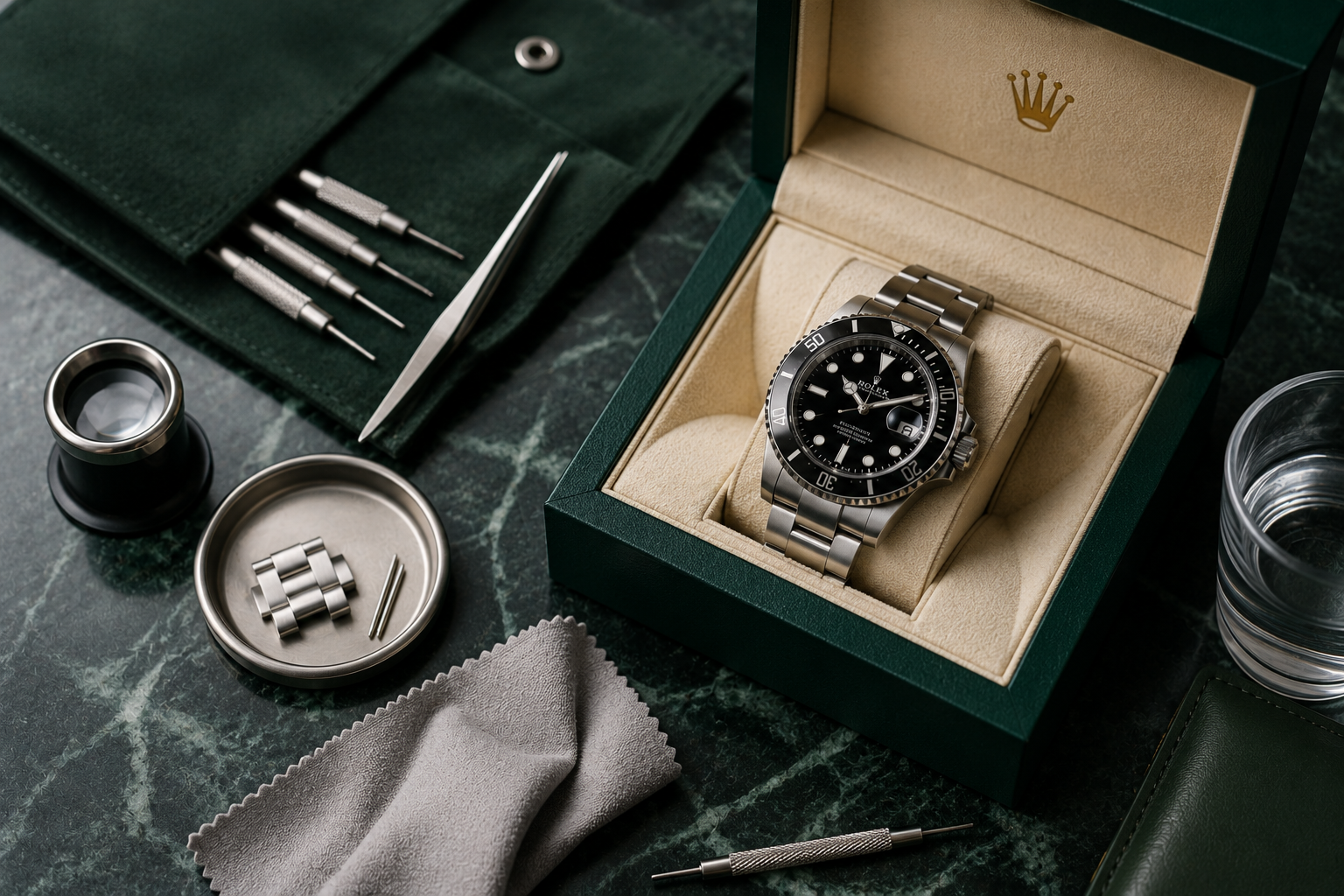
What a Complete Service Actually Costs, by Model
Pricing at official Rolex Service Centers generally breaks down like this:
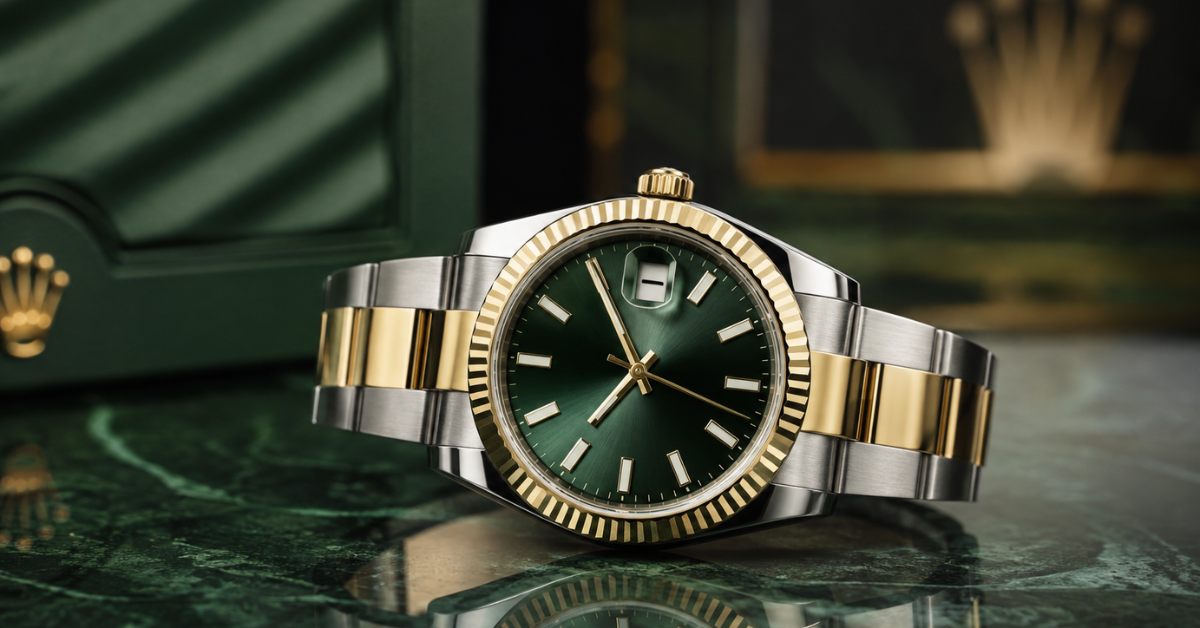
- Oyster Perpetual, Datejust, Explorer, Explorer II, Air-King — around $800. These are Rolex's simplest three-hand or three-hand-plus-date movements, requiring the least disassembly and labor.
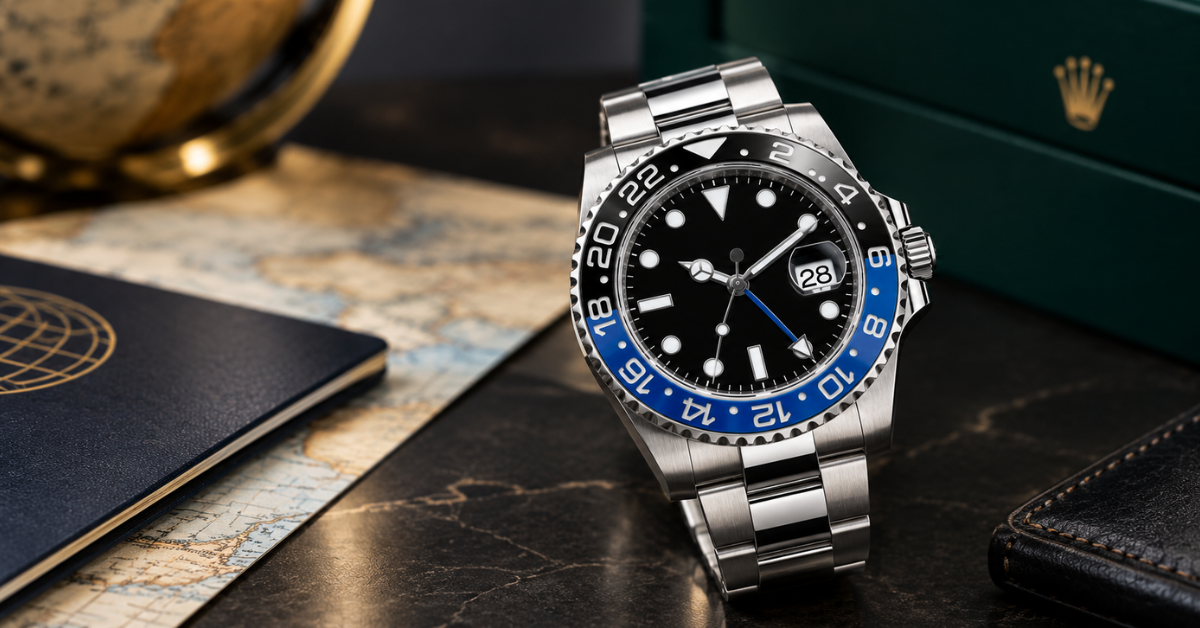
- Submariner, GMT-Master II, Yacht-Master, Sea-Dweller — roughly $800 to $950. Slightly higher than the simplest tier, largely due to more rigorous water-resistance testing and gasket work on dive-oriented references.
- Day-Date — around $900, reflecting the day complication and typically precious-metal case construction.
- Cosmograph Daytona — $1,000 to $1,600 depending on the source and specific reference. The chronograph movement, Caliber 4130, involves substantially more components than a time-only or time-and-date movement, which means more disassembly, cleaning, and reassembly labor.
- Sky-Dweller — $1,200 to $1,600, Rolex's most mechanically complex current production model, combining an annual calendar with a dual time zone function.
Total costs beyond this range — into the $2,000 to $2,800+ territory some owners report — typically reflect additional repairs on top of routine servicing, not the baseline overhaul itself: a damaged crystal, corrosion from a failed gasket, or parts that need replacing rather than just cleaning and re-lubricating.
Why Complexity Drives the Price So Directly
A Daytona's Caliber 4130 movement contains significantly more individual components than a Datejust's simpler time-and-date caliber — every one of which has to be disassembled, ultrasonically cleaned, inspected, lubricated, and precisely reassembled by hand. More parts means more skilled labor hours, and skilled labor is what a service bill is actually paying for. It's a genuinely proportional relationship, not an arbitrary markup on Rolex's more expensive models.
Water resistance testing adds its own layer of cost on dive-oriented references. A Submariner or Sea-Dweller requires full pressure testing and complete gasket replacement to restore its rated water resistance, work that a simple Datejust doesn't need to the same degree. If you want the deeper mechanical context for what's actually happening inside a Rolex movement during this process, our Rolex Perpetual Calibre explainer covers how the self-winding movement and chronometer certification actually work, which helps explain why a full overhaul is a genuine rebuild, not a quick cleaning.
What's Actually Included
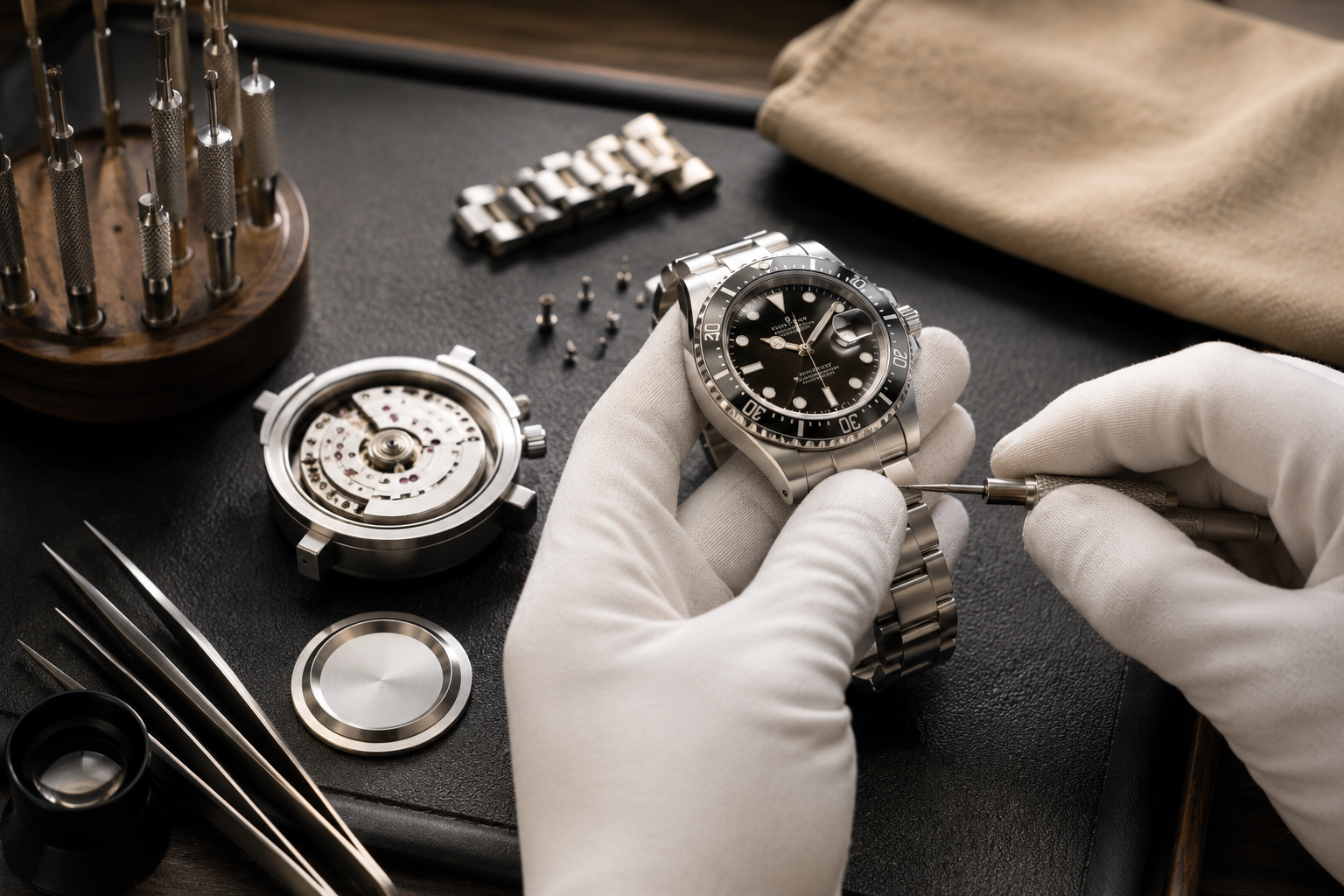
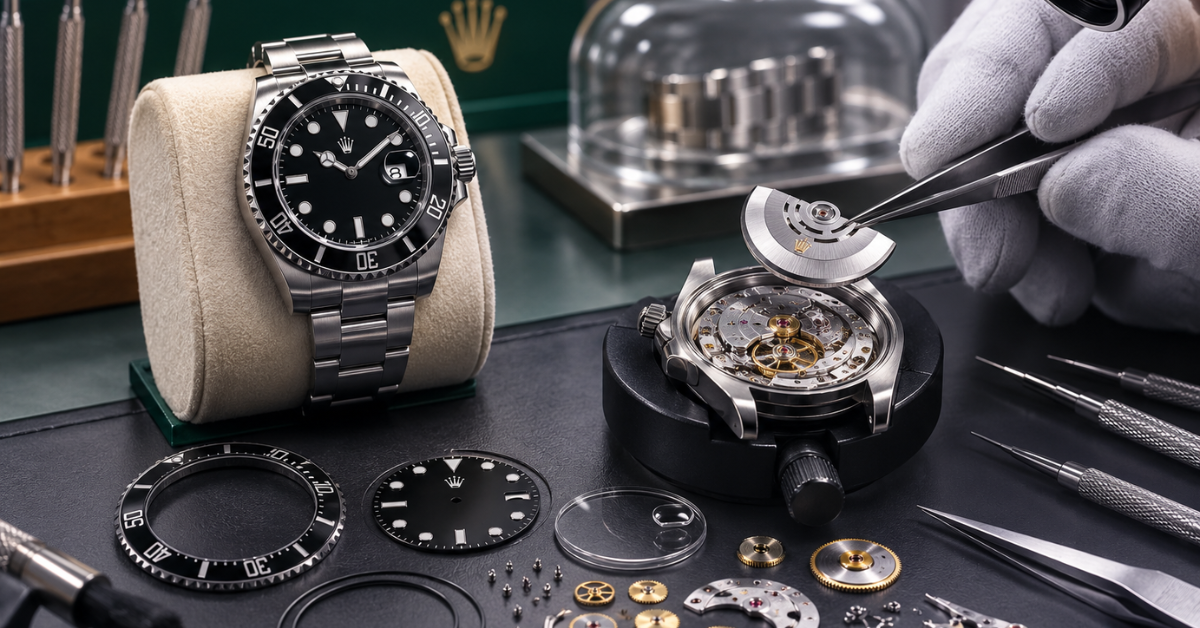
A complete service is a full overhaul, not a light check-up. The movement is entirely disassembled, every component ultrasonically cleaned to remove old lubricant and debris, inspected for wear, reassembled with fresh lubrication, and regulated for accuracy. The case goes through its own process — bezel, crystal, and pushers removed, gaskets replaced, and the case pressure-tested for water resistance before the watch is reassembled and given final timekeeping checks.
Replacement parts are quoted separately, after assessment, and always before work begins. Common parts like crowns, crystals, and gaskets typically run $50 to $300 each; rare components for older or discontinued references can run considerably higher, occasionally exceeding $1,000 for a single hard-to-source part.
One Worthwhile Caution: Polishing
Rolex's standard service includes refinishing the case and bracelet as part of the process — which makes a modern Datejust or Submariner look genuinely new again, and for most owners that's exactly the point. But if you own a reference with any collector interest, it's worth knowing that over-polishing gradually rounds off sharp lug edges and reduces the crispness that collectors specifically pay a premium for on well-preserved examples. If that matters to you, requesting no polishing is a standard option Rolex Service Centers will honor — worth asking about explicitly before the work begins, not after.
How Long a Service Actually Takes
A standard service typically runs 2 to 4 weeks from drop-off to return, whether through an authorized retailer or shipped directly to a service center. References needing a backordered part, or older watches requiring less common components, can take meaningfully longer. It's worth planning around being without the watch for at least a month rather than assuming a quick turnaround.
Rolex Service Centers vs. Independent Watchmakers
An official Rolex Service Center guarantees genuine parts and Rolex's own quality standards, generally at the pricing outlined above. Qualified independent watchmakers can sometimes offer more flexible pricing and faster turnaround, particularly for straightforward maintenance, but the trade-off is worth weighing carefully — independent service can affect certain warranty considerations, and not every independent shop has equal access to genuine parts for every reference. For a watch still under Rolex's own warranty, using an authorized channel is usually the more straightforward choice.
Is It Worth It? A Quick Value Check
Here's a detail worth factoring in that most servicing guides skip: on Rolex's more accessible references, a full service can represent a meaningful percentage of the watch's actual market value — commonly cited estimates put it around 13% to 18% for entry-level Oyster Perpetual and Datejust models specifically. That's not a reason to skip servicing — neglected gaskets and old lubricant genuinely risk real damage over time — but it's a legitimate factor to weigh when deciding between an authorized service center and a qualified independent, or when budgeting for ownership of a specific reference from the start. If you're researching a specific model before buying, our Rolex Explorer guide covers what to expect from that particular reference beyond just the purchase price.
FAQ
How much does a full Rolex service typically cost? Generally $800 to $1,600 at an official Rolex Service Center, depending on the model, with simple three-hand watches at the lower end and complex movements like the Daytona and Sky-Dweller at the higher end.
Why does servicing a Daytona cost more than a Datejust? The Daytona's chronograph movement contains significantly more components than a Datejust's simpler movement, requiring more disassembly, cleaning, and skilled labor to service properly.
Are replacement parts included in the service price? No — parts like crystals, crowns, and gaskets are assessed and quoted separately, always before work begins, typically running $50 to $300 each for common components.
Should I let Rolex polish my watch during service? For most modern references, standard polishing is fine and restores a like-new look. For collectible or well-preserved references, you can specifically request no polishing to preserve original case sharpness, which Rolex Service Centers will honor as a standard option.
How long does a Rolex service take? Typically 2 to 4 weeks from drop-off to return, though watches needing backordered or less common parts can take longer.
Conclusion
Rolex servicing costs aren't random — they scale predictably with how mechanically complex a given movement actually is, from roughly $800 for a simple three-hand Datejust to $1,600 for a Sky-Dweller's annual calendar. Knowing that tier structure ahead of time, along with the polishing question and realistic turnaround time, turns an intimidating unknown into a straightforward line item you can actually budget for.
Senior Writer
James Whitfield
Senior watch writer with a decade covering Swiss horology, vintage markets and modern releases.