On this page
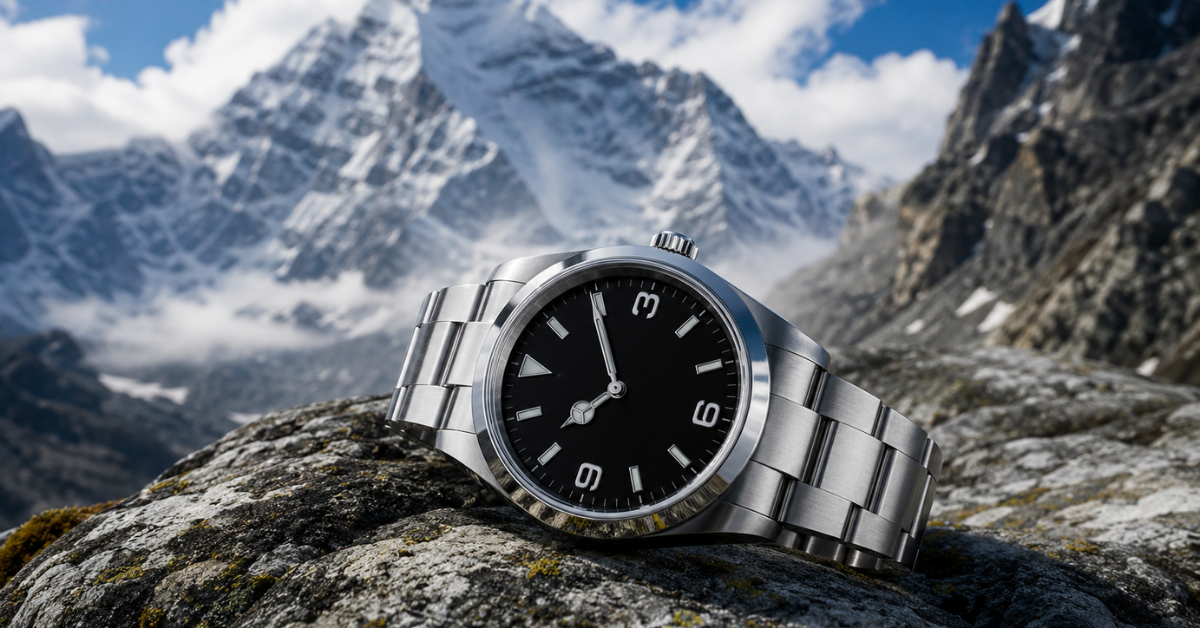
The Rolex Explorer was born from the 1953 British expedition that first summited Mount Everest, and it became Rolex's tribute watch to that achievement in 1953. It's defined by a black dial, 3-6-9 Arabic numerals for legibility in low light, and a design that has changed less than almost any other Rolex over 70 years. Today it comes in 36mm and 40mm cases with the caliber 3230 movement, and it's widely considered the brand's most understated, do-everything sports watch.
Most Rolex sports models get sold on a story about extreme conditions — deep-sea diving, cockpit instrumentation, motorsport timing. The Explorer's story is a little different, and honestly a little better, because it actually happened exactly the way the marketing says it did.
In May 1953, Edmund Hillary and Tenzing Norgay became the first people to reach the summit of Everest. Rolex watches were on the wrists of several expedition members, tested against cold that regularly dropped below -40°C. Later that same year, Rolex released a watch built specifically for that kind of environment. That watch became the Explorer. No embellishment needed — it's one of the few origin stories in watchmaking that doesn't require an asterisk.
If you're weighing the Explorer against Rolex's other sports references, our Rolex Submariner history and Cosmograph Daytona history cover the other two legs of that story.
What Actually Makes the Explorer's Design Work
The Explorer's dial hasn't changed all that much since the 1950s, and that's the point. Black dial, 3-6-9 Arabic numerals in white gold surrounds, minute markers between them. No date window on the standard model. No chronograph subdials. It's a watch built to be read at a glance in bad light, at altitude, with gloves on — and every design decision traces back to that.
Compare that to the Submariner, which added a rotating bezel for dive timing, or the Daytona, which exists almost entirely around its chronograph function. The Explorer skipped all of it. It's arguably the purest expression of "tool watch" in the entire Rolex catalog, which is a little ironic given how few people buying one today are actually summiting anything.
That restraint is also why it wears so well as a daily watch. There's nothing on the dial competing for attention, and nothing on the case that snags a cuff. It just tells the time, clearly, which is a surprisingly rare quality in a $7,000+ watch these days.
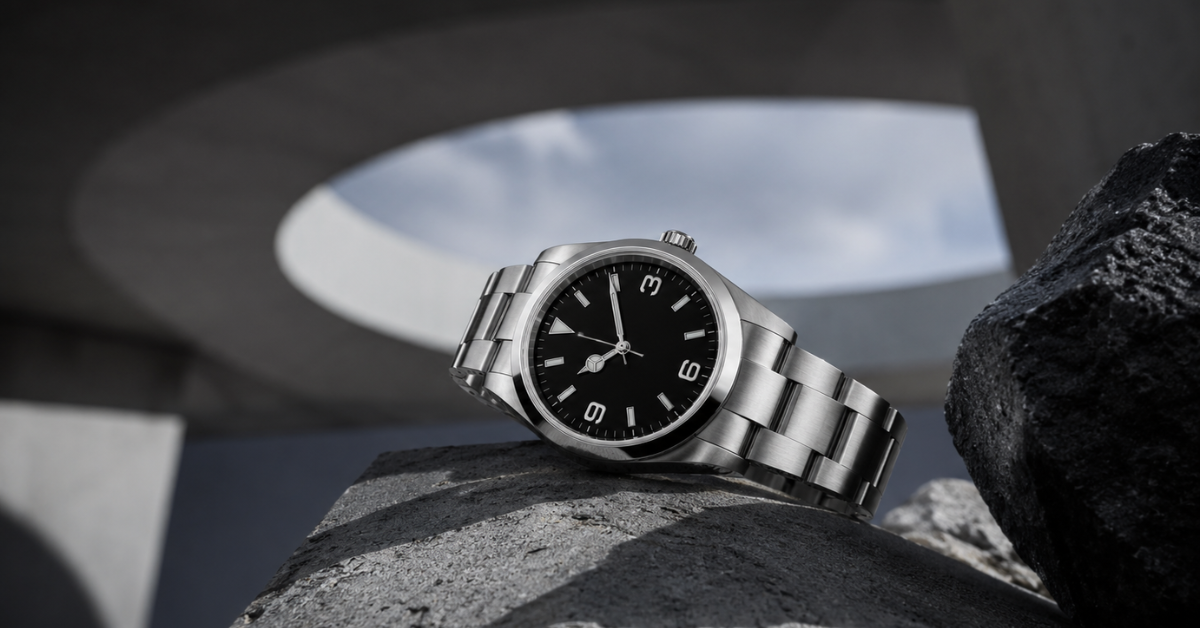
Case Sizes: 36mm vs. 40mm
Rolex has bounced around on Explorer sizing more than almost any other model in the line, and it's worth understanding before you buy.
The original 1953 Explorer came in at 36mm, and that size stuck for decades — it's still considered the "correct" historical size by a lot of collectors. In 2010, Rolex bumped the standard Explorer up to 39mm, which drew a mixed reaction. Then in 2021, for the watch's 70th anniversary, Rolex did something unusual: it brought back the 36mm alongside a new 40mm option, effectively letting the market decide.
That 2021 move matters for buyers now. The 36mm reads smaller and closer to the vintage proportions; the 40mm wears more like a modern sports watch and suits larger wrists better. Neither is objectively correct — it genuinely comes down to wrist size and whether you want the watch to feel vintage-inspired or contemporary.
The Movement: Caliber 3230
Current Explorer models run on Rolex's caliber 3230, a movement shared with the Submariner. It carries the Chronergy escapement, Rolex's own take on improving efficiency and shock resistance over the traditional Swiss lever escapement, along with a Parachrom hairspring that resists magnetic fields and temperature swings.
The result is a stated power reserve of around 70 hours — enough to sit unworn over a weekend and still be running (though not necessarily still accurate) when you pick it back up Monday. If you want the deeper mechanical explanation of how Chronergy actually works and why Rolex developed it, we cover that in detail here: What Is the Chronergy Escapement?
How the Explorer Compares to Rolex's Other Sports Watches
People cross-shopping the Explorer are usually looking at one of two other models, and the differences are worth being honest about.
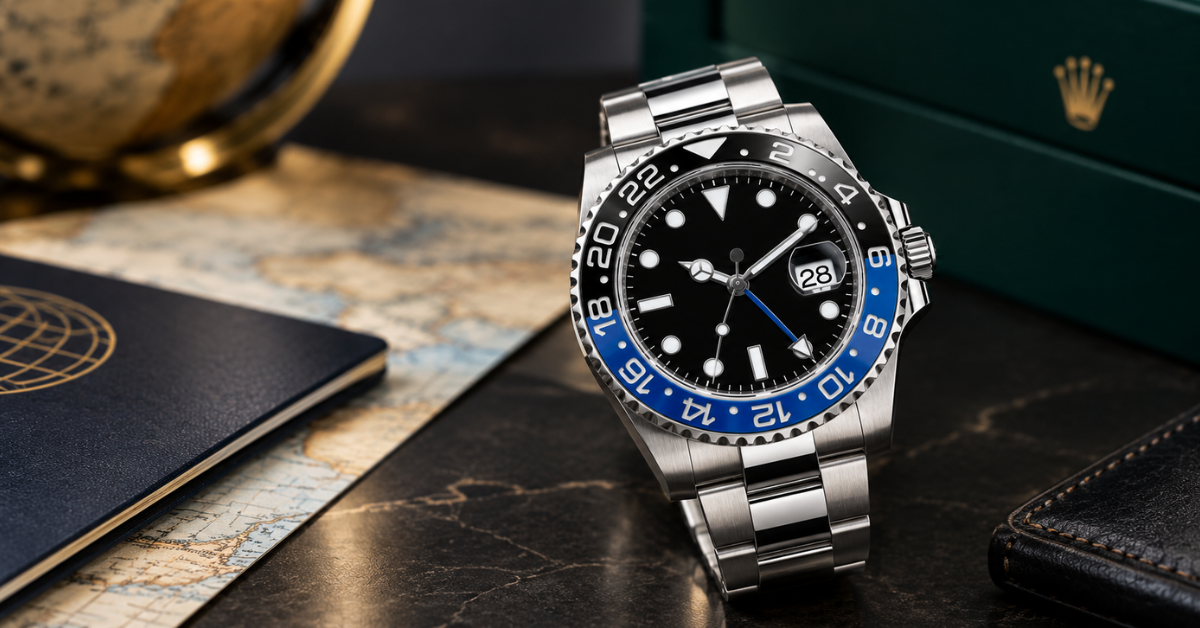
Against the Submariner, the Explorer gives up water resistance and the dive bezel but gains a slimmer, quieter profile that works better under a shirt cuff. Against the GMT-Master II, it gives up the second time zone function entirely — the Explorer has never had a GMT complication — in exchange for simplicity and, usually, a shorter wait at an authorized dealer.
For a full side-by-side on the Submariner specifically, our comparison piece breaks down Submariner vs. GMT-Master II in more depth than we can here, and it's a useful read if you're still deciding between Rolex's three-watch "everyday sports" tier.
Buying One: New vs. Pre-Owned
New Explorers sit at Rolex's more accessible end of the steel sports lineup, but "accessible" at Rolex still means a boutique waitlist in most markets — the Explorer isn't immune to the allocation problems affecting the Submariner and Daytona, even if it moves a bit faster than those two.
Pre-owned is where most buyers actually end up finding one without a years-long wait, and the Explorer's simple design makes it relatively easy to authenticate compared to more complicated references. Still, box, papers, service history and dealer reputation all matter just as much here as they do on any other Rolex. Our full walkthrough on navigating that process — authentication, documentation, and which dealers to trust — is here: How to Buy a Pre-Owned Rolex.
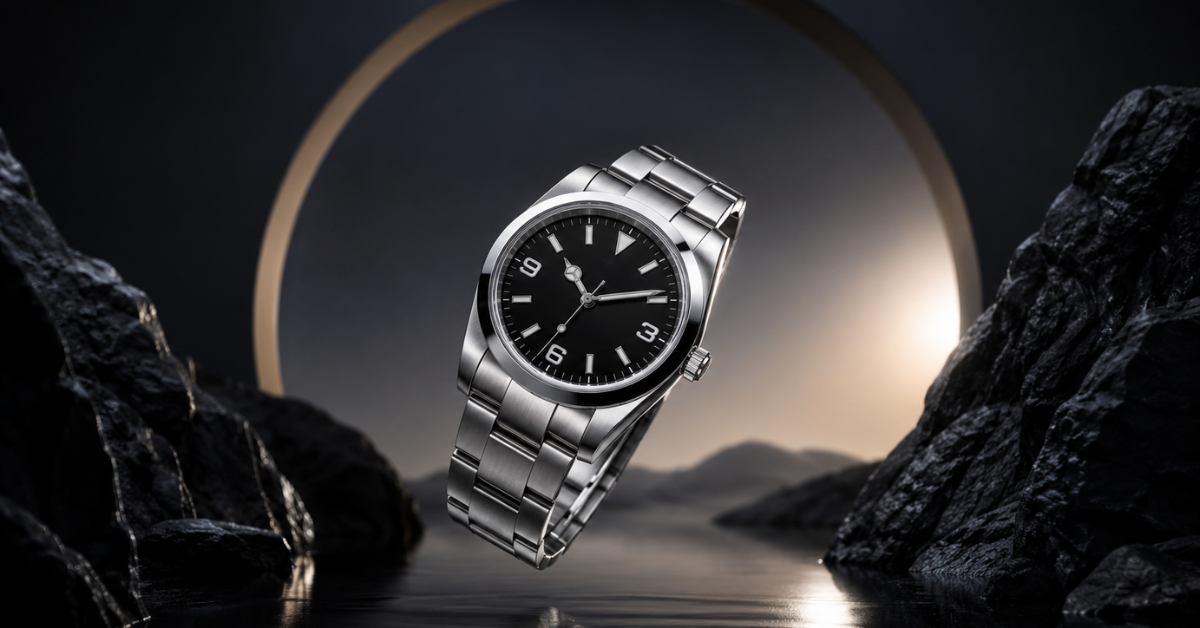
Is the Explorer the Right Rolex for You?
If you want one watch that works in a boardroom and on a hike, doesn't shout, and won't feel dated in twenty years, the Explorer is about as safe a choice as exists in the Rolex catalog. It's not the one that turns heads at dinner — that's the Daytona's job — and it's not the one built for actual diving. It's the one built for everything else, which for most people covers a lot more days of the year than either of those.
If you're still deciding between Rolex and another brand entirely, our Rolex vs Omega comparison is a good next read.
FAQ
Why is the Rolex Explorer connected to Everest? Rolex watches were worn by members of the 1953 British expedition that made the first confirmed summit of Everest, and the standard Explorer was released later that year as Rolex's response to that achievement and the extreme cold it tested against.
What's the difference between the 36mm and 40mm Explorer? The 36mm follows the watch's original historical proportions and suits smaller wrists or those who want a vintage feel; the 40mm, introduced in 2021, wears larger and more in line with modern Rolex sports watches.
Does the Rolex Explorer have a date window? No. The standard Explorer has always been a time-only watch with no date complication, which is part of what keeps its dial so clean and legible.
Is the Rolex Explorer a good daily watch? Yes — its simple dial, comfortable case sizes, and durable caliber 3230 movement make it one of the more practical Rolex sports models for everyday wear.
How much does a Rolex Explorer cost? New Explorer pricing sits toward the more accessible end of Rolex's steel sports lineup, though actual retail availability varies by market and boutique allocation.
Is the Explorer harder or easier to authenticate than other Rolex models? Its simpler design gives counterfeiters fewer details to get wrong compared to more complicated references, but buyers should still verify documentation and dealer reputation on any pre-owned purchase.
Conclusion
The Explorer doesn't need a bigger story than the one it already has. It went to Everest, it came back, and Rolex has spent seventy years mostly resisting the urge to mess with what worked. That kind of restraint is rare in this industry — and it's exactly why the Explorer still holds up next to watches with far louder résumés.
Editor-in-Chief
Editorial Team
The RolexWatches.blog editorial desk — independent watch journalism, reviews and buying advice.