On this page
- Why the Rolex 1500 Gets Overlooked (and Why That's Good for You)
- Rolex Date 1500 at a Glance
- What Makes the 1500 Special
- It's a Chronometer, and That Matters
- The Same Heart as a Datejust
- That Warm Vintage Look
- Is 34mm Too Small?
- Rolex 1500 vs Datejust 1601 vs Air-King 5500
- How Much Is a Rolex Date 1500 Worth?
- Dials Worth Knowing About
- What to Check Before Buying a Rolex 1500
- Living With a Rolex 1500
- Is the Rolex Date 1500 a Good Investment?
- Frequently Asked Questions
- How much is a Rolex 1500 worth today?
- What is the difference between the Rolex 1500 and the Datejust?
- Is the Rolex 1500 a chronometer?
- What years was the Rolex 1500 made?
- Is the Rolex 1500 too small for men?
- Does the Rolex 1500 have a quickset date?
- The Bottom Line
The Rolex Date 1500 is a 34mm vintage Rolex Oyster Perpetual Date made from the early 1960s into the late 1970s. It uses the same chronometer-certified automatic movement as the Datejust of its era, in a slightly smaller case, for less money. A steel Rolex 1500 typically sells for about $3,500 to $5,000 today, making it one of the most affordable genuine vintage Rolex watches you can buy.
Why the Rolex 1500 Gets Overlooked (and Why That's Good for You)
Ask most people to name a vintage Rolex and you'll hear Submariner, GMT-Master, maybe Daytona. Nobody says "the 1500." And that's exactly why the Rolex Date 1500 is such a smart buy.
It's the quieter sibling of the Datejust. Same movement, same Oyster case design, same Cyclops date. It's just 2mm smaller, so collectors chasing the "proper" 36mm Datejust tend to walk right past it.
The result? You can get a real, chronometer-certified, sixty-year-old Rolex for roughly what a new Tudor costs. If you've been wondering where to start with vintage Rolex, this is the answer we'd give most people. Here's why, and what to look for before you buy one.
Rolex Date 1500 at a Glance
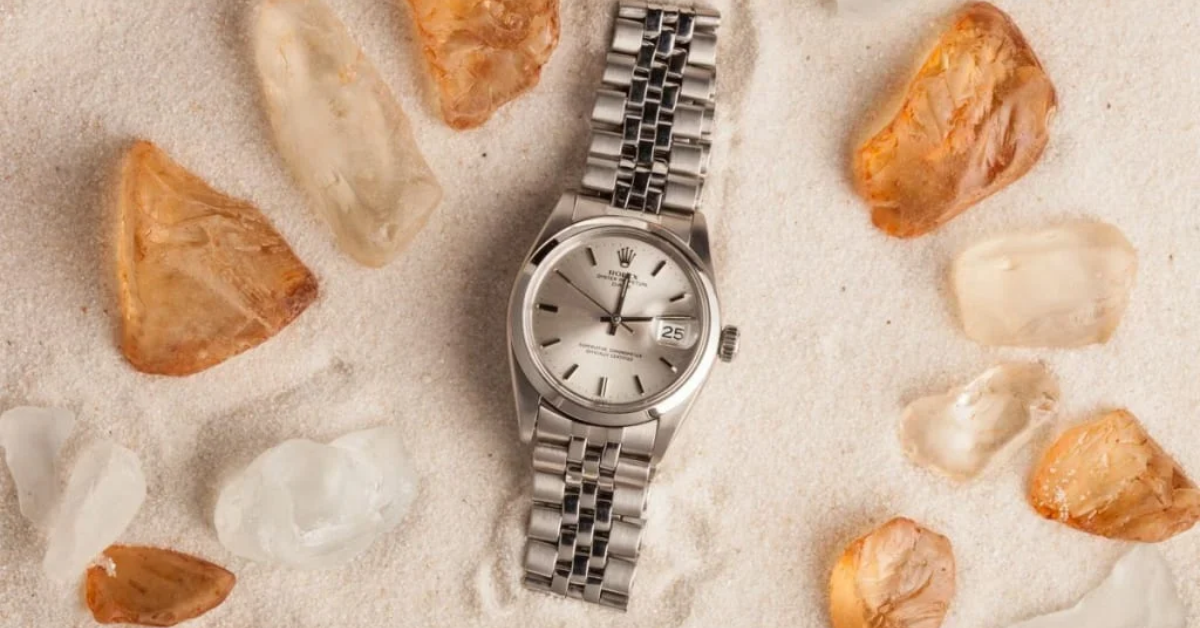
- Full name: Rolex Oyster Perpetual Date, ref. 1500
- Production: early 1960s to the late 1970s
- Case: 34mm Oyster case, about 12mm thick, screw-down crown and caseback
- Lug width: 19mm
- Crystal: acrylic (Plexiglas) with Cyclops lens
- Movement: calibre 1565, later calibre 1575, both COSC chronometer-certified
- Bezel: smooth (sister references 1501, 1503 and 1507 used other bezels)
- Bracelet: Oyster or Jubilee
- Metals: mostly steel, plus steel-and-gold, yellow gold and rose gold
What Makes the 1500 Special
It's a Chronometer, and That Matters
Here's the detail that separates the 1500 from other small vintage Rolexes. In the 1960s and '70s, Rolex also made 34mm watches like the Air-King and the Oysterdate. Those weren't chronometer-certified. The 1500 was.
That means its movement passed official COSC accuracy testing, just like the larger Datejust. You'll see "Superlative Chronometer Officially Certified" printed on the dial. For a watch at this price, that's a genuine step up, not just marketing text.
The Same Heart as a Datejust
Early 1500s run on the calibre 1565. Around the mid-1960s, Rolex switched to the calibre 1575, which beats faster (19,800 vibrations per hour instead of 18,000) and runs a little longer, about 48 hours instead of 42.
Then, around 1972, the 1575 gained a hacking feature. Pull the crown out and the seconds hand stops, so you can set the time to the second. If you care about precise time-setting, look for a later 1575 example.
One quirk worth knowing: open the caseback and you won't see "1565" or "1575" on the movement. You'll see "1560" or "1570." Rolex used the same bridges for its date and no-date versions, so it only stamped the base calibre number. Sellers sometimes get this wrong, so don't panic if the numbers look "off."
That Warm Vintage Look
Every 1500 has an acrylic crystal. It's softer than modern sapphire and picks up scratches, but it also gives the dial a gentle, domed glow that sapphire can't copy. Light scuffs polish out in minutes, which is a nice bonus.
The Cyclops lens over the date magnifies it about 2.5 times. And with a smooth bezel and simple baton markers on most examples, the whole watch reads clean and understated. It works with a suit, and it works with a T-shirt.
Is 34mm Too Small?
This is the question everyone asks. Honestly, it's usually smaller on paper than it feels on the wrist.
Vintage Rolex Oyster cases have broad lugs, so a 34mm 1500 wears closer to a modern 35 or 36mm watch. On wrists up to about 7 inches, it looks just right. On bigger wrists, it reads as a classic dress watch, which is very much in style again.
If you're used to 40mm-plus sports watches, it'll feel small for a week. Then it'll feel normal. That's been the pattern for a lot of collectors who've made the switch.
Rolex 1500 vs Datejust 1601 vs Air-King 5500
These three get compared constantly, so here's the plain version:
- Rolex Date 1500: 34mm, date with Cyclops, chronometer-certified. The sweet spot for value.
- Rolex Datejust 1601: 36mm, date with Cyclops, chronometer-certified, often with a fluted or engine-turned bezel. Same movement family as the 1500, but it usually costs noticeably more because it's a Datejust.
- Rolex Air-King 5500: 34mm, no date, not chronometer-certified. Simpler and sometimes cheaper, but you give up both the date and the certification.
So the 1500 gives you nearly everything the Datejust does at a lower price, and more than the Air-King for only a little more money. That's why we call it the smartest way in. (For a modern take on the same small-versus-dressy question, see our Datejust vs Oyster Perpetual comparison.)
How Much Is a Rolex Date 1500 Worth?
Prices have crept up as vintage Rolex has grown more popular, but the 1500 is still very reachable.
- Steel, average condition: about $3,500 to $4,500
- Steel, excellent with papers: about $4,500 to $5,500
- Steel-and-gold or solid gold: typically $5,000 and up
- Rare dials (tropical, gilt or retailer-signed): can sell well above standard examples
Recent sales data puts the average steel 1500 at around $4,300 to $4,500, with values up roughly 10 to 18 percent over the past year. Compare that with a new Rolex, which now costs well over $7,000 even for the entry-level Oyster Perpetual, and the appeal is obvious. Our look at how much Rolex prices have risen over the years shows why older references like this feel like such good value now.
Just remember the hidden cost. A vintage watch that hasn't been serviced recently will need it, and a full Rolex service runs from around $800. Here's what Rolex servicing actually costs, so you can budget for it up front.
Dials Worth Knowing About
The 1500 was made for nearly two decades, so dial variety is huge. Most have silver or black dials with applied baton markers, but a few versions are worth watching for:
- Gilt dials: gold-coloured printing on early black dials. Collectors pay more for them.
- Tropical dials: black dials that have faded to brown over decades in the sun. No two are alike, and they command a premium.
- Retailer-signed dials: some carry a dealer's name, such as the Venezuelan retailer Serpico y Laino. These are rare and highly sought after.
A word of warning: dial value attracts fakes and refinished dials. If a "rare" dial looks too perfect or too cheap, be suspicious.
What to Check Before Buying a Rolex 1500
Vintage Rolex rewards patient buyers. Before you pay, work through this checklist:
- Dial originality. Check that the printing is crisp and consistent, and that the lume on the markers matches the hands. Refinished dials sell for far less.
- Movement and case match. The serial number between the lugs should fit the era of the dial and movement.
- Case condition. Look for sharp edges on the lugs. Heavily rounded lugs mean the case has been polished many times.
- Bezel. A smooth bezel is standard. Fluted or engine-turned bezels can be original, since dealers sometimes swapped them at the point of sale, but they can also be later replacements.
- Bracelet stretch. Older folded-link bracelets stretch over time. Some sag is normal; a lot of it lowers the value.
- Service history. Ask when it was last serviced and by whom.
- The seller. Buy from someone with a real reputation and a return policy.
Our guide to 7 signs your Rolex might be a fake covers the seller and paperwork red flags in more detail.
Living With a Rolex 1500
Day to day, the 1500 is about as easy as vintage gets. It's tough, legible and simple to wear. A few things to know, though.
There's no quickset date. To change the date, you wind the hands forward through midnight, once for each day. If the watch has stopped for a few days, that takes a minute or two. Our guide on how to set a Rolex date explains how older non-quickset references work and which hours to avoid.
Water resistance is the other caution. The Oyster case was built to be waterproof, but after fifty-plus years the gaskets matter more than the original rating. Treat it as splash-proof unless a watchmaker has recently pressure-tested it.
And the steel is different too. The 1500 predates the 904L alloy Rolex now calls Oystersteel, so it won't have quite the same sheen as a modern watch. Here's how Oystersteel differs from regular stainless steel if you're curious.
Is the Rolex Date 1500 a Good Investment?
It's a sensible place to put money, not a get-rich plan. Good examples have climbed steadily in value, and with new Rolex prices still rising, demand for affordable vintage references keeps growing. There's more on that trend in what collectors think of Rolex's price increases.
But the real return is wearing it. Buy a clean, honest example at a fair price, and it should hold its value while you enjoy it. Original dials and documented history are what protect value most.
Frequently Asked Questions
How much is a Rolex 1500 worth today?
A steel Rolex Oyster Perpetual Date 1500 typically sells for about $3,500 to $5,000, depending on condition, dial and paperwork. Gold and two-tone examples usually start above $5,000, and rare tropical or gilt dials can sell for much more.
What is the difference between the Rolex 1500 and the Datejust?
The Rolex 1500 has a 34mm case, while the classic Datejust 1601 is 36mm. Both share the same chronometer-certified movement family and Cyclops date. The 1500 usually has a smooth bezel and a 19mm lug width, and it typically costs less than a comparable Datejust.
Is the Rolex 1500 a chronometer?
Yes. The Rolex Date 1500 uses the COSC-certified calibre 1565 or 1575, and the dial reads "Superlative Chronometer Officially Certified." That sets it apart from other 34mm Rolexes of the era, like the Air-King, which weren't chronometers.
What years was the Rolex 1500 made?
The Rolex Date ref. 1500 was produced from the early 1960s until the late 1970s. Early examples use the calibre 1565, and later ones use the calibre 1575, which gained hacking seconds around 1972.
Is the Rolex 1500 too small for men?
Not for most men. Its broad lugs make the 34mm case wear closer to 35 or 36mm. It suits wrists up to about 7 inches particularly well and reads as a classic dress watch on larger wrists.
Does the Rolex 1500 have a quickset date?
No. The Rolex 1500 has no quickset date function. You change the date by turning the hands forward through midnight once for each day.
The Bottom Line
The Rolex Date 1500 doesn't have a nickname, a movie role or a waiting list. What it has is everything that made vintage Rolex great: a chronometer movement, a tough Oyster case and a design that hasn't aged a day.
For a first vintage Rolex, it's hard to think of a smarter place to start. Find an honest one, get it serviced, and wear it.
Senior Writer
James Whitfield
Senior watch writer with a decade covering Swiss horology, vintage markets and modern releases.