On this page
- 1. The Price Doesn't Match the Market — In Either Direction
- 2. The Seller Won't Allow Independent Inspection or Authentication
- 3. Documentation Is Missing, Inconsistent, or Doesn't Match
- 4. The Seller Won't Provide Detailed Close-Up Photos on Request
- 5. You're Being Pressured to Decide Quickly
- 6. The Listing Uses Stock Photos Instead of Real Images
- 7. The Watch Fails a Basic Weight Check
- Why Context Matters as Much as the Watch Itself
- FAQ
- Conclusion
Before you even get to inspecting a Rolex's weight, dial, or engravings, the buying situation itself often gives away a fake first. Warning signs include a price that's either suspiciously low or, more subtly, priced deliberately close to real retail to defeat "too good to be true" instincts; a seller who won't allow independent inspection or authentication; missing or inconsistent documentation; a refusal to provide detailed close-up photos; pressure to decide quickly; and stock photos in place of real images of the actual watch. These contextual red flags often surface well before any physical check does.
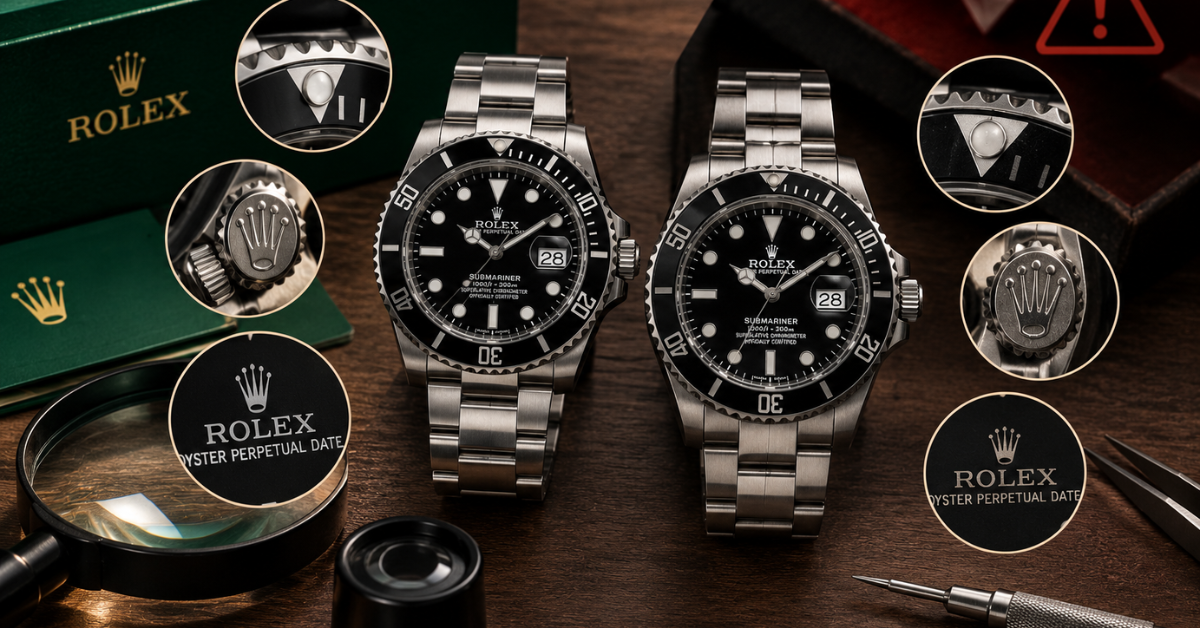
Most fake-Rolex advice jumps straight to the watch itself — weight, cyclops magnification, engraving depth. Our general field guide to spotting a fake Rolex covers those physical checks in detail, and they matter. But by the time you're holding a watch and checking its weight, you've often already missed several earlier warning signs in how the sale itself was set up. These seven show up before that point, and catching them saves you from ever needing the physical checklist at all.
1. The Price Doesn't Match the Market — In Either Direction
The obvious version of this is familiar: a modern Oyster Perpetual 41 listed at a fraction of its established market value is almost certainly not genuine, no matter how convincing the photos look. Our Submariner pricing by reference guide and similar coverage across this site give you a real baseline to check any listing against before getting excited about a deal.
The less obvious version is worth knowing too: sophisticated counterfeit operations have caught on to buyers watching for suspiciously low prices, and now deliberately price fakes close to genuine retail specifically to defeat that instinct. A watch priced just slightly below market isn't automatically safe — it just means the specific "too good to be true" trigger doesn't apply here, and you need the other checks on this list regardless.
2. The Seller Won't Allow Independent Inspection or Authentication
This is one of the clearest, most consistent red flags across documented cases: a private seller who refuses to let you have the watch independently inspected before completing payment, or who won't meet in a setting that allows a professional to look at it first. Legitimate sellers of genuine watches generally have nothing to lose by allowing this. Reluctance here — vague excuses, sudden unavailability, insisting on shipping-only sales with no verification option — is worth treating as a serious warning sign on its own.
3. Documentation Is Missing, Inconsistent, or Doesn't Match
Genuine Rolex warranty cards carry specific security features, correct fonts, and formatting that are difficult to replicate accurately, and the serial number on the paperwork should match the watch itself exactly. Missing papers alone isn't automatic proof of a fake — plenty of legitimate older watches have lost their original documentation over the years — but missing or inconsistent papers combined with any other sign on this list should raise real suspicion. If you're evaluating a specific reference number against what a seller claims it is, our reference numbers decoded guide helps you verify the watch matches its own paperwork in the first place.
4. The Seller Won't Provide Detailed Close-Up Photos on Request
Ask any legitimate seller for a clear photo of the serial number, the rehaut engraving, or the movement through a display caseback, and they'll generally provide it without hesitation — they have nothing to hide and every incentive to prove authenticity to a serious buyer. A seller who deflects these requests, provides only the same handful of promotional-style images, or claims the details are "hard to photograph" is worth walking away from. This pattern shows up constantly in documented fraud cases, and it's one of the easiest signs to test for directly: just ask.
5. You're Being Pressured to Decide Quickly
Artificial urgency — a limited-time offer, another buyer supposedly circling, pressure to wire payment immediately — is a documented tactic specifically because it works against careful buyers. A real seller of a genuine, valuable watch generally understands that a serious purchase deserves time for verification. If a deal only works when you skip your normal due diligence, that's not a bargain; it's a warning built directly into the sales pitch.
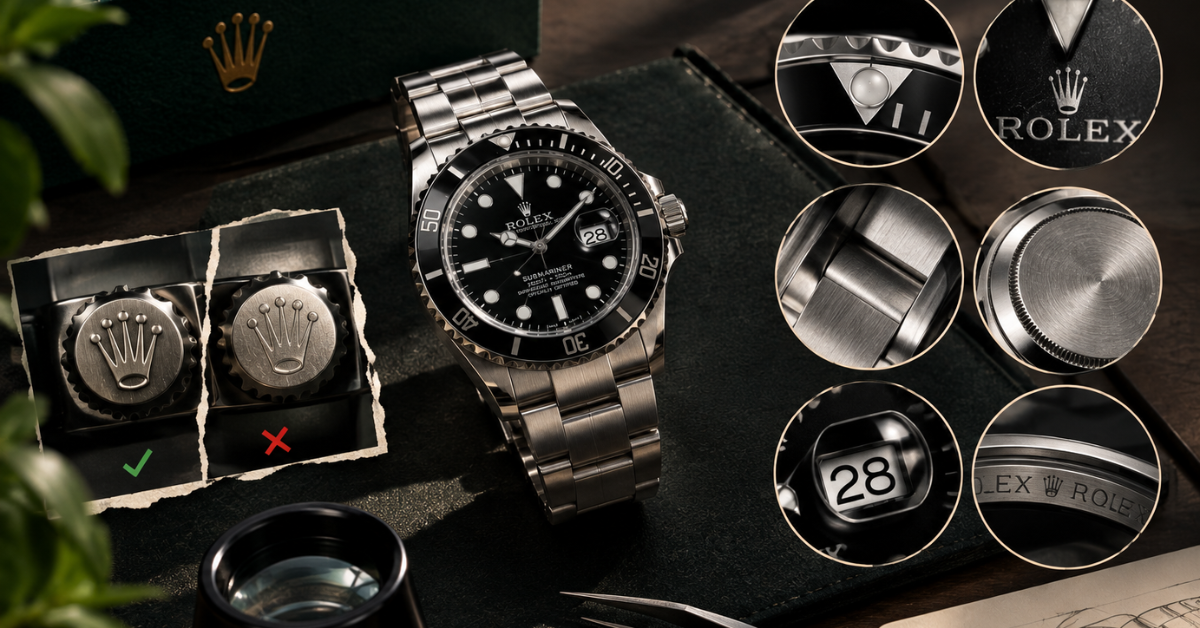
6. The Listing Uses Stock Photos Instead of Real Images
This is a fast, simple check worth running before anything else: does the listing show the actual watch you'd be buying, with its own specific wear patterns, box, and papers, or does it use polished stock photography that could represent any watch of that reference? Genuine private sellers photograph the specific item in front of them, imperfections included. Stock imagery — overly clean, professionally lit, identical across multiple supposedly different listings — is a strong sign the seller either doesn't have the watch in hand or is intentionally obscuring what you'd actually receive.
7. The Watch Fails a Basic Weight Check
If a listing clears every check above and you're at the point of physically handling the watch, weight remains one of the fastest, most universal physical tests available across Rolex's catalog — genuine Oystersteel and precious-metal construction carries a specific, recognizable heft that's expensive and difficult to fake convincingly. Our 60-second Submariner field test covers this check in more model-specific detail, and the same underlying principle applies broadly: a Rolex that feels notably light or hollow for its size is telling you something before any other detail does.
Why Context Matters as Much as the Watch Itself
It's worth being direct about why this list focuses on the buying situation rather than the watch: the highest-quality counterfeits in circulation today can pass a casual physical inspection well enough to fool even experienced buyers glancing quickly. The contextual signs above — pricing psychology, seller behavior, documentation gaps, urgency tactics — often surface earlier and more reliably than a visual check alone, particularly for someone unfamiliar with the finer physical details of a specific reference. Our own account of a close call with a fake Day-Date shows exactly this pattern in practice — a seller whose explanations got vaguer as the questions got more specific was itself one of the clearest warnings, well before the physical checks confirmed it.
FAQ
What's the biggest red flag when buying a Rolex privately? A seller who won't allow independent inspection or authentication before payment — this single behavior is one of the most consistent warning signs across documented fraud cases.
Is a low price always a sign of a fake Rolex? A price significantly below established market value is a strong warning sign, but sophisticated counterfeit sellers also deliberately price near genuine retail specifically to avoid triggering that suspicion, so price alone shouldn't be your only check.
Should I worry if a seller doesn't have the original box and papers? Missing documentation alone isn't proof of a fake, since legitimate older watches sometimes lose their original paperwork, but it's worth treating as a serious concern when combined with any other warning sign.
Why do scammers use pressure tactics when selling fake watches? Urgency and artificial deadlines are specifically designed to prevent buyers from taking the time to verify authenticity or seek an independent inspection, which is exactly the due diligence that would expose a fake.
Can a fake Rolex pass a casual physical inspection? Yes — the highest-quality counterfeits in circulation today can fool a quick glance, which is exactly why contextual warning signs in how a sale is conducted matter as much as physically inspecting the watch.
Conclusion
By the time you're checking a Rolex's weight or counting bezel clicks, you're already several steps into the buying process — and several of these seven signs will have shown up long before that point if you know to watch for them. Pricing psychology, seller behavior, documentation gaps, and urgency tactics catch a fake earlier and more reliably than physical inspection alone, particularly against counterfeits sophisticated enough to survive a casual look. Use both layers together, and very little gets through.
Senior Writer
James Whitfield
Senior watch writer with a decade covering Swiss horology, vintage markets and modern releases.