On this page
- The Current Rolex Daytona Lineup at a Glance
- What Every Daytona Has in Common
- Steel Daytona (126500LN): The Icon Everyone Wants
- The problem: you probably can't buy one at retail
- Panda or black dial?
- Two-Tone Daytona (126503): The Underrated Middle Ground
- Gold Daytona: Where the Real Value Is
- What gold Daytonas actually sell for
- Bracelet or Oysterflex?
- Platinum Daytona (126506): The Ultimate Daytona
- The price reality
- The Wildcard: The Rolesium Daytona (126502)
- Steel, Gold or Platinum: Which Rolex Daytona Should You Buy?
- How to Buy a Rolex Daytona Without Getting Burned
- The authorized dealer route
- The pre-owned route
- The Bottom Line
- FAQ
- How much is a Rolex Daytona?
- Which Rolex Daytona is the best value?
- Is the steel or gold Daytona better?
- Why is the platinum Daytona so expensive?
- Is the Panda dial worth the extra money?
- How long is the wait for a steel Rolex Daytona?
In this Rolex Daytona buying guide, the short version is this: steel is the icon but costs about double its $16,900 retail on the pre-owned market. Gold models trade much closer to retail, so they're the best value per dollar. Platinum ($84,600 retail) is the ultimate Daytona, with an ice-blue dial and display caseback. Buy steel for heritage and resale, gold for value, platinum if money is no object.
Every Rolex Daytona runs the same movement, wears on the same 40mm case shape, and times a lap the same way. So why does one cost $16,900 and another $84,600? And why does the cheapest one often cost the most to actually get?
That's the Daytona paradox in a sentence. The steel model everyone wants is the hardest Rolex to buy at retail. Meanwhile, some gold Daytonas sit in dealer cases at or near list price, waiting for someone to notice them.
I've gone through current Rolex pricing, a year of real sales data from major pre-owned dealers and the latest market trackers to answer one question: which Daytona should you actually buy? Steel, two-tone, gold or platinum — here's what each one gets you, what it really costs, and who it's for.
The Current Rolex Daytona Lineup at a Glance
Before the opinions, the facts. These are the main current-production references and their US retail prices, according to Bob's Watches' review of the current Rolex catalog:
- 126500LN — Oystersteel: $16,900
- 126503 — Yellow Rolesor (steel and yellow gold): $24,550
- 126518LN — Yellow gold on Oysterflex: $42,700
- 126505 — Everose gold: $59,100
- 126506 — Platinum, ice-blue dial: $84,600
There's also a newcomer that doesn't fit neatly anywhere: the 126502 "Rolesium", a steel-and-platinum special order that arrived at Watches and Wonders this year. More on that one later.
Retail prices change roughly once a year, usually in January. So treat these as a snapshot and check Rolex's own site before you walk into a dealer. If you're curious how fast those numbers have climbed, collectors have strong opinions on Rolex's latest price increases.
What Every Daytona Has in Common
Here's the part that surprises a lot of first-time buyers. Strip away the metal and the dial, and every current Daytona is mechanically the same watch.
They all use the Calibre 4131, which Rolex introduced with the current generation in 2023. According to The Watchology's breakdown of the movement, it's a column-wheel chronograph with a vertical clutch, a Chronergy escapement, a blue Parachrom hairspring and a 72-hour power reserve. It's certified to Rolex's Superlative Chronometer standard of ±2 seconds a day — after casing, not just on a bench.
Every model also shares:
- A 40mm Oyster case that's surprisingly slim for an automatic chronograph
- Screw-down chronograph pushers
- 100 metres of water resistance
- A tachymeter bezel (ceramic Cerachrom or solid metal, depending on the model)
So when you're choosing between steel, gold and platinum, you're not choosing a better or worse watch. You're choosing weight, colour, presence on the wrist — and how much of a premium you're willing to pay for scarcity.
Steel Daytona (126500LN): The Icon Everyone Wants
This is the Daytona. The one people mean when they say "Daytona." Black Cerachrom bezel, Oystersteel case and bracelet, and a choice of white or black dial.
The steel case is made from Oystersteel, Rolex's name for 904L stainless steel — if you've ever wondered what that actually changes, here's the real difference between Oystersteel and regular stainless steel.
The problem: you probably can't buy one at retail
At $16,900, the steel Daytona is the cheapest Daytona on paper. In practice, authorized dealers ration it to clients with a long purchase history, and the wait can run for years.
That's why the real price is the pre-owned price. As of September, the white-dial version was worth about $37,500 on the secondary market, with the black dial closer to $31,000. Steel Daytonas consistently sit near the top of the list of Rolex models that hold their value best.
Panda or black dial?
The white "Panda" dial with black subdials is the more famous look, and the market charges for it. In Bob's Watches' sales over twelve months, white-dial 126500LN examples sold for a median of about $38,200 against roughly $31,700 for the black dial.
That's $5,000 to $6,500 for a different colour of paint on an identical watch. Honestly? If you're buying to wear rather than to flip, the black dial is the smarter steel Daytona. It's sportier, it hides wrist wear better, and the money you save pays for a lot of servicing.
Buy the steel Daytona if: you want the most recognisable chronograph in the world, you care about resale, and you either have a strong dealer relationship or can accept paying roughly double retail.
Two-Tone Daytona (126503): The Underrated Middle Ground
The title says steel, gold or platinum — but skipping Rolesor would be a mistake, because it might be the smartest buy in the whole family.
The 126503 pairs an Oystersteel case with an 18k yellow gold bezel, crown, pushers and bracelet centre links. Retail is $24,550, and on the pre-owned market the current 126503 sold mostly between roughly $25,600 and $30,900 in Bob's Watches' data.
Read that again. A two-tone Daytona can cost less on the open market than a steel one, even though Rolex charges more for it new. That's backwards — and it's exactly the kind of thing smart buyers look for.
Buy two-tone if: you want a Daytona now, you like a bit of warmth on the wrist, and you'd rather spend the steel premium on something else.
Gold Daytona: Where the Real Value Is
Gold Daytonas are heavier, warmer and far more relaxed to buy. There's no five-year wait and, on most references, no huge premium. Several Everose and yellow gold configurations trade near or even below retail.
Rolex makes the gold Daytona in three alloys, and each feels different:
- Yellow gold — the classic, unapologetic gold watch. Available on a full gold bracelet or the Oysterflex rubber strap (126518LN).
- White gold — looks like steel from a few feet away, weighs like gold. The stealth choice.
- Everose — Rolex's own rose gold alloy (126505), developed to hold its colour over time.
What gold Daytonas actually sell for
In twelve months of completed sales, Bob's Watches recorded yellow gold Oysterflex Daytonas mostly between $26,000 and $50,000, white gold examples centred in the mid-$40,000s, and Everose models between $53,500 and $64,000. The lower end of those ranges includes the previous generation, which is where the deals hide.
Compare that with the $42,700 retail on a new 126518LN or $59,100 on an Everose 126505. You're paying roughly what Rolex charges — sometimes less — and you can usually have one this week.
Bracelet or Oysterflex?
This one comes down to lifestyle. A full gold bracelet is heavy, luxurious and very noticeable. The Oysterflex is lighter, cooler in hot weather and noticeably cheaper. If you live somewhere warm or plan to wear the watch every day, the Oysterflex is the easier long-term companion.
One caveat: gold Daytonas with rare dials — meteorite, the green "John Mayer" 126508 — are a separate market entirely and can trade far above retail. Stick to standard dials if value is the point.
Buy gold if: you want a Daytona without the waitlist drama, you're happy with a heavier and more visible watch, and you'd like your money to go into the watch rather than into a market premium.
Platinum Daytona (126506): The Ultimate Daytona
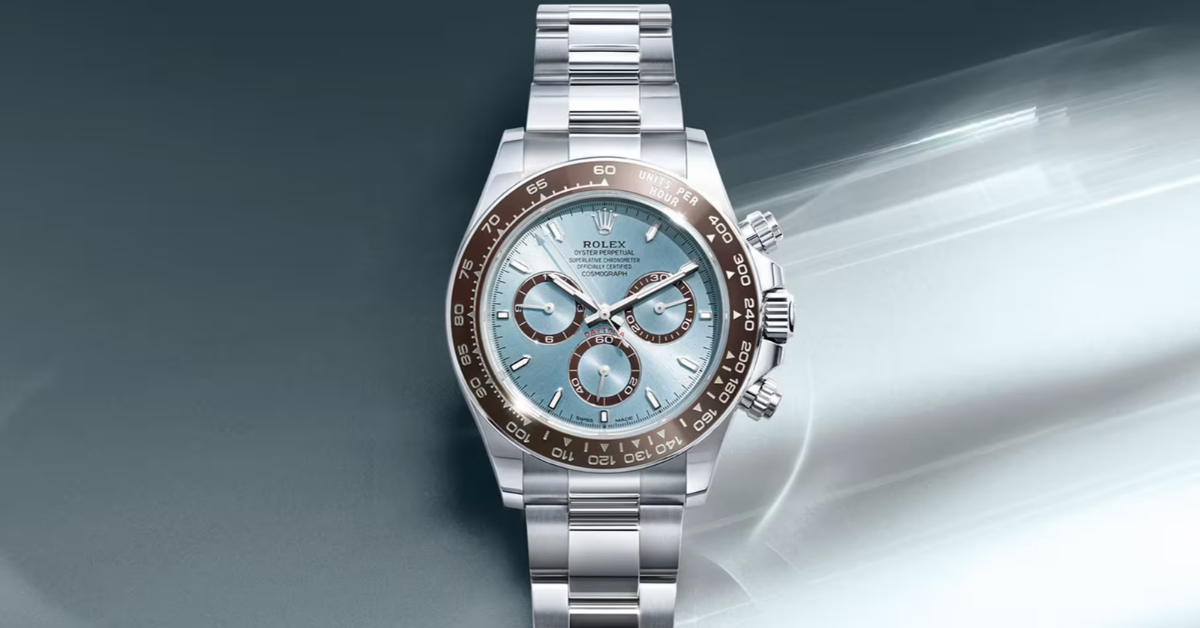
The platinum 126506 is the top of the regular Daytona line, and Rolex makes sure you know it. It gets an ice-blue dial (a colour Rolex reserves for platinum), a chestnut-brown Cerachrom bezel, and the only sapphire display caseback in the standard Daytona range, so you can actually see the Calibre 4131 at work.
Platinum is also dense. Pick one up after a steel Daytona and the difference in weight is the first thing you notice — it feels like a much more serious object.
The price reality
Retail is $84,600. On the open market, WatchCharts put the platinum Daytona's value at about $116,000 in July — a 37% premium over list. Bob's Watches' own platinum sales landed lower, around $90,000, which shows how much individual pieces vary.
So budget anywhere from about $90,000 to well over $110,000 if you're buying pre-owned, depending on condition and completeness.
Buy platinum if: you already own the Daytona you wanted first, or you simply want the best one Rolex makes and the price isn't the deciding factor.
The Wildcard: The Rolesium Daytona (126502)
This year Rolex added something genuinely new. The 126502 pairs an Oystersteel case with platinum on the bezel ring and caseback ring — the combination Rolex calls Rolesium.
It has a white Grand Feu enamel dial and is the first steel-cased Daytona with an open caseback. It's a special-order piece priced at $57,800, available only through authorized dealers to established clients.
It's too new to have a reliable resale track record, so I'd treat it as a collector's watch rather than a value buy. Beautiful, though. Very beautiful.
Steel, Gold or Platinum: Which Rolex Daytona Should You Buy?
Here's my honest take, depending on what kind of buyer you are.
Your first and only Daytona? Go steel if you can get it at a sensible price, ideally the black dial. It's the purest version of the watch, the most versatile day to day, and historically the strongest at holding value.
You want a Daytona now and hate overpaying? Look hard at two-tone or a gold Oysterflex. You'll pay close to Rolex's list price for a watch that's genuinely more expensive to make than the steel one.
You want the best and money is secondary? Platinum. Nothing else in the range comes close in presence or finishing.
Still torn between a Daytona and another Rolex sports watch? Our comparison of the Daytona vs Yacht-Master lays out how they differ in daily life, and the Submariner buying guide covers the other steel icon. If gold is on your mind, the Day-Date buying guide is the natural alternative.
How to Buy a Rolex Daytona Without Getting Burned
The Daytona is the most faked and most fiddled-with modern Rolex. That doesn't mean you should be scared of buying one — just careful.
The authorized dealer route
For steel, retail access is based on relationships, not sign-up sheets. Dealers usually offer allocated models to clients who've bought from them before. It's slow, and there are no guarantees. For gold and platinum, it's far easier — many dealers can source one with a short wait.
The pre-owned route
This is where most buyers end up. A few rules that will save you money and stress:
- Insist on box and papers. A full set commands a premium for a reason, and the warranty card should match the case serial exactly. Check the year against our Rolex serial number lookup.
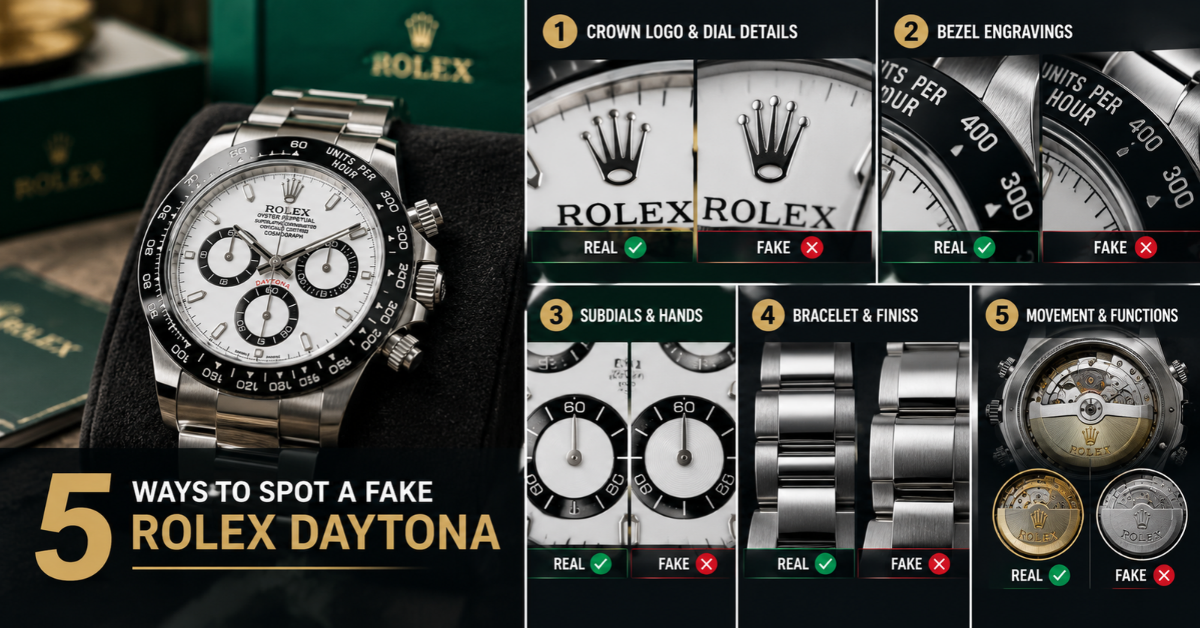
- Check the chronograph, not just the time. Start, stop and reset should be crisp, with no stutter in the seconds hand. Our guide to 5 ways to spot a fake Rolex Daytona walks through the subdials, pushers and bezel checks that catch most fakes.
- Look for an unpolished case. Over-polishing rounds off the edges and drags the value down. Sharp lugs and crisp brushed surfaces are what you want.
- Watch the seller, not just the watch. A price that seems too good usually is. These 7 warning signs of a fake Rolex show up before you even see the watch.
- Budget for servicing. Chronographs cost more to service than three-hand watches. Expect a Daytona overhaul to land in the upper tier of Rolex servicing costs, roughly $1,000 to $1,600.
If you want maximum peace of mind and don't mind paying for it, Rolex's own Certified Pre-Owned program is worth a look. We've weighed up whether the CPO premium is worth paying.
The Bottom Line
The steel Daytona is the legend, and nothing in this guide changes that. But the best Daytona for most people isn't necessarily the most famous one — it's the one you can buy at a fair price and wear without worrying about it.
For some, that's a black-dial steel 126500LN tracked down patiently. For others, it's a two-tone or gold Oysterflex picked up this month at close to list. And for a lucky few, it's ice blue in platinum. Same movement, same 40mm case, same 60-year story. Pick the metal that fits your life, not the one that fits the hype.
FAQ
How much is a Rolex Daytona?
A new Rolex Daytona retails from $16,900 for the steel 126500LN up to $84,600 for the platinum 126506. On the pre-owned market, the steel model trades for roughly $31,000 to $38,000 depending on dial, while gold models often sell close to their retail price.
Which Rolex Daytona is the best value?
Two-tone and gold Daytonas are the best value right now. The two-tone 126503 retails for $24,550 and often trades for less than a steel Daytona pre-owned, while several gold references sell near or below retail with no waiting list.
Is the steel or gold Daytona better?
Neither is better mechanically — every current Daytona uses the same Calibre 4131 movement. Steel is lighter, more versatile and holds value best. Gold is heavier and more luxurious, and usually costs far less over retail to buy pre-owned.
Why is the platinum Daytona so expensive?
The platinum 126506 uses 950 platinum, an exclusive ice-blue dial, a brown Cerachrom bezel and the only display caseback in the standard Daytona range. It retails for $84,600 and has traded well above that on the pre-owned market.
Is the Panda dial worth the extra money?
Only if it's the dial you really want. White Panda dials sell for about $5,000 to $6,500 more than black dials on the same steel Daytona, but the watches are mechanically identical. For wearing rather than resale, the black dial is better value.
How long is the wait for a steel Rolex Daytona?
There's no fixed wait. Authorized dealers usually offer steel Daytonas to established clients with a purchase history, which can take years. Gold and platinum Daytonas are much easier to get, often with little or no wait.
Senior Writer
James Whitfield
Senior watch writer with a decade covering Swiss horology, vintage markets and modern releases.