On this page
- Why the Rolex President Still Matters
- Rolex Day-Date at a Glance
- A Short History of the Rolex Day-Date
- How the Movement Evolved
- Why Is It Called the Rolex President?
- Not Every "President" Is a Day-Date
- Day-Date 36 vs Day-Date 40: Which Size?
- Choosing a Metal
- Dials, Bezels and Bracelets
- How Much Does a Rolex Day-Date Cost?
- New (Retail) Prices
- Pre-Owned Prices
- The Best Rolex Day-Date for Every Budget
- Under $15,000: Vintage Character
- $15,000 to $30,000: Modern Comfort
- $30,000 to $50,000: The Current Generation
- $50,000 and Up: Platinum and Gem-Set
- New or Pre-Owned: Which Is Smarter?
- How to Buy a Pre-Owned Day-Date Without Getting Burned
- Is the Rolex Day-Date a Good Investment?
- Frequently Asked Questions
- Why is the Rolex Day-Date called the President?
- How much is a Rolex President?
- What is the cheapest Rolex Day-Date?
- Is the Rolex Day-Date made in stainless steel?
- Should I buy the Day-Date 36 or Day-Date 40?
- What's the difference between the Day-Date and the Datejust?
- The Bottom Line
The Rolex President is the nickname for the Rolex Day-Date, launched in 1956 as the first wristwatch to show the date and the full day of the week. It's made only in 18k gold or 950 platinum, in 36mm or 40mm. A new Day-Date costs roughly $43,700 to $50,000+ at retail, while pre-owned examples start around $8,000 for vintage models and reach $38,000 to $48,000 for a modern Day-Date 40.
Why the Rolex President Still Matters
Every brand has a flagship. For Rolex, it's not the Submariner or the Daytona — it's the Rolex Day-Date, the watch everyone simply calls the Rolex President.
It's been on the wrists of heads of state, business founders and pro athletes for almost seventy years. And it hasn't changed much in that time, which is exactly the point. A Day-Date from the 1960s and one bought last week are instantly recognisable as the same watch.
That longevity is also what makes buying one tricky. There are dozens of references, four metals, two current sizes, a discontinued 41mm version and a quartz oddity from the '70s. Prices range from under $10,000 to well over $100,000. This Day-Date buying guide walks you through all of it — the history, every generation, what to pay, and which one actually suits you.
Rolex Day-Date at a Glance
- Launched: 1956 (refs. 6510 and 6511)
- Current sizes: 36mm and 40mm (a 41mm Day-Date II ran from 2008 to 2015)
- Metals: 18k yellow gold, 18k white gold, 18k Everose gold and 950 platinum
- Current movement: Calibre 3255, about 70 hours of power reserve
- Water resistance: 100m (330ft)
- Signature bracelet: the President, with semi-circular three-piece links and a hidden Crownclasp
- Day wheel: available in 26 languages
A Short History of the Rolex Day-Date
Rolex introduced the Day-Date in 1956 with references 6510 and 6511. They were the first wristwatches to show the date and the day of the week spelled out in full, through two windows on the dial. Both came in a 36mm Oyster case with a fluted bezel and the brand-new President bracelet.
The formula worked so well that Rolex has mostly refined it ever since rather than reinvented it. Here's how the generations line up:
- 1956: refs. 6510 and 6511, calibre 1055
- 1959: 180x series (like the 1803), calibre 1555, later 1556
- 1977: 180xx series (like the 18038), calibre 3055
- 1977: OysterQuartz Day-Date, calibre 5055, later 5355
- 1988: 182xx series (like the 18238), calibre 3155
- 2000: 118xxx series (like the 118238), still calibre 3155
- 2008: Day-Date II, 41mm, calibre 3156
- 2015: Day-Date 40, calibre 3255
- 2019: 1282xx series, the current Day-Date 36, calibre 3255
Along the way, the acrylic crystal gave way to sapphire, the bracelet went from folded links to solid ones, and the clasp became the concealed Crownclasp you'll find today.
How the Movement Evolved
The movement story is really a story of convenience. Early Day-Dates had no quickset, so changing the date meant spinning the hands through full 24-hour cycles. Then came the upgrades:
- Hacking seconds (calibre 1556): the seconds hand stops while you set the time
- Single Quickset (calibre 3055): the date jumps independently via the crown
- Double Quickset (calibre 3155): both the date and the day can be set quickly
- Calibre 3255 (2015 onward): around 70 hours of power reserve, better shock and magnetic resistance, and 14 patents
If you're buying vintage, that quickset detail matters more than you'd think. A 1960s 1803 is lovely to wear, but you'll be winding the hands a lot after it stops. If you're new to the process, our guide on how to set a Rolex date covers the crown positions and the hours you should avoid.
Why Is It Called the Rolex President?
The nickname comes from the White House. Lyndon B. Johnson famously wore a yellow gold Day-Date while in office, and the "President" name stuck to both the watch and its bracelet.
You'll often read that Dwight D. Eisenhower started it. He didn't. Eisenhower did own a gold Rolex, but it was a Datejust, and he was photographed wearing it in 1952 — four years before the Day-Date even existed.
Then there's the JFK story. A gold Day-Date engraved with a message from Marilyn Monroe is said to have been given to Kennedy in 1962. Whether he ever kept it is still unclear, but the watch reportedly sold at auction in 2005 for around $120,000.
Not Every "President" Is a Day-Date
Here's where buyers get confused. "President" technically refers to the bracelet, not the watch. Some Day-Dates come on an Oyster bracelet or a leather strap instead. And some President bracelets sit on watches that aren't Day-Dates at all — the Lady President ref. 69178, for example, is actually a Datejust. If the listing doesn't show a day window at 12 o'clock, it isn't a Day-Date.
Day-Date 36 vs Day-Date 40: Which Size?
This is the first real decision, and honestly, it's less obvious than it looks.
The Day-Date 36 is the original size. It wears smaller than its number suggests because gold watches feel dense and compact on the wrist. On wrists under about 7 inches, it looks perfectly proportioned. On bigger wrists, it reads as classic and a bit vintage — which plenty of people love.
The Day-Date 40 is the modern flagship. It's only 4mm larger, but the extra width and heft make it feel like a statement piece. For most men with 7-inch-plus wrists, it's the more natural fit.
What about the Day-Date II? The 41mm version from 2008 had thick lugs and a chunky case, and it never quite looked right to many collectors. The Day-Date 40 replaced it in 2015 with slimmer lugs and better proportions. The II is still a solid buy pre-owned if you want the biggest Day-Date ever made, but most buyers prefer the 40.
Our take: try both on if you can. The difference on the wrist is bigger than 4mm sounds.
Choosing a Metal
Today, every Day-Date is made in precious metal. That's a big part of why it holds value well — there's real gold or platinum in every one. A handful of very rare early examples are reported to exist in steel, but you won't find a modern one. (If you're curious why Rolex's steel models are a different story, here's how Oystersteel differs from regular stainless steel.)
- Yellow gold: the classic President. Loud, warm and instantly recognisable. Usually the easiest to resell.
- White gold: looks almost like steel from a distance, so it's the stealthiest choice. Pre-owned white gold often costs less than yellow, making it a smart value pick.
- Everose gold: Rolex's own rose gold alloy, designed not to fade. Warmer and more modern-looking than yellow.
- 950 platinum: the top of the range. It's heavy, discreet and expensive, and it's the only metal Rolex pairs with its famous ice blue dial.
Dials, Bezels and Bracelets
No other Rolex gives you as many dial choices. You'll find stick indexes, Roman numerals, Arabic numerals and diamond markers, plus colours from champagne and silver to green, blue and bright lacquers. Some vintage and modern pieces even use stone dials like onyx or meteorite.
Bezels are usually fluted, which is the look most people picture. Smooth bezels feel sportier, and diamond bezels push the price way up.
Bracelet-wise, the President is the default and the one most buyers want. The Oyster bracelet gives a sportier look (the white gold ref. 118209 is a good example), and leather straps turn up on some references for a dressier feel.
How Much Does a Rolex Day-Date Cost?
Day-Date prices swing a lot depending on age, size and metal, so it helps to split them into new and pre-owned.
New (Retail) Prices
- Day-Date 36 in yellow gold: from about $43,700
- Day-Date 40 in yellow gold (ref. 228238): about $48,000 to $50,400, depending on the dial
- Platinum and diamond-set models: well into six figures
Rolex has raised gold-watch prices several times recently, and the Day-Date has felt it more than most. If you want the context behind that, see what collectors actually think of Rolex's price increases, or the bigger picture in how much Rolex prices have gone up over the years.
Pre-Owned Prices
- Vintage 36mm (like the 1803): roughly $8,000 to $12,000
- White gold 118209 or 118239: around $15,000
- Yellow gold 118238: around $16,000 to $20,000
- Day-Date II (ref. 218238): about $35,000 to $42,000
- Day-Date 40 (ref. 228238): about $38,000 to $48,000
Across all references, average pre-owned Day-Date sales were running around $32,600 in early 2026, up from roughly $22,000 to $25,000 in 2023 and 2024. So the market has warmed up again after a quiet couple of years.
The Best Rolex Day-Date for Every Budget
Under $15,000: Vintage Character
Ref. 1803 is the classic way into a gold Rolex. Made from the 1960s into the late '70s, it has a 36mm case, fluted bezel and often a domed "pie-pan" dial that vintage fans adore.
Ref. 18038 is one step newer, with a sapphire crystal, a faster-beating calibre 3055 and the handy Single Quickset.
Want something different? The ref. 18078 has a bark-textured bezel and centre links, and the ref. 19018 OysterQuartz brings a sharp, angular 1970s design with a quartz movement. Both are cult favourites and tend to sit at the lower end of Day-Date pricing.
$15,000 to $30,000: Modern Comfort
Ref. 18238 was the first Day-Date with Double Quickset, so it's the sweet spot for anyone who wants vintage looks with modern convenience.
The 118xxx generation (2000 to 2019) is where value really shines. The 118238 in yellow gold and 118239 in white gold have solid-link bracelets and a more substantial feel, often for under half the price of a new watch. For a rarer look, the Tridor ref. 18239 mixes yellow, white and rose gold on the bracelet.
$30,000 to $50,000: The Current Generation
This is the territory of the Day-Date 36 (1282xx) and the Day-Date 40 (2282xx), both running the calibre 3255. Current references include:
- Day-Date 36: 128238 (yellow gold), 128239 (white gold), 128235 (Everose)
- Day-Date 40: 228238 (yellow gold), 228239 (white gold), 228235 (Everose)
The Day-Date II (218238, 218235, 218239) also lives here, usually a few thousand cheaper than a comparable 40.
$50,000 and Up: Platinum and Gem-Set
The Day-Date 40 in platinum (ref. 228206) with the ice blue dial is the quiet power move of the whole range. Add diamond bezels, gem-set dials or rare stone dials, and prices can climb well past $100,000.
New or Pre-Owned: Which Is Smarter?
Buying new means a full Rolex warranty, the latest movement and the pleasure of being the first owner. But getting a Day-Date at retail usually means building a relationship with an authorised dealer first. (We've covered whether the Rolex waiting list is still a thing if you're weighing that route.)
Pre-owned is where the Day-Date really makes sense for most buyers. A 118238 gives you the same iconic look as a new 128238 for well under half the money, and the first owner has already absorbed the depreciation.
The catch? You have to buy carefully.
How to Buy a Pre-Owned Day-Date Without Getting Burned
Gold Rolexes are a favourite target for counterfeiters, and some fakes now come close enough to fool casual buyers. Work through this checklist before you pay:
- Buy the seller first. Stick to established dealers with real reviews, a physical address and a return policy. Marketplace bargains are where most problems start.
- Check the weight. A real Day-Date is solid gold or platinum, and it feels heavy. A watch that feels light is a red flag.
- Look at the day window. The day should be spelled out in full, with crisp, evenly spaced letters.
- Inspect the clasp. A genuine President clasp is hidden almost completely, with just a small crown tab underneath.
- Match the numbers. The serial and reference on the watch should match the papers.
- Ask about service history. A full Day-Date service at a Rolex Service Center runs around $900 before any parts, so factor that in if one is due. Here's what Rolex servicing actually costs by model.
For a deeper look at warning signs, read our guide to 7 signs your Rolex might be a fake.
Is the Rolex Day-Date a Good Investment?
It's a better store of value than most luxury watches, mainly because there's real precious metal in every one. That puts a floor under the price that steel watches don't have.
But "investment" is a strong word. Modern Day-Dates bought at retail often sell for less than you paid, at least at first, and prices move with the gold market and buyer demand. The smartest way to think about it: buy the Day-Date you want to wear, pay a fair price, and expect it to hold its value well rather than make you rich.
Frequently Asked Questions
Why is the Rolex Day-Date called the President?
The Rolex Day-Date is called the President because Lyndon B. Johnson wore a yellow gold Day-Date while serving as US President. The name also refers to the watch's semi-circular three-link President bracelet. Eisenhower's gold Rolex, often credited with the name, was actually a Datejust.
How much is a Rolex President?
A new Rolex Day-Date costs from about $43,700 for the 36mm model and about $48,000 to $50,400 for the 40mm in yellow gold. Pre-owned prices start around $8,000 for vintage models and reach $38,000 to $48,000 for a modern Day-Date 40.
What is the cheapest Rolex Day-Date?
The cheapest Rolex Day-Dates are vintage 36mm references like the 1803 and the OysterQuartz 19018, which typically sell for around $8,000 to $12,000 pre-owned. Condition, dial and service history all affect the final price.
Is the Rolex Day-Date made in stainless steel?
No modern Rolex Day-Date is made in stainless steel. Every current model comes in 18k yellow, white or Everose gold, or 950 platinum. A few very rare early examples are reported to exist in steel.
Should I buy the Day-Date 36 or Day-Date 40?
The Day-Date 36 suits wrists under about 7 inches and anyone who prefers a classic look. The Day-Date 40 suits larger wrists and buyers who want more presence. Both share the calibre 3255 movement and the same design.
What's the difference between the Day-Date and the Datejust?
The Day-Date shows both the date and the full day of the week and is made only in gold or platinum. The Datejust shows only the date and is available in steel and two-tone versions, which makes it much more affordable. For a related comparison, see Rolex Datejust vs Oyster Perpetual.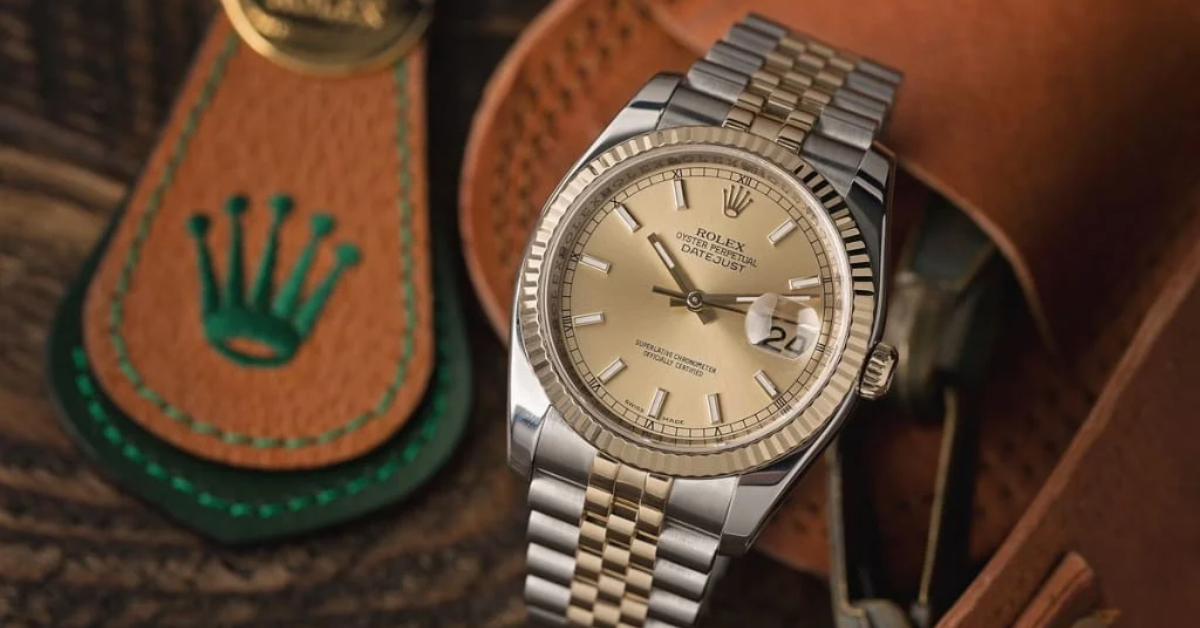
The Bottom Line
The Rolex President has never tried to be clever. It shows the time, the date and the day, in gold, the same way it did in 1956 — and that steadiness is exactly why it still means something to put one on.
Pick the size that fits your wrist, the metal that fits your style, and the era that fits your budget. Get those three right, and there's no wrong Day-Date.
Reviews Editor
Sofia Marchetti
Reviews editor focused on dive watches, chronographs and everyday wearability.