On this page
- What a Regatta Chronograph Actually Does
- The Biggest Change: The Ring Command Bezel Is Gone
- The Countdown Display Moved, and It Now Runs Backward
- The Case: Slimmer, Despite More Mechanical Complexity
- The Movement: Caliber 4162
- A Detail Worth Noticing: Real Finishing on a Movement No One Will See
- Dial and Bracelet
- Pricing and Metal Options
- Why This Relaunch Matters Beyond This One Watch
- FAQ
- Conclusion
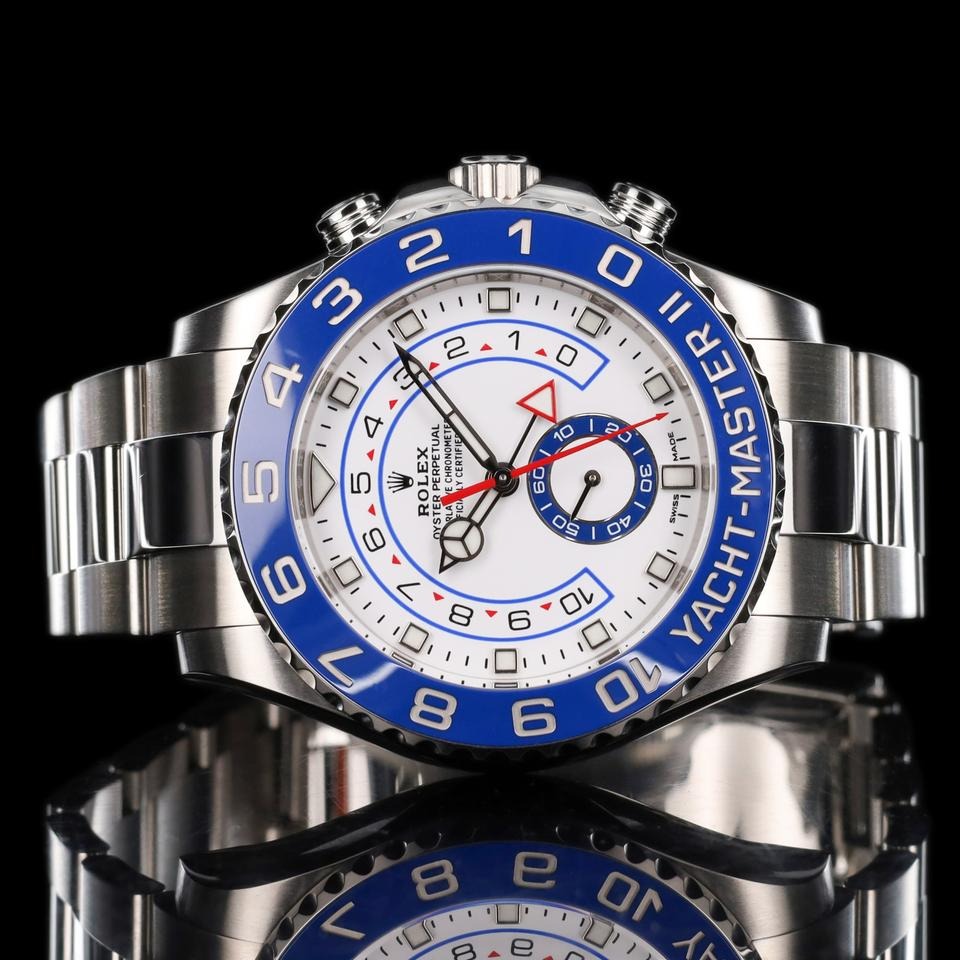
After being discontinued in 2024, the Rolex Yacht-Master II returned at Watches & Wonders 2026 as references 126680 (Oystersteel, $20,300) and 126688 (18-karat yellow gold, $57,800). The single biggest change is how the regatta countdown actually works: the old Ring Command Bezel, which physically coupled the rotating bezel to the movement to set the countdown, has been eliminated entirely — the new version programs the countdown solely through the lower pusher, with the countdown display moved to a new internal flange ring and the minute and seconds hands now running counterclockwise for more intuitive reading. It runs a new Caliber 4162 with a 72-hour power reserve, in a case that's actually slimmer than its predecessor despite the added mechanical complexity.
The Yacht-Master II disappeared from Rolex's catalog in 2024 without much fanfare, and its return at Watches & Wonders 2026 deserves more attention than it's gotten — this isn't a running update with a new dial color. Nearly everything about how the watch's core function actually works has changed. It's one of only two chronographs in Rolex's current lineup alongside the Daytona, covered in our Daytona vs Yacht-Master comparison — worth revisiting now that this relaunch has changed several details discussed there.
What a Regatta Chronograph Actually Does
Worth a quick reminder before the specifics: the Yacht-Master II isn't a conventional chronograph measuring elapsed time. It's a regatta timer, built to count down to a sailboat race's official start, letting competitors synchronize their approach precisely with the starting sequence. It's a genuinely niche complication, deliberately so — this has always been one of Rolex's most specialized watches, built for a specific sport's specific need rather than broad everyday use.
The Biggest Change: The Ring Command Bezel Is Gone
This is the change that actually matters most, and it's a fundamental rethink rather than a refinement. The previous-generation Yacht-Master II (reference 116680) set its countdown through the Ring Command Bezel — a rotating bezel mechanically coupled to the movement, where turning the bezel itself adjusted the countdown length. The new generation eliminates that system entirely. Countdown programming is now handled exclusively through the lower pusher: each press advances the minute hand by one increment until it reaches the desired countdown length, typically somewhere between five and ten minutes depending on the specific race. Once set, the movement remembers that length until changed again.
The bezel itself is now a more conventional blue Cerachrom dive-style bezel, cleaner and simpler in layout, no longer functionally tied to the countdown mechanism at all. It's a genuine philosophy shift — Rolex traded a distinctive but more complex interaction model for something more universally intuitive.
The Countdown Display Moved, and It Now Runs Backward
Where the previous generation displayed its countdown via the bezel insert itself, the new Yacht-Master II moves that display to a newly introduced internal flange ring, marked 10 to 0 with half-minute increments shown as triangles. The more significant change: the countdown's minute and seconds hands now run counterclockwise rather than the conventional clockwise direction. That's a deliberate legibility decision — watching a hand visually count backward as the actual time until start decreases matches how a sailor intuitively experiences a countdown, rather than requiring a mental translation from a clockwise-moving hand.
The Case: Slimmer, Despite More Mechanical Complexity
The new Yacht-Master II retains its signature 44mm diameter but moves to a restyled middle case with more refined, domed sides, bringing overall thickness down to 13.90mm — genuinely slimmer than its predecessor. That's a notable engineering achievement specifically because the movement inside became more mechanically complex, not less, to support the reverse-running countdown hands. Slimming the case while adding complexity under the hood isn't a trivial combination to pull off. The watch retains a 100-meter water-resistant Oyster case with a Triplock winding crown and integrated crown guard.
The Movement: Caliber 4162
Inside is an entirely reengineered movement, Caliber 4162, an evolution of the previous Caliber 4161 rather than a carryover. It keeps the column wheel and vertical clutch chronograph architecture that gives the countdown its crisp, instantaneous start, while adding several of Rolex's current-generation technologies for the first time on this specific watch: the Chronergy escapement and a blue Parachrom hairspring with Rolex's overcoil, both aimed at improved efficiency and resistance to shocks and magnetic fields. Our Rolex Perpetual Calibre explainer covers what these underlying technologies actually do across Rolex's current lineup more broadly.
The movement delivers a 72-hour power reserve, runs at 28,800 vibrations per hour across 47 jewels, and carries full Superlative Chronometer certification to Rolex's precision standard of -2/+2 seconds per day.
A Detail Worth Noticing: Real Finishing on a Movement No One Will See
This is genuinely worth pointing out, because it signals how seriously Rolex treated this update. The Yacht-Master II keeps a solid caseback, not a sapphire exhibition window — meaning the movement's finishing is invisible during normal ownership. Rolex finished it anyway: the bridges carry Rolex's own Côtes de Genève decoration, and the oscillating weight is distinctively cut out rather than a plain solid disc. Dressing up a movement no owner will ever actually see, purely as a mark of manufacturing standard, is the kind of detail that separates a genuine overhaul from a cosmetic refresh.
Dial and Bracelet
The dial picks up more pronounced, maxi-style diver markers alongside the new internal flange ring, a legibility-focused update consistent with the broader design language shift. The bracelet remains an Oyster construction with polished center links and brushed outer links, secured with Rolex's Oysterlock folding clasp and the standard Easylink 5mm comfort extension — though reports describe the clasp itself as slimmer than the outgoing generation's.
Pricing and Metal Options
The relaunched Yacht-Master II is available in exactly two configurations: Oystersteel, reference 126680, at $20,300, and 18-karat yellow gold, reference 126688, at $57,800. There's no platinum or two-tone Rolesium option in this specific relaunch, at least as of its Watches & Wonders 2026 debut. If you're trying to read what these reference numbers themselves encode, our Rolex reference numbers decoded guide covers how to interpret the digits and material codes on any current Rolex.
Why This Relaunch Matters Beyond This One Watch
The Yacht-Master II has always been a more interesting watch than its relatively low profile suggested, and this relaunch makes that case more clearly than any previous generation. Trading a mechanically distinctive but genuinely fussier interaction model for one built around clarity and intuitive use, while simultaneously advancing the movement technology and slimming the case, is a real statement about where Rolex is willing to rethink even a niche, specialized product rather than simply carrying it forward unchanged.
FAQ
What happened to the Ring Command Bezel on the new Yacht-Master II? It's been eliminated entirely — the previous generation set its countdown by rotating a bezel mechanically coupled to the movement, while the new version programs the countdown solely through the lower pusher, with the bezel now a standard, disconnected dive-style design.
Why do the countdown hands on the new Yacht-Master II run counterclockwise? It's a legibility decision — watching the hands visually count backward as the countdown decreases matches how sailors intuitively experience time running out before a race start, rather than requiring translation from a conventional clockwise motion.
How much does the new Rolex Yacht-Master II cost? $20,300 for the Oystersteel reference 126680, and $57,800 for the 18-karat yellow gold reference 126688.
Is the new Yacht-Master II bigger or smaller than the previous generation? It retains the same 44mm diameter but is actually thinner, at 13.90mm, despite the movement becoming more mechanically complex to support the new countdown system.
What movement does the new Yacht-Master II use? Caliber 4162, an evolution of the previous Caliber 4161, adding the Chronergy escapement and a blue Parachrom hairspring, with a 72-hour power reserve and Superlative Chronometer certification.
Conclusion
This isn't a watch that came back unchanged after a two-year absence — nearly everything about how the Yacht-Master II's signature countdown function actually works has been rethought, from the bezel's role to the direction the hands themselves turn. Combined with a genuinely upgraded movement and a slimmer case despite added complexity, it's a rare case of Rolex treating a comeback as a real opportunity to improve a niche product rather than simply reintroducing it as-is.
Editor-in-Chief
Editorial Team
The RolexWatches.blog editorial desk — independent watch journalism, reviews and buying advice.