On this page
- Datejust 36 vs 41 at a Glance
- A quick history lesson
- How Each Size Wears: A Wrist Size Guide
- Rough wrist size guide
- The "one watch" factor
- The Secret Size Changers: Bezel and Bracelet
- Fluted vs smooth bezel
- Oyster vs Jubilee bracelet
- Lug width and straps
- Dials
- Price, Value and Resale
- Retail price
- Pre-owned prices
- Which size holds its value better?
- Datejust 36 or 41: Which Should You Buy?
- How to Buy a Datejust Safely
- The Verdict
- FAQ
- Is the Datejust 36 or 41 better?
- Is the Datejust 41 too big for a 6.5-inch wrist?
- Is the Datejust 36 a men's watch?
- How much more does the Datejust 41 cost than the 36?
- Which Datejust size holds its value better?
- Does the fluted bezel make the Datejust look bigger or smaller?
- Sources
In the Datejust 36 vs 41 choice, the movement, water resistance and dials are the same — only the proportions change. The Datejust 36 suits wrists under about 7 inches, looks more classic and has held its value better. The Datejust 41 suits wrists of 7 inches and up and gives a bolder, more modern look. Between 6.75 and 7.25 inches, either works, so let the bezel and bracelet decide.
Five millimetres. That's the whole difference on paper between the two most popular sizes of the most popular Rolex ever made.
On the wrist, it feels like much more. Five millimetres decides whether the lugs hug your wrist or hang off it, whether the watch slides under a shirt cuff or sits on top of it, and whether people see a classic Rolex or a modern statement.
The Datejust 36 is the original — the size Rolex launched the Datejust in back in 1945. The Datejust 41 is the modern take that many buyers now reach for first. I've compared the current steel references side by side — the 36mm 126200 and 126234 against the 41mm 126300 and 126334 — to help you pick the one you'll be happy with in ten years, not just ten minutes.
Datejust 36 vs 41 at a Glance
Here's where the two sizes match and where they differ. Measurements are from WatchGuys' hands-on comparison, since Rolex doesn't publish lug-to-lug figures.
What's identical on both:
- Calibre 3235 movement with a 70-hour power reserve
- Superlative Chronometer accuracy of −2/+2 seconds a day
- 100 metres of water resistance
- Oystersteel case, sapphire crystal and Cyclops date lens
- Choice of Oyster or Jubilee bracelet
- Case thickness of just under 12mm
What's different:
- Case diameter: 36mm vs 41mm
- Lug-to-lug: roughly 44mm vs roughly 47mm
- Lug width: 20mm vs 21mm
- Steel references: 126200 (smooth) and 126234 (fluted) for the 36; 126300 (smooth) and 126334 (fluted) for the 41
That's it. Same engine, same toughness, same dial choices. So this really is a question of fit and style — which makes it a more personal decision than most people expect.
A quick history lesson
The 36mm size goes all the way back to the first Datejust in 1945, and it was the standard Rolex men's size for decades. The 41mm arrived much later, replacing the earlier Datejust II, and it's become the go-to for buyers who want a bigger, more contemporary watch.
One side effect of that history: the 36 has never been "just" a men's watch. It's worn by women and men alike, which matters later when we talk about resale.
How Each Size Wears: A Wrist Size Guide
Forget the 36 and 41 numbers for a second. The figure that actually decides fit is lug-to-lug — the distance from the tip of the top lugs to the tip of the bottom ones. If that's wider than the flat top of your wrist, the lugs hang over the edge and the watch looks too big, however good it is.
The Datejust 41's span is about 3mm longer than the 36's. That sounds tiny. On a slim wrist, it's the difference between a watch that hugs and one that perches.
Rough wrist size guide
- Under 6.5 inches: the Datejust 36. The 41 will likely overhang.
- 6.5 to 7 inches: the 36 is the natural fit; the 41 is possible if you like a bolder look, ideally on a Jubilee bracelet.
- 7 to 7.5 inches: genuinely either. Choose by style.
- Over 7.5 inches: the Datejust 41. The 36 can start to look a little small here.
Wrist shape matters too. A flat, wide wrist carries a bigger watch better than a round, narrow wrist of the same measurement. If you can, try both on before you buy — most people know within a few seconds.

The "one watch" factor
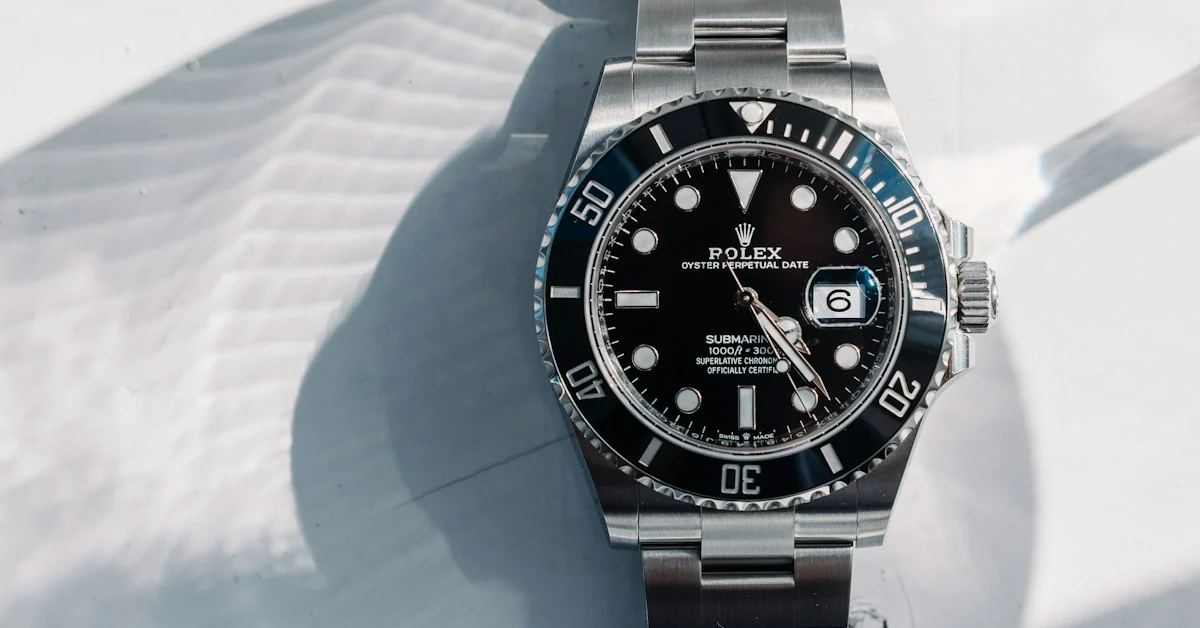
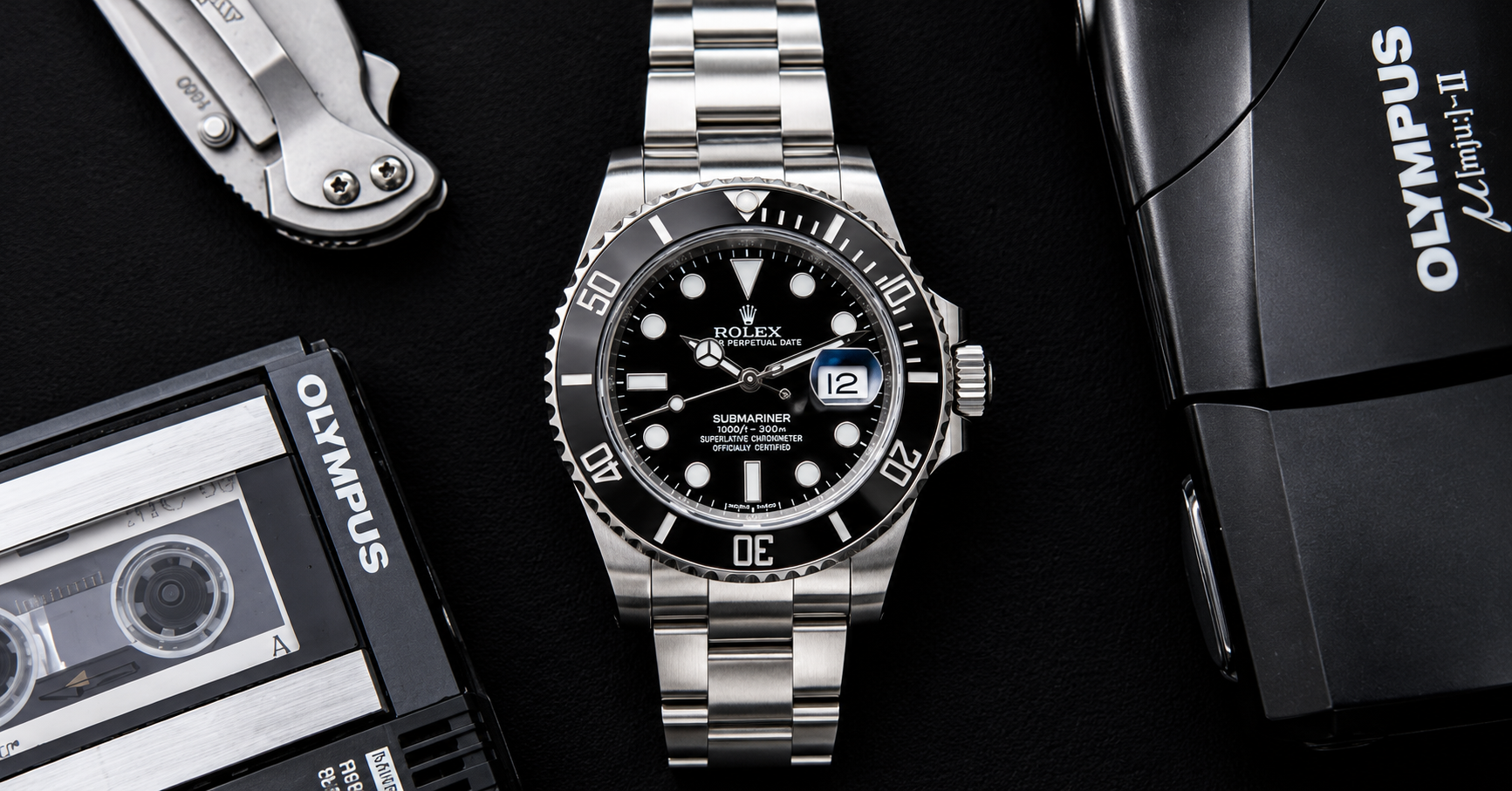
There's a useful tiebreaker if you're sitting right on the fence. If the Datejust will be your only watch and you want it to work with T-shirts and weekends as well as suits, the 41's extra presence makes sense. If you already own a sports Rolex — say a Submariner — the 36 gives your collection a dressier counterpoint rather than two watches of similar size competing for wrist time. Our Submariner buying guide is a good place to start if you're building that kind of pair.
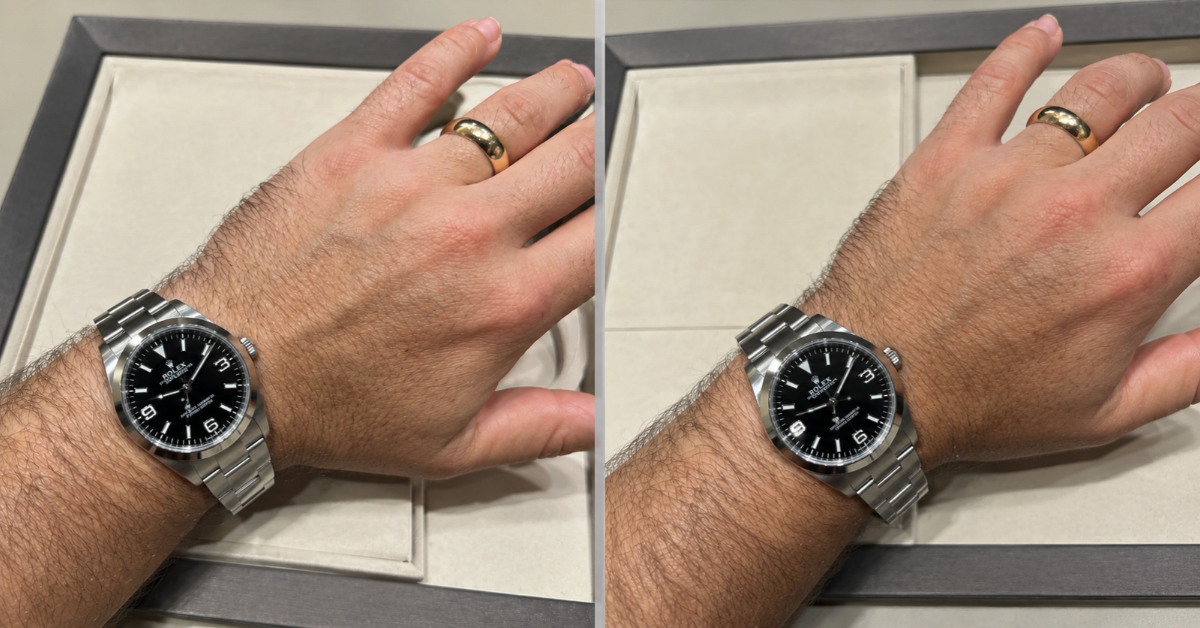
If this size dilemma sounds familiar, it's the same question Explorer buyers face — see our Explorer 36 vs 40 size guide for a similar breakdown.
The Secret Size Changers: Bezel and Bracelet
Here's the part most buyers miss. Two Datejusts with the same case size can look like completely different watches, depending on the bezel and bracelet.
Fluted vs smooth bezel
The fluted white gold bezel is the Datejust's signature. It catches light from every angle — but because it's a thicker ring, it shrinks the visible dial. A smooth domed bezel is slimmer and gives more of the diameter back to the dial.
The result is a neat optical trick. According to WatchGuys, a fluted Datejust 41 reads closer to 39mm, and a smooth Datejust 36 reads closer to 38mm. In other words, your bezel choice can make the two sizes look much closer than the numbers suggest.
That's why a fluted Datejust 36 (ref. 126234) is such a popular "middle ground." It has the sparkle and presence that pull people towards the 41, without the extra length on the wrist.
Oyster vs Jubilee bracelet
The Oyster bracelet has three broad, flat links. It's sportier and a little stiffer, so the watch sits higher and looks bigger.
The Jubilee has five smaller links that drape around the wrist. It pulls the case down and makes a large watch wear more comfortably. If you're borderline on the 41, the Jubilee is the bracelet that makes it work.
Both come with Rolex's Easylink extension, which lets you add about 5mm of length in seconds — handy on hot days when your wrist swells slightly.
Lug width and straps
One practical difference: the 36 has a 20mm lug width, the 41 has 21mm. Twenty millimetres is a standard strap size, so if you ever want your Datejust on leather, the 36 gives you far more options. A 21mm strap is harder to find.
Dials
Both sizes share the same huge dial menu, from silver and blue to slate, mint green and fluted motif. Rolex also recently refreshed the Datejust's Roman numerals — here's what changed on the new Roman numeral dial.

Price, Value and Resale
Retail price
In steel, the Datejust 41 costs about $800 more than the 36 at an authorized dealer. The smooth-bezel 126200 lists at $8,150 on Rolex's US site, while the smooth 126300 was listed at $8,950 in September.
Add a fluted white gold bezel and the 36mm 126234 goes to $10,100, while the 41mm 126334 sits around $11,650. Two-tone and gold versions climb from there.
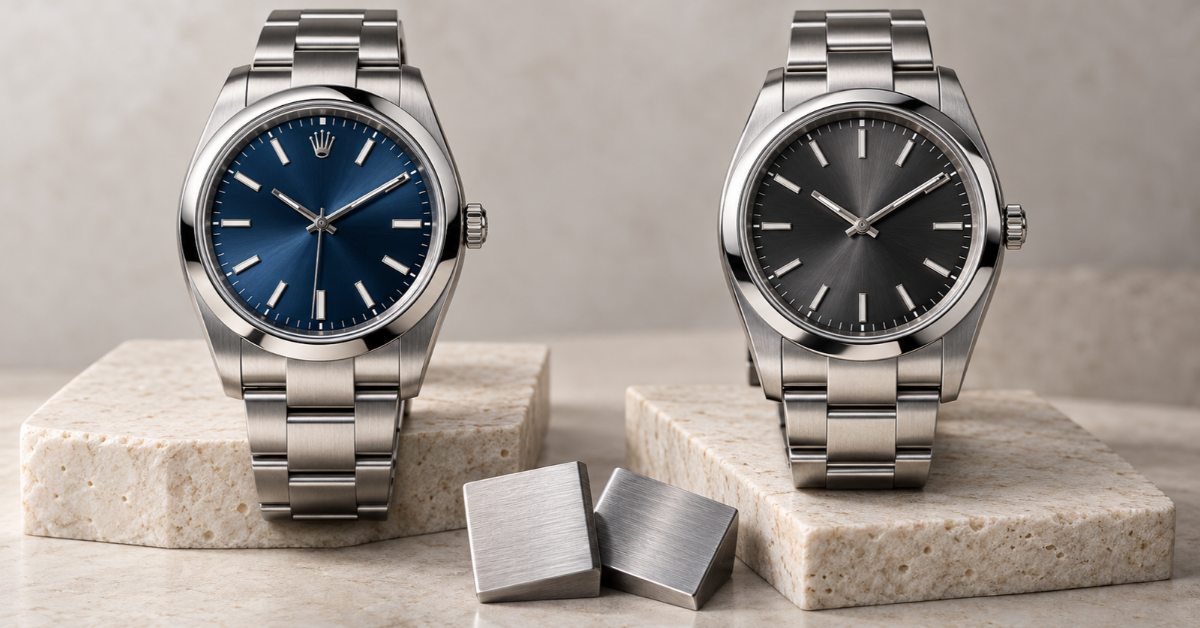
Not sure the Datejust is the right model at all? Our comparison of the Datejust and Oyster Perpetual shows what the extra money buys over Rolex's simpler three-hander.
Pre-owned prices
Here's where it gets interesting. On the secondary market, the price gap between the two sizes almost disappears.
In September, WatchCharts data put the steel 126200 at around $9,612 and the 126300 at around $10,002. That's because the 36 sells at a bigger premium over its own retail price — about 17.9%, against 11.8% for the 41.
The fluted versions carry bigger premiums still: the 126234 traded around $12,700 and the 126334 around $14,500 at the same point.
Which size holds its value better?
The 36 — and fairly clearly. The steel 126300 has risen about 12.1% over five years, compared with 20.8% for the Datejust collection overall.
Two things help the 36. It's the original, heritage size, with decades of demand behind it. And it's bought by both men and women, so the pool of future buyers is bigger.
That said, a steel Datejust in either size isn't really an investment piece. It's a watch to wear for decades. If resale is high on your list, our breakdown of which Rolex holds its value best shows how the Datejust compares with the sports models.

Datejust 36 or 41: Which Should You Buy?
Here's my honest recommendation, depending on who you are.
Buy the Datejust 36 if:
- Your wrist is under about 7 inches
- You love the classic, heritage Datejust look
- You want it to slip easily under a shirt cuff
- You already own a sports Rolex and want a dressier partner
- You'd like more strap options, or resale value matters to you
- You might share it with a partner
Buy the Datejust 41 if:
- Your wrist is 7 inches or more
- It will be your only watch, worn with everything
- You prefer a modern, bolder look with more wrist presence
- You'd like to pay the smallest premium over retail on the pre-owned market
Still on the fence? Try a fluted Datejust 36 on a Jubilee bracelet and a smooth Datejust 41 on an Oyster, back to back. Those two combinations sit closest together visually, and one of them will almost certainly feel "right."
If you're open to other first-Rolex options too, our guide to the Oyster Perpetual as the smartest entry into Rolex is worth a read.
How to Buy a Datejust Safely
The Datejust is one of Rolex's best-selling models, which also makes it one of the most commonly faked and modified. A few checks will protect you:
- Beware aftermarket diamonds. Non-factory diamond bezels and dials are common on both sizes. They aren't covered by Rolex service and usually hurt resale value badly.
- Check the seller first. These 7 warning signs of a fake Rolex often show up before you see the watch.
- Match the serial and papers. Use our Rolex serial number lookup and make sure the warranty card matches the case.
- Know which movement you're getting. Current models use the Calibre 3235 with 70 hours of power reserve. Older references (116200, 116234 and the Datejust II) use the earlier Calibre 3135.
- Budget for servicing. Here's what Rolex servicing really costs.
Once you own it, learn how to set the date on your Rolex without damaging it. And if you want maximum peace of mind, see whether Rolex Certified Pre-Owned is worth the premium.

The Verdict
The Datejust 36 and 41 are the same watch at heart: same movement, same build, same famous Cyclops date. Choosing between them isn't about getting more Rolex. It's about getting the right-sized one.
If you're under seven inches, love tradition or care about resale, the 36 is the smarter and more timeless choice. If you're over seven inches and want one bold watch for everything, the 41 earns its extra five millimetres.
And if you're stuck in the middle? Let the bezel and bracelet break the tie. Try them on, trust your gut, and buy the one you keep glancing down at.
FAQ
Is the Datejust 36 or 41 better?
Neither is better mechanically — both use the Calibre 3235 movement with 70 hours of power reserve and 100 metres of water resistance. The Datejust 36 suits smaller wrists and has held its value better. The Datejust 41 suits wrists of 7 inches and up and has a bolder, more modern look.
Is the Datejust 41 too big for a 6.5-inch wrist?
Usually, yes. The Datejust 41 measures roughly 47mm lug to lug, so on a 6.5-inch wrist the lugs tend to overhang. The Datejust 36, at roughly 44mm lug to lug, is the better fit for wrists under about 6.75 inches.
Is the Datejust 36 a men's watch?
Yes. The 36mm Datejust was Rolex's standard men's size for decades and is still part of its men's lineup. It's also popular with women, which is one reason it resells so well.
How much more does the Datejust 41 cost than the 36?
In steel, about $800 more at retail: $8,950 for the smooth 126300 against $8,150 for the 126200. On the pre-owned market the gap shrinks to around $400, because the 36 trades at a bigger premium over its retail price.
Which Datejust size holds its value better?
The Datejust 36. It trades at a higher premium over retail than the 41 and has appreciated more over the past five years, helped by its heritage and its appeal to both men and women.
Does the fluted bezel make the Datejust look bigger or smaller?
Smaller, across the dial. The thicker fluted bezel shrinks the visible dial, so a fluted Datejust 41 looks closer to 39mm. A smooth bezel gives more space to the dial and makes the watch look larger.
Sources
- Rolex Datejust 36 vs 41: Comparison — WatchGuys (WatchCharts data, September 2026)
- Rolex watches and US retail prices — official Rolex website
About the author: James Whitfield is a senior watch writer with a decade covering Swiss horology, vintage markets and modern releases. RolexWatches.blog is independent and not affiliated with Rolex SA or any authorized dealer. Prices are in US dollars and reflect retail and market data at the time of writing; always confirm with your local dealer.
Senior Writer
James Whitfield
Senior watch writer with a decade covering Swiss horology, vintage markets and modern releases.