On this page
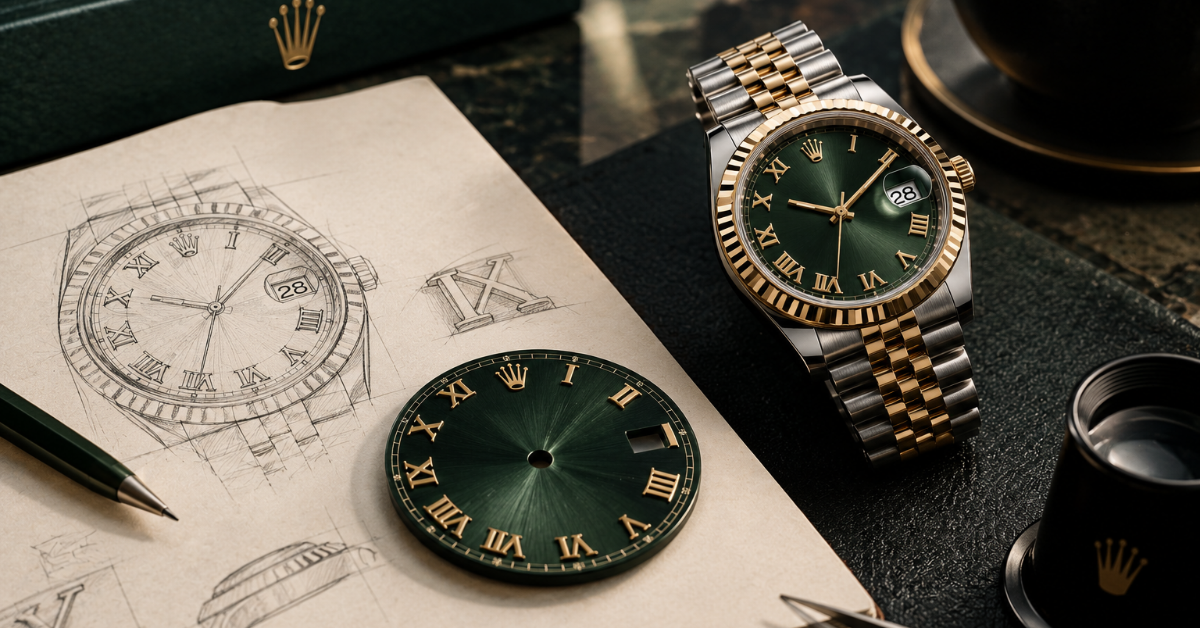
Rolex announces its big stories loudly and its small ones almost not at all. The Datejust's new Roman numerals belong to the second group. If you'd only read Rolex's own highlights from Watches & Wonders 2026, you'd have heard about the green ombré dial and missed one of the biggest visual changes to the Datejust in years.
Here's what actually changed, what didn't, and how to read it if you're shopping.
What Changed
The most significant change involves the applied Roman numerals on select Datejust dials. Three differences stand out:
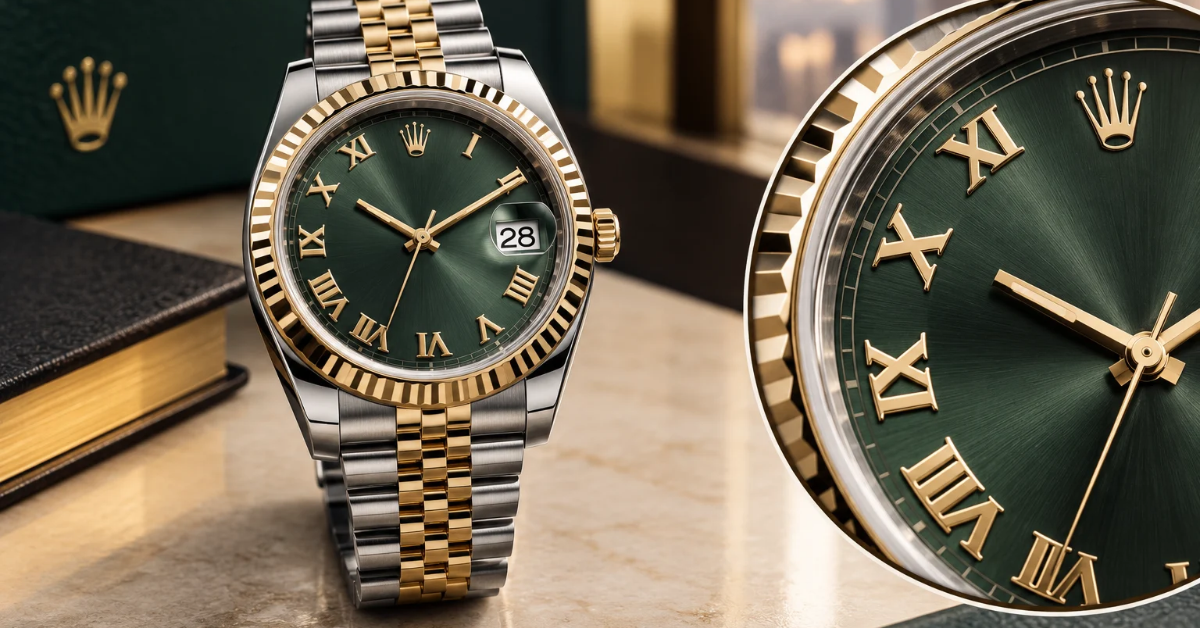
- A new letterform. The old numerals were classic serif characters, with the small finishing strokes you'd expect from traditional Roman lettering. The new ones are sans-serif: flatter, more angular and visibly thicker. Retailers and reviewers describe the result as more modern and graphic, and some compare it to the numerals used on the Day-Date.
- A new way of building them. Each numeral is now assembled from separate applied elements rather than being a single piece. That's why the style is described as "deconstructed": you can see the individual strokes.
- A rearranged dial. Reporting on the update says the baton marker at 9 o'clock was replaced with a Roman numeral, and that the numerals are arranged radially around the dial. One dealer notes that this makes the Datejust a more complete Roman-numeral dial than the Day-Date's version.
Which Datejusts Got Them
The new numerals appear on the Datejust 36 and Datejust 41, and only those two sizes. They show up across steel, white Rolesor and Everose Rolesor configurations. They're part of a release of more than 100 new Datejust references this year, which also includes new color and material combinations.
One detail worth knowing if you're shopping for the Datejust 41 in blue: reporting differs on which shade Rolex calls what, with one retailer saying the Azzurro was discontinued and replaced by a "Bright Blue" with the new numerals. Check the current catalog for the exact name of the dial you want.
A mint green dial with applied rose gold Roman numerals on the Everose Rolesor Datejust was among the new references, reportedly starting around $15,000.
What Didn't Change
The movement and specifications are the same. Reporting on the update says Rolex made no technical changes to the Datejust 41 or 36, so this is a dial update, not an engineering one. If you want the full picture of what the Datejust is and how it differs from Rolex's simplest model, see our comparison of the Datejust and the Oyster Perpetual and our Oyster Perpetual guide.
The Wimbledon dial also stayed as it was. The slate-grey face with green serif Roman numerals, named for Rolex's long association with the Championships, was the one Roman-numeral Datejust dial Rolex deliberately left untouched. Dealers describe it as the most-requested Roman dial, and it remains a rare chance to buy the older, serif style from the current catalog.
What Was Discontinued
Alongside the redesign, Rolex retired the previous serif Roman numeral dials on the Datejust 36 and 41, along with the floral motif dials on the Datejust 31. In practice, that means the older style now lives on the pre-owned market, plus the Wimbledon.
How to Think About It as a Buyer
A few honest takeaways:
It's a matter of taste, not quality. The new numerals are bolder and more contemporary. The old ones are more traditional. Neither is better built. If you like the classic look, you'll want a serif dial, and the pre-owned market is now where most of them live.
Don't assume the old dials will rise in value. It's tempting to think a discontinued dial must appreciate, but it's too early to know. The market's reaction to a quiet change like this takes time to show up. Our look at how Rolex prices have changed over time is a useful reminder of how unpredictable those reactions can be.
Verify the reference. With over 100 new references in one year, the details matter. Our guide to reading Rolex reference numbers helps you confirm exactly which Datejust you're looking at.
Be careful buying used. A big refresh gives counterfeiters a reason to produce new variants. Our field guide to spotting a fake Rolex covers the general checks worth running, and our piece on setting a Rolex date shows how the Datejust's quickset date function should behave.
Why Rolex Changes Things Quietly
Rolex has long made small design changes without fanfare, and this one follows a pattern: it redesigned the Day-Date's numerals earlier, and the Datejust is now catching up. The brand concentrates its public messaging on a handful of headline releases and lets the rest surface through dealers and collectors. It also means the best way to track the changes is to read the catalog, not the press release.
FAQ
What changed on the new Rolex Datejust Roman numeral dials? The classic serif numerals were replaced with a sans-serif style that's flatter, more angular and thicker, with each numeral built from separate applied elements rather than one piece.
Which Datejust sizes have the new numerals? Only the Datejust 36 and Datejust 41.
Did the Datejust's movement change? No. Reporting on the update says there were no technical changes to the movements or specifications.
Is the Wimbledon dial affected? No. The slate dial with green serif Roman numerals kept its original design.
When were the new dials released? At Watches & Wonders 2026, as part of more than 100 new Datejust references.
Will the old serif Roman dials become more valuable? It's too early to say. Rolex discontinued them in 2026, but how the market will price them is uncertain.
Conclusion
The Datejust's new Roman numerals are the kind of change that's easy to miss in a photograph and hard to miss on the wrist. They make a classic dial look more modern without touching the watch underneath. Whether you prefer the new look or the old one, you now know what to ask for.
Senior Writer
James Whitfield
Senior watch writer with a decade covering Swiss horology, vintage markets and modern releases.