On this page
- The Case That Changed Everything
- 1926: The Birth of the Oyster
- 1927: Proving It in the English Channel
- 1931: The Oyster Becomes "Perpetual"
- The Oyster Family Tree
- How the Oyster Case Kept Evolving
- Not Every Rolex Is an Oyster
- 2026: Celebrating the Centenary
- Why the Oyster Still Matters
- Oyster Timeline at a Glance
- Frequently Asked Questions
- When was the Rolex Oyster invented?
- Why is it called the Oyster?
- Who swam the English Channel with a Rolex Oyster?
- What does "Oyster Perpetual" mean?
- Are all Rolex watches Oysters?
- What did Rolex release for the Oyster's 100th anniversary?
- The Bottom Line
The Case That Changed Everything
A century ago, wristwatches were fragile things. Dust got in. Moisture got in. Rain, sweat or a splash at the sink could ruin one. Most serious men still carried pocket watches for exactly that reason.
Hans Wilsdorf, the founder of Rolex, wanted to fix that. His answer was a case sealed so tightly that it kept the elements out completely, like an oyster closed tight in its shell. He called it the Oyster.
In 2026, that idea turned 100. And while Rolex has changed enormously since then, almost every watch it makes still carries "Oyster" on the dial. This is the story of how one waterproof case became the backbone of the world's most famous watch brand.
1926: The Birth of the Oyster
In 1926, Rolex patented the Oyster case. Its genius was in how it sealed:
- A screw-down bezel pressed the crystal tightly against the case.
- A screw-down caseback sealed the back.
- A screw-down crown closed the weakest point, where the winding stem enters the case.
Together, these created what Rolex described as a hermetically sealed case. It was a breakthrough. For the first time, a wristwatch could genuinely protect its movement from water and dust.
1927: Proving It in the English Channel
A waterproof case is only impressive if people believe it. Wilsdorf needed proof, and he found it in a young English swimmer named Mercedes Gleitze.
In 1927, Gleitze swam the English Channel wearing a Rolex Oyster. After hours in cold water, the watch was still keeping time. Rolex celebrated with a full-page advertisement on the front of the Daily Mail, announcing the Oyster as the watch that had conquered the Channel.
It was one of the first examples of what we'd now call a brand ambassador, and the start of Rolex's long tradition of proving its watches in extreme conditions.
1931: The Oyster Becomes "Perpetual"
The Oyster had one remaining weakness. To keep running, it still had to be wound by hand, which meant unscrewing the crown every day. Each time, the seal was opened.
In 1931, Rolex solved that too, with the Perpetual: a self-winding rotor that turns freely as the wrist moves, winding the watch automatically. With no daily winding needed, the crown could stay screwed down, keeping the Oyster sealed.
That's why almost every Rolex dial today reads "Oyster Perpetual." The two inventions, a waterproof case and a self-winding movement, became inseparable.
The Oyster Family Tree
From that foundation, Rolex built nearly its entire catalogue. Here are some of the most important Oyster milestones:
- 1945: the Datejust, the first self-winding chronometer wristwatch with a date in a window on the dial. Read about the latest version in the Datejust's new Roman numeral dial.
- 1953: the Submariner, one of the first dive watches, and the Explorer, linked to the first ascent of Everest. Here's our Submariner buying guide.
- 1955: the GMT-Master, built for airline pilots tracking two time zones. See our GMT-Master II bezel guide.
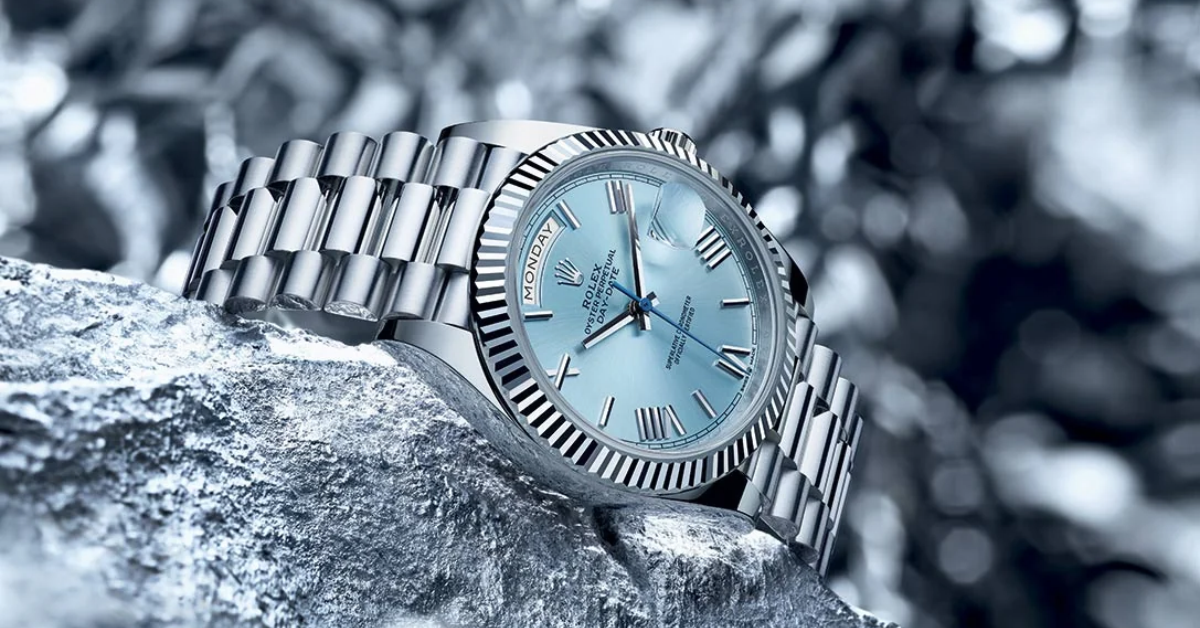
- 1956: the Day-Date, the first wristwatch to show both the date and the full day of the week, later nicknamed the "President." Read The Rolex President: a complete Day-Date buying guide.
- 1963: the Cosmograph Daytona, Rolex's racing chronograph.
- 1967: the Sea-Dweller, built for professional saturation divers. Compare it in Sea-Dweller vs Deepsea.
Each of these is, at heart, an Oyster: a sealed case wrapped around a self-winding movement.
How the Oyster Case Kept Evolving
The 1926 idea was only the beginning. Over the decades, Rolex kept improving the seal:
- Twinlock crown (1953): a double sealing system for the crown.
- Triplock crown (1970): a triple seal, used on Rolex's dive watches.
- Oystersteel: Rolex's own 904L steel alloy, chosen for its resistance to corrosion. Here's how Oystersteel differs from regular stainless steel.
- Extreme depths: in 2012, an experimental Rolex Deepsea Challenge travelled to the bottom of the Mariana Trench on film director James Cameron's solo dive, proving how far the Oyster concept could go.
Today, every Oyster case is tested for water resistance, and dive models go far beyond the original ambitions of 1926.
Not Every Rolex Is an Oyster
Here's a detail many people don't know: Rolex has made a few watches without the Oyster case. The most famous was the Cellini collection, Rolex's dress watches, which used non-Oyster cases for a slimmer, more classic look. Read whether the Cellini was Rolex's most underrated watch.
That contrast shows how central the Oyster is. When Rolex stepped away from it, it created a completely different kind of watch.
2026: Celebrating the Centenary
For the Oyster's 100th birthday, Rolex marked the moment with several new releases at Watches and Wonders 2026:
- Anniversary Oyster Perpetuals: new Rolesor (steel and gold) versions with a slate dial, at $7,700 (31mm), $8,450 (36mm) and $9,650 (41mm).
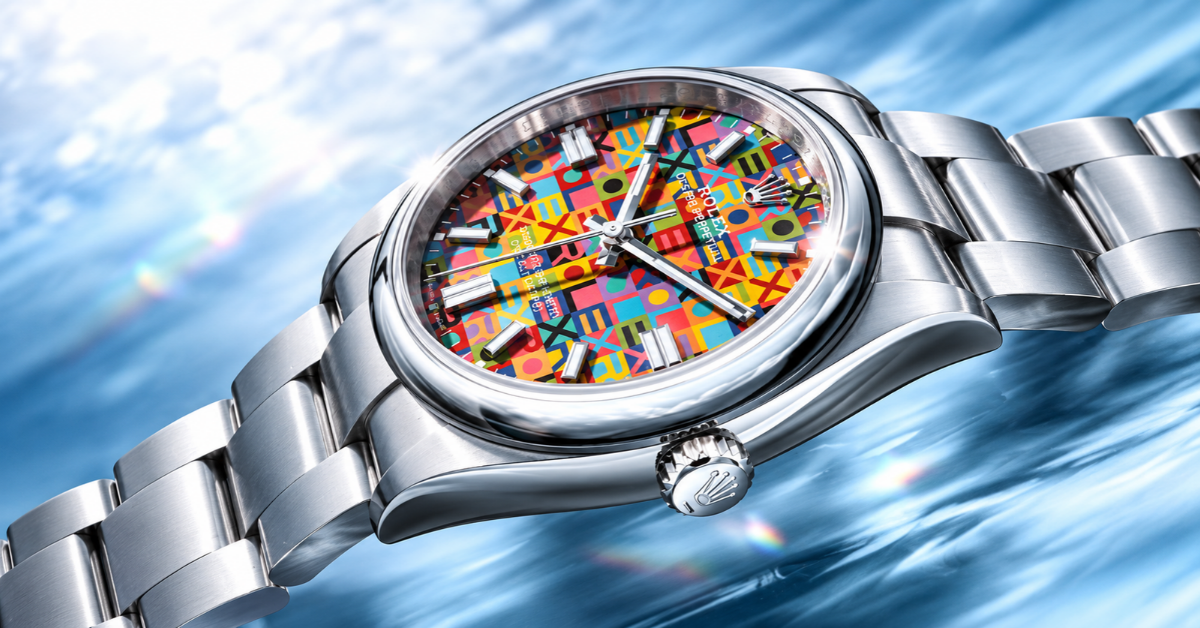
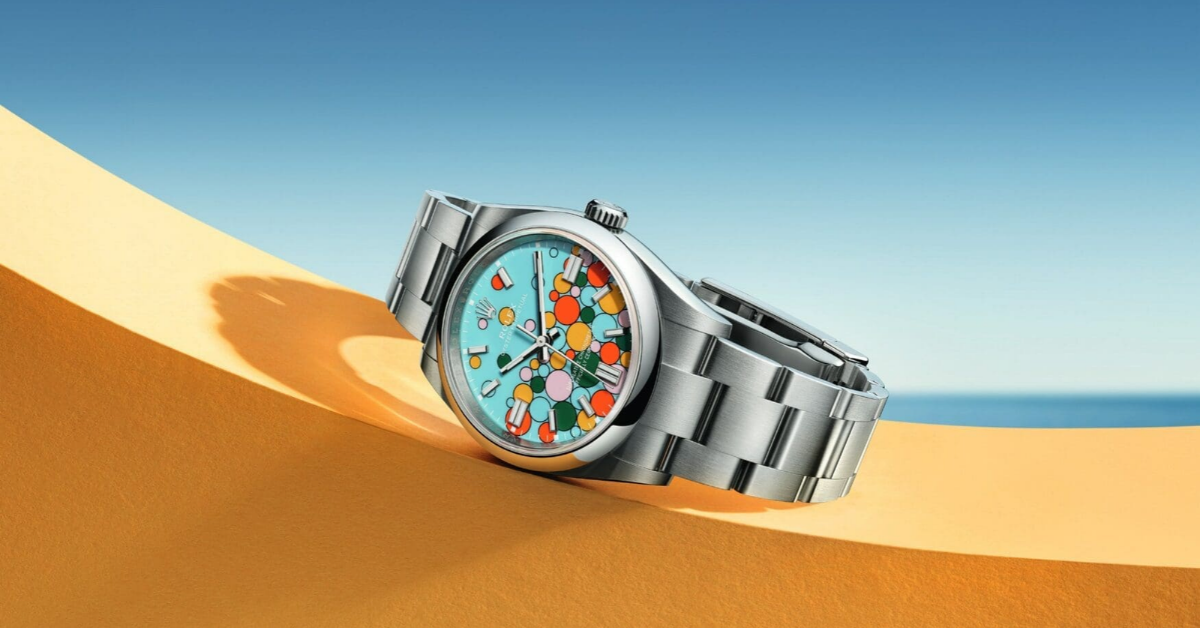
- A multicoloured Jubilee motif dial for the Oyster Perpetual, at standard pricing.
- The first gold Oyster Perpetuals: 28mm and 34mm models in 18k gold.
- Jubilee Gold: Rolex's first new gold alloy since 2005, debuting on the Day-Date. Read Rolex Jubilee Gold: the new metal only the Day-Date gets.
- The Rolesium Daytona: the first Daytona combining Oystersteel with platinum. See Rolex Daytona 126502: why collectors call it the new grail.
The centenary year also saw Rolex's most dramatic auction moment: four unique Daytonas sold for a combined $49.4 million for charity. Here's why four Rolex Daytonas just sold for $49.4 million.
Why the Oyster Still Matters
A hundred years on, the Oyster's original promise still defines Rolex: a watch you can wear anywhere, in any weather, every day, for decades.
That reliability is a big part of why Rolex watches hold their value so well. People trust that a well-maintained Oyster from the 1960s still works, and that a new one will last a lifetime. For the numbers, see which Rolex holds its value best and how much Rolex prices have risen over the years.
And if you own an older Oyster and want to know when it was made, our Rolex serial number guide can help you date it.
Oyster Timeline at a Glance
- 1926: Oyster case patented
- 1927: Mercedes Gleitze swims the English Channel wearing a Rolex Oyster
- 1931: Perpetual self-winding rotor introduced
- 1945: Datejust launched
- 1953: Submariner, Explorer and Twinlock crown
- 1955: GMT-Master
- 1956: Day-Date
- 1963: Cosmograph Daytona
- 1967: Sea-Dweller
- 1970: Triplock crown
- 2012: Deepsea Challenge reaches the Mariana Trench
- 2026: Oyster centenary, with anniversary models and Jubilee Gold
Frequently Asked Questions
When was the Rolex Oyster invented?
Rolex patented the Oyster case in 1926. It was one of the first waterproof wristwatch cases, sealed by a screw-down bezel, caseback and crown. 2026 marks its 100th anniversary.
Why is it called the Oyster?
Hans Wilsdorf named it the Oyster because the case seals as tightly as an oyster shell, keeping water and dust away from the movement inside.
Who swam the English Channel with a Rolex Oyster?
British swimmer Mercedes Gleitze wore a Rolex Oyster during her 1927 English Channel swim. The watch kept working, and Rolex celebrated with a front-page advertisement in the Daily Mail.
What does "Oyster Perpetual" mean?
"Oyster" refers to the waterproof case patented in 1926, and "Perpetual" refers to Rolex's self-winding rotor introduced in 1931. Together, they describe a sealed, self-winding Rolex.
Are all Rolex watches Oysters?
Almost all are. The main exception was the Cellini collection, Rolex's dress watches, which used non-Oyster cases for a slimmer, more classic design.
What did Rolex release for the Oyster's 100th anniversary?
For the 2026 centenary, Rolex released anniversary Rolesor Oyster Perpetuals with slate dials, a multicoloured Jubilee motif dial, the first 18k gold Oyster Perpetuals, the new Jubilee Gold alloy on the Day-Date and the Rolesium Daytona.
The Bottom Line
The Oyster started as a simple promise: a watch that keeps the world out. A hundred years later, it has crossed oceans, climbed mountains, flown with pilots and reached the deepest point on Earth.
Every Rolex on a wrist today carries a piece of that 1926 idea. Not bad for a watch named after a shellfish.
Senior Writer
James Whitfield
Senior watch writer with a decade covering Swiss horology, vintage markets and modern releases.