On this page
- What It Actually Replaced, and How Rolex Frames It
- The Case and Design
- The Movement: A Genuine, Dedicated Caliber
- A Rare Feature: The Exhibition Caseback
- Pricing and References
- What You Give Up Compared to the Cellini
- Secondary Market: Holding Value Better Than a New Collection Usually Does
- So, Is It Actually Worth It?
- Buying With Confidence
- FAQ
- Conclusion
The Rolex 1908 is Rolex's current dress watch collection, debuted at Watches & Wonders 2023 as the replacement for the discontinued Cellini line. It runs a genuinely new in-house movement, the Caliber 7140, visible through a sapphire exhibition caseback — a rare feature for Rolex — in a slim 39mm precious-metal case available in yellow gold, white gold, and platinum, starting around $22,000. It carries no complications, unlike the Cellini it replaced, and comes only in precious metals with no steel option. Secondary-market pricing has held close to or slightly above retail, a genuinely reassuring sign for a still-young collection, making it worth it specifically for buyers who want real Rolex engineering and rare movement visibility in dress-watch proportions.
Rolex dress watches get less attention than the brand's sports lineup, and the 1908 has spent its first three years largely overlooked as a result — overshadowed by whatever steel sports reference is generating waitlist headlines that month. That's worth correcting, because the 1908 represents something genuinely different from Rolex's usual approach, and the honest answer to whether it's worth it depends on understanding exactly what that difference is.
What It Actually Replaced, and How Rolex Frames It
The 1908 debuted on March 27, 2023, following the discontinuation of the Cellini collection, Rolex's previous dress-watch line. Worth noting a genuine nuance here: Rolex's own marketing frames the 1908 as an homage to the original 1931 Oyster Perpetual rather than a direct Cellini successor. In practice, though, it occupies the exact same shelf space Cellini once held — the only round, time-only, precious-metal dress watch currently in Rolex's catalog.
The name itself carries real historical weight: 1908 is the year Hans Wilsdorf registered the "Rolex" trademark in Switzerland, making the collection a direct tribute to the brand's founding moment rather than an arbitrary product name.
The Case and Design
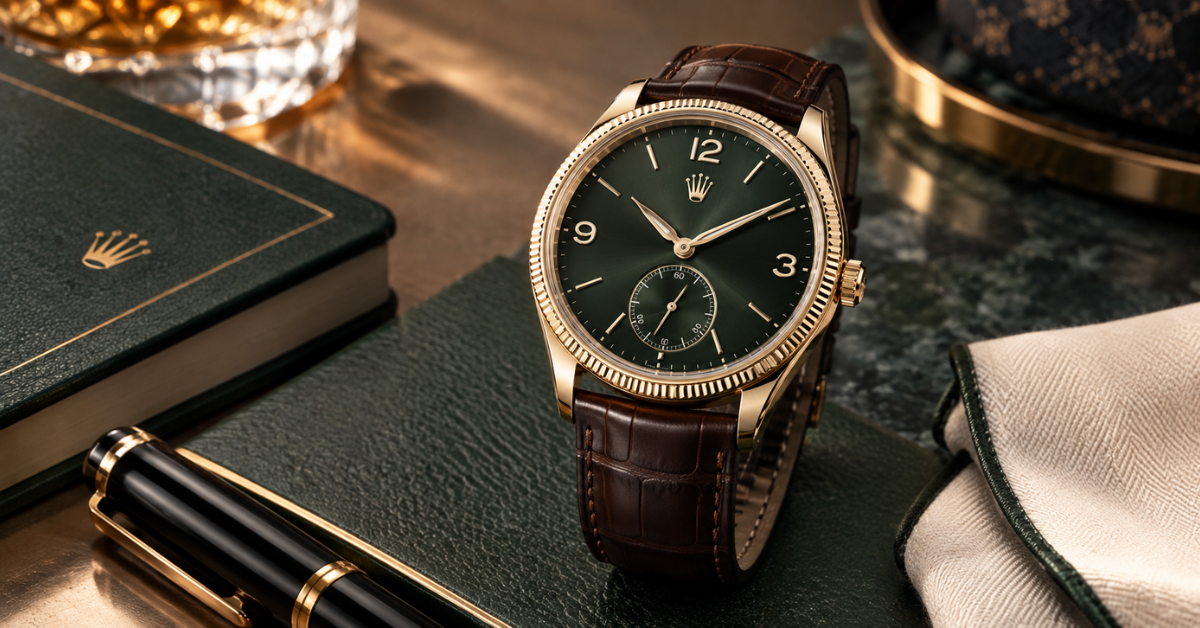
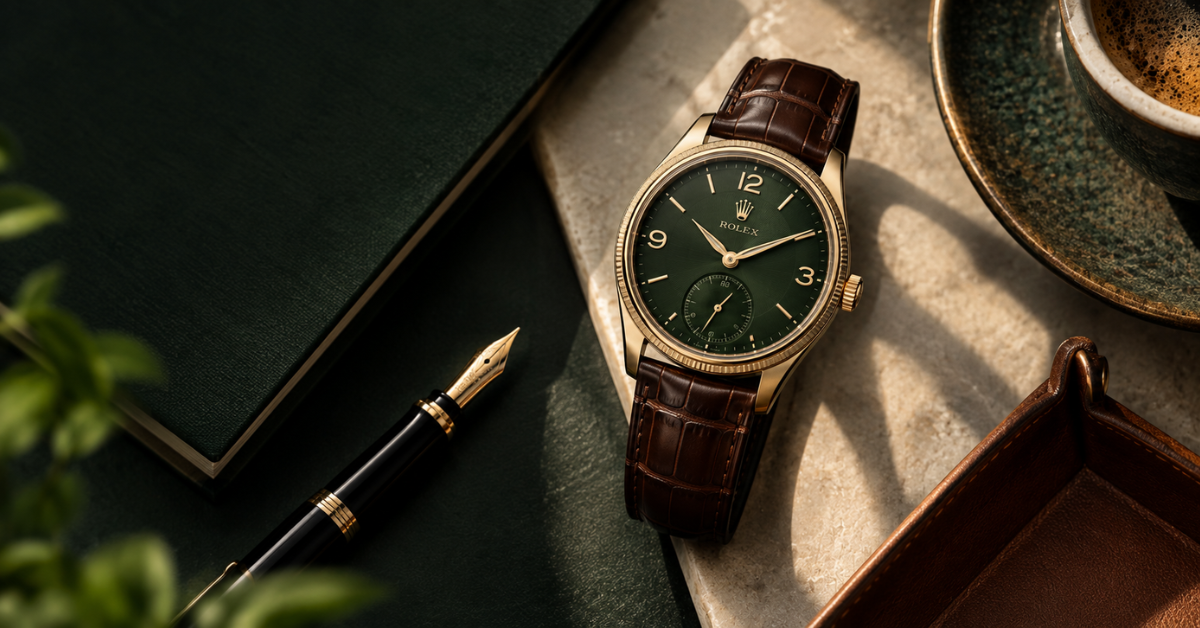
The 1908 runs a 39mm case at roughly 9.5mm thick, with a 47mm lug-to-lug and 20mm lug width — proportions aimed squarely at genuine dress-watch thinness rather than a shrunk-down sports case. It's noticeably slimmer than comparable watches in Rolex's Oyster Perpetual line, a real engineering target distinct from the robust, tool-watch case construction Rolex is best known for.
Design details lean toward classic marine-chronometer styling: a subsidiary running seconds subdial at 6 o'clock, a railroad-track chapter ring around the dial's perimeter, and a domed, fluted "divided bezel." Dial options are flat and matte-textured across the gold references, while the platinum reference 52506 stands apart with a guilloché rice-grain motif in light blue — a genuine point of differentiation across the three metal options, not just a color change.
The Movement: A Genuine, Dedicated Caliber
This is where the 1908 makes its strongest case for being taken seriously rather than treated as a Cellini reskin. It runs the Caliber 7140, an entirely new self-winding movement developed specifically for this collection — not a reused caliber pulled from elsewhere in Rolex's catalog. It delivers 38 jewels, operates at 4Hz (28,800 vibrations per hour), and offers a 66-hour power reserve, built around a Syloxi hairspring in silicon with a patented geometry, a Chronergy escapement with a paramagnetic nickel-phosphorus pallet fork, and Paraflex shock absorbers. It carries full Superlative Chronometer certification, the same ±2 seconds per day standard covered in our Rolex Perpetual Calibre explainer — worth reading for context on how that certification process works, even though the 7140 is a genuinely different movement family from the Perpetual rotor calibers used across Rolex's sports lineup.
A Rare Feature: The Exhibition Caseback
This is genuinely uncommon for Rolex, and worth highlighting on its own. The 1908 shows its movement through a transparent sapphire exhibition caseback — a feature Rolex rarely offers across its current catalog, where solid casebacks are the norm even on watches costing considerably more. The finishing on display is meticulous, consistent with what you'd expect from a dedicated dress-watch movement built to be looked at, not just relied on. For a brand that typically keeps its mechanical work hidden, this is a real departure, and it signals how seriously Rolex is treating this specific collection.
Pricing and References
Three references make up the current lineup: 52508 in 18-karat yellow gold, 52509 in 18-karat white gold, and 52506 in 950 platinum, added roughly a year after the initial launch. Official retail pricing started around $22,000 for yellow gold and $23,300 for white gold at launch, with the platinum reference listing at $30,900. More recent secondary-market data has shown average pricing in the upper-$20,000s across gold references, suggesting demand has held steady rather than declining — a genuinely reassuring sign for a collection still young enough that its long-term reception was an open question at launch.
One configuration detail worth knowing if you're comparing references: the Settimo bracelet option is currently exclusive to the yellow gold 52508 — the white gold and platinum references are offered on alligator leather strap only.
What You Give Up Compared to the Cellini
Worth being direct about the trade-off here. The Cellini offered genuine complications — moonphase and date displays among them — across a wider range of dial and strap combinations, often at somewhat lower price points than the 1908's precious-metal-only lineup. The 1908 currently offers no complications at all, just hours, minutes, and running seconds, in exchange for the new movement, the exhibition caseback, and a more streamlined, curated design. Collectors specifically wanting complications in a Rolex dress watch may find remaining Cellini inventory still worth considering; collectors who want the newest engineering in the simplest possible package will find the 1908 the more compelling modern choice.
Secondary Market: Holding Value Better Than a New Collection Usually Does
Gold references have generally traded close to retail on the secondary market, with some periods showing pricing slightly above official list — a genuinely strong sign for a watch collection without the artificial scarcity that drives premiums on Rolex's hyped steel sports references. The platinum reference has shown particularly resilient pricing, likely reflecting its more limited production numbers. Our coverage of Submariner pricing by reference illustrates how differently scarcity-driven pricing works on Rolex's sports lineup, useful context for understanding why the 1908's steadier, less speculative value pattern is actually a positive sign here rather than a lack of excitement.
So, Is It Actually Worth It?
The honest answer: yes, for the right buyer, and no for buyers expecting something it was never built to be. If you want genuine Rolex engineering — a purpose-built movement, real Superlative Chronometer certification, and a rare opportunity to actually see Rolex's finishing work through an exhibition caseback — in slim, classic dress-watch proportions, the 1908 delivers that honestly, and its secondary-market resilience suggests the broader market agrees. If you specifically want complications, a lower entry price, or a steel option, none of those exist in this collection, and you'll need to look at Cellini's remaining inventory or a genuine competitor like Patek Philippe's Calatrava or Jaeger-LeCoultre's Master Ultra Thin instead.
Buying With Confidence
Given the values involved and the collection's relative newness, buying from an authorized source or a verified reputable dealer matters. Our Rolex reference numbers decoded guide helps you confirm exactly which 1908 reference you're looking at, and our field guide to spotting a fake Rolex covers authentication fundamentals worth applying to any high-value purchase.
FAQ
What does the "1908" name refer to? 1908 is the year Hans Wilsdorf registered the "Rolex" trademark in Switzerland, making the collection a direct tribute to the brand's founding moment rather than an arbitrary product name.
Does the Rolex 1908 have any complications? No — it currently offers only hours, minutes, and running seconds, unlike the Cellini collection it replaced, which offered moonphase and date complications on select references.
Is the Rolex 1908 available in steel? No — it's offered exclusively in precious metals: 18-karat yellow gold, 18-karat white gold, and 950 platinum, with no steel or two-tone Rolesor option currently planned.
How much does a Rolex 1908 cost? Official retail pricing started around $22,000 for yellow gold and $23,300 for white gold at launch, with the platinum reference listing at $30,900.
Does the Rolex 1908 hold its value well? Yes, relative to expectations for a new collection — gold references have generally traded close to or slightly above retail on the secondary market, with the platinum reference showing particularly resilient pricing.
Conclusion
The 1908 earns its place as a genuine, serious addition to Rolex's catalog rather than a rebadged Cellini — a purpose-built movement, a rare exhibition caseback, and secondary-market performance that's held up better than most new collections manage in their first few years. Whether it's worth it comes down to what you actually want from a dress watch: real engineering and movement visibility, yes; complications or a lower price floor, not here. For the buyer it's actually built for, that trade-off is an easy one to make.
Senior Writer
James Whitfield
Senior watch writer with a decade covering Swiss horology, vintage markets and modern releases.